
Perpignan Cathedral Architecture: A 2025 Guide
Discover the Perpignan Cathedral architecture and its Gothic charm in 2025. Read our expert guide for history, visit tips, and local insights for your trip.
On this page
Perpignan Cathedral stands as a masterpiece of Catalan Gothic design in southern France. This historic site draws visitors from around the world to admire its unique spiritual beauty. It remains a central landmark for those exploring architecture in Perpignan today.
The building reflects the rich cultural history of the Roussillon region. Visitors can enjoy the peaceful atmosphere while studying the complex brickwork and stone. Its grand scale makes it one of the most impressive religious sites in France. You will find that the structure tells a story of faith and power.
As you plan your 2025 visit, understanding the design will enhance your experience. This guide provides deep insights into the construction and art found within the walls. We will explore every detail of the cathedral to help you prepare. Get ready to discover a hidden gem in the heart of the city.
Historical Context of the Perpignan Cathedral
The history of this site begins in the early 14th century. King Sancho of Majorca laid the first stone of the cathedral in 1324. This era was a golden age for Majorcan Gothic architecture in Perpignan and the surrounding area. The project took nearly two centuries to finish completely.
Progress was slow due to various wars and lack of funding. The main structure was finally completed in 1509 during a different political era. Despite the long timeline, the original Gothic vision remained largely intact. It replaced an older church that no longer served the growing population.
The cathedral is dedicated to Saint John the Baptist, the patron of the city. It has survived numerous sieges and political changes over the many centuries. Each period of history left a small mark on the building's identity. Today, it serves as a proud symbol of the city's Catalan heritage.
Medieval builders faced many challenges while constructing such a massive vaulted space. They used local materials to ensure the building would stand for a long time. The result is a structure that feels both heavy and remarkably light. It represents the transition from medieval fortresses to elegant places of worship.
Key Features of Perpignan Cathedral Architecture
The Perpignan Cathedral architecture follows the unique Southern Gothic style. This style is known for having a single, wide nave without side aisles. It creates a massive open space that feels very grand and inclusive. Large buttresses support the walls from the outside to allow for height.
The builders used a mix of red brick and river stones for the walls. This combination is a classic feature of local construction in the Roussillon region. You can see the ruins of Saint Jean le Vieux Romanesque ruins nearby. These older stones contrast with the later Gothic brickwork seen on the cathedral.
Windows in Southern Gothic buildings are often smaller than those in Northern France. This design choice helps to keep the interior cool during hot Mediterranean summers. The light that does enter creates a soft and dramatic effect on the stone. It highlights the intricate carvings and religious art found throughout the nave.
The vaulting inside the cathedral is another major highlight for any architecture lover. These high arches distribute the weight of the roof down to the thick walls. They create a sense of rhythm as you walk toward the main altar. You will appreciate the technical skill required to build such a tall roof.
- Single wide nave design
- Local brick and stone materials
- Large exterior buttresses
- Small, high-set stained glass windows
The Magnificent Interior of Saint-Jean-Baptiste
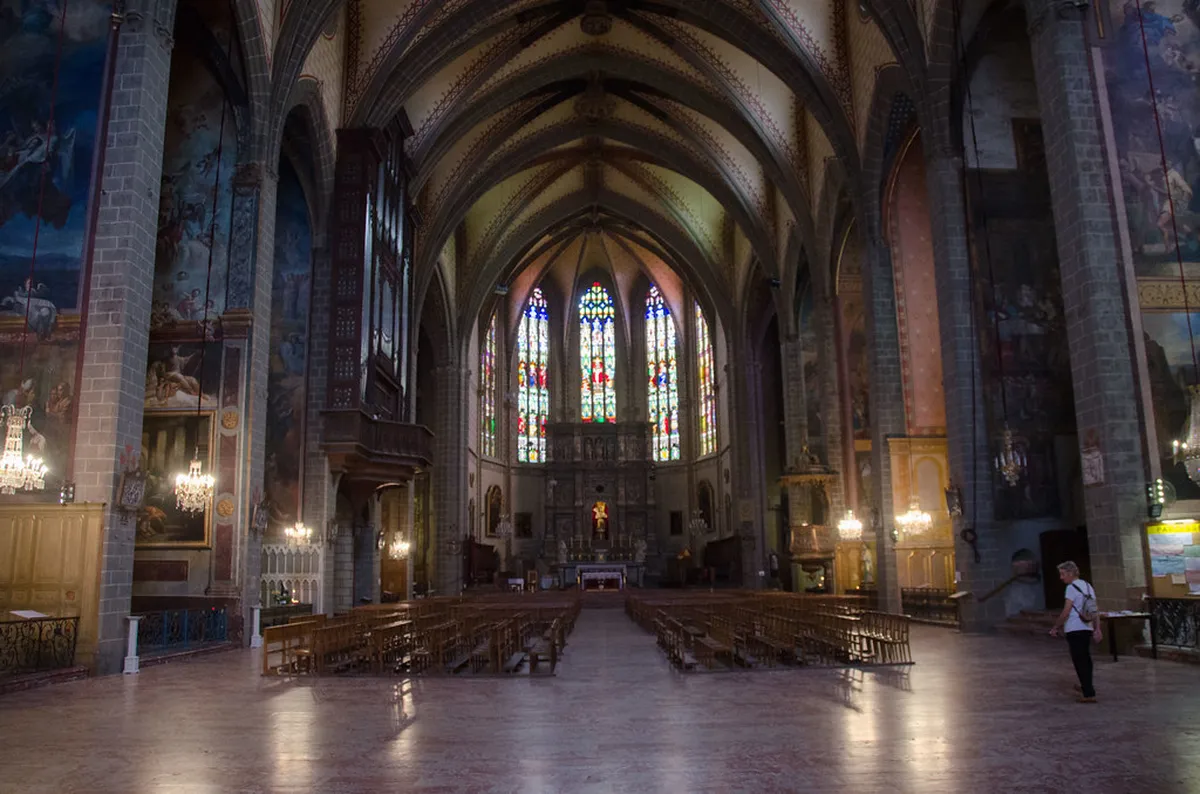
Stepping inside the cathedral reveals a world of artistic and religious treasures. The nave measures 80 meters long and 18 meters wide for maximum impact. You will immediately notice the impressive sense of scale and quiet devotion. The Saint Jean Baptiste Cathedral interior design is truly world-class.
The high altar features a stunning marble retable from the 17th century. It depicts scenes from the life of Saint John the Baptist in detail. Local artists spent many years perfecting these carvings for the Catholic Church. The use of light and shadow on the marble is very effective.
Side chapels line the walls and contain many historical works of art. Each chapel was often funded by a local guild or wealthy family. You can find beautiful wooden altarpieces that date back to the late medieval period. These pieces show the evolution of religious art in the Perpignan region.
The organ is another essential feature located high above the main entrance floor. It dates back to the 15th century and features beautiful painted wooden panels. This instrument is still used for concerts and religious services in 2025. Its sound fills the vast space with a powerful and moving resonance.
The floor is paved with smooth stones that have worn down over centuries. Walking through the space feels like stepping back into a different time. Every corner of the interior offers a new detail to study and enjoy. Take your time to appreciate the craftsmanship of the wooden choir stalls.
Notable Exterior Design and the Wrought Iron Bell
The exterior of the cathedral looks more like a fortress than a church. This was common in Southern France during the middle ages for protection. The flat facade is made of dark stones and bright red bricks. It lacks the flying buttresses seen on cathedrals like Notre Dame in Paris.
The most famous exterior feature is the wrought iron campanile on the roof. This bell cage was added in the 18th century to hold the bells. It is a classic example of local metalwork from the Roussillon area. The iron design allows the wind to pass through without causing damage.
A large square tower stands on the side of the main building. It was intended to be much taller but remained unfinished for many years. Despite its height, the tower offers a strong presence in the city skyline. It houses several large bells that still ring out across Perpignan today.
The main portal is relatively simple compared to the grand interiors found inside. It features a pointed arch that is characteristic of the Gothic period of design. Small statues and carvings decorate the entrance to welcome the faithful visitors. You will see the coat of arms of the city above the door.
The Sacred Space of the Neighboring Campo Santo
Located next to the cathedral is the Campo Santo, a unique cloister cemetery. This site is the oldest and largest of its kind in all of France. It served as a burial ground for the city's elite for many centuries. The Campo Santo Perpignan architecture features beautiful white marble arches and galleries.
The central courtyard is now used for public events and summer music festivals. It provides a peaceful contrast to the busy streets of the modern city. The Gothic galleries are decorated with funeral plaques and various stone carvings. You can spend an hour walking through these silent and historic halls.
Restoration efforts in 2025 have kept the Campo Santo in excellent condition for tourists. It is a vital part of the cathedral complex that most people enjoy. The combination of religious and civic history makes it a very special place. Entry is often free or very low cost for the general public.
Architects admire the way the cloister integrates with the walls of the cathedral. It creates a unified religious campus that was essential for medieval life. The marble used here was brought from nearby quarries in the Pyrenees mountains. This local material gives the site a bright and clean appearance today.
Practical Tips for Visiting the Cathedral in 2025
Visiting the cathedral is easy as it sits in the historic city center. Most visitors can walk there from the main square in just five minutes. Admission to the main nave is generally free for all tourists and locals. Check the local schedule for mass times to avoid disrupting any religious services.
The best time to visit is in the morning for the light. Sunlight streams through the high windows and illuminates the historic altarpieces beautifully. The temperature inside remains cool even during the peak of the summer heat. This makes it a perfect midday stop during your Perpignan walking tour.
Photography is allowed but you must turn off your camera flash inside. Please remain quiet and respectful of those who are there to pray. Guided tours are available in several languages during the busy summer months. These tours offer deeper insights into the hidden symbols found in the art.
Expect to spend about one to two hours exploring the entire complex. This includes the main cathedral, the chapels, and the neighboring Campo Santo area. Wear comfortable shoes as the historic stone floors can be somewhat uneven. There are many small cafes nearby for a snack after your visit.
Frequently Asked Questions
When was the Perpignan Cathedral built?
Construction on the cathedral began in 1324 and finished around 1509. It took nearly 200 years to complete the entire Gothic structure. The project spanned several different political eras in the city's history.
Is entry to the Perpignan Cathedral free for visitors?
Yes, entry to the main cathedral is free for the public in 2025. Some special exhibitions or guided tours might require a small fee. Donations are always welcome to help with the ongoing maintenance of the building.
What is the architectural style of Perpignan Cathedral?
The cathedral is built in the Southern Gothic style, also known as Catalan Gothic. It features a single wide nave and thick walls made of brick. This style is very common in the Mediterranean regions of France and Spain.
Can I see the bells of the cathedral?
You can see the famous wrought iron bell cage from the outside square. The bells themselves are housed in the main tower and the iron campanile. They ring during services and for special city events throughout the year.
The Perpignan Cathedral is a stunning example of medieval engineering and religious art. Its unique Southern Gothic style offers a different perspective on French church architecture. Whether you love history or art, this site is a must-see in 2025. Plan your trip today to experience this Catalan treasure for yourself.
Key Takeaways
- Explore the unique single-nave Southern Gothic design from the 14th century.
- Visit the Campo Santo next door to see France's oldest cloister cemetery.
- Admire the local craftsmanship of the wrought iron bell cage on the roof.
- View the 17th-century marble high altar and historic wooden altarpieces.
Related reads: architecturebycity.com.