
Synagogue of Reims Architecture: A 2025 Guide
Discover the stunning Synagogue of Reims architecture. Explore this 2025 guide to Romano-Byzantine design and religious heritage in France. Plan your visit now!
On this page
The Synagogue of Reims architecture serves as a brilliant example of nineteenth-century religious design in France. Visitors to the city often focus on the cathedral while overlooking this stunning Romano-Byzantine masterpiece on Rue Clovis. The building reflects the cultural diversity that has shaped this historic French city over many centuries. This structure remains a vital part of the broader religious architecture in Reims landscape today.
Completed in 1879, the synagogue stands as a testament to the resilience of the local Jewish community. The design captures a unique moment in French history where Eastern and Western styles merged beautifully. Travelers in 2025 will find the building remarkably well-preserved despite the challenges of two world wars. Exploring this site offers a deeper understanding of how architecture mirrors the social evolution of a region.
Historical Context of the Synagogue
Construction of this site began in 1879 to serve a growing Jewish population after the Franco-Prussian War. The community needed a larger space for worship as many families moved to Reims during this era. Architect Ernest Brunette received the commission to create a structure that felt both ancient and dignified. His work contributed significantly to the evolving skyline of Reims during a prosperous industrial period.
Ernest Brunette was a prominent figure who understood the importance of historical continuity in urban design. He chose to move away from the prevailing Gothic styles commonly seen in the Champagne region. Instead, he looked toward Mediterranean and Oriental influences to represent the roots of the faith. This choice made the building stand out as a unique landmark within the city's residential districts.
The inaugural ceremony took place in September 1879 with great fanfare from the local community. It symbolized a new era of religious freedom and integration for Jewish citizens in the Grand Est. The synagogue quickly became a center for cultural life and spiritual guidance for many local families. Today, it remains one of the most significant historic monuments in the entire city of Reims.
During the early twentieth century, the building faced severe threats from the heavy shelling of World War I. Most of the surrounding neighborhood suffered extensive damage while the synagogue required significant structural repairs later. These events added a layer of historical weight to the stones of the building we see today. Preserving this history is a major focus for local heritage organizations in 2025.
Key Features of Synagogue of Reims Architecture
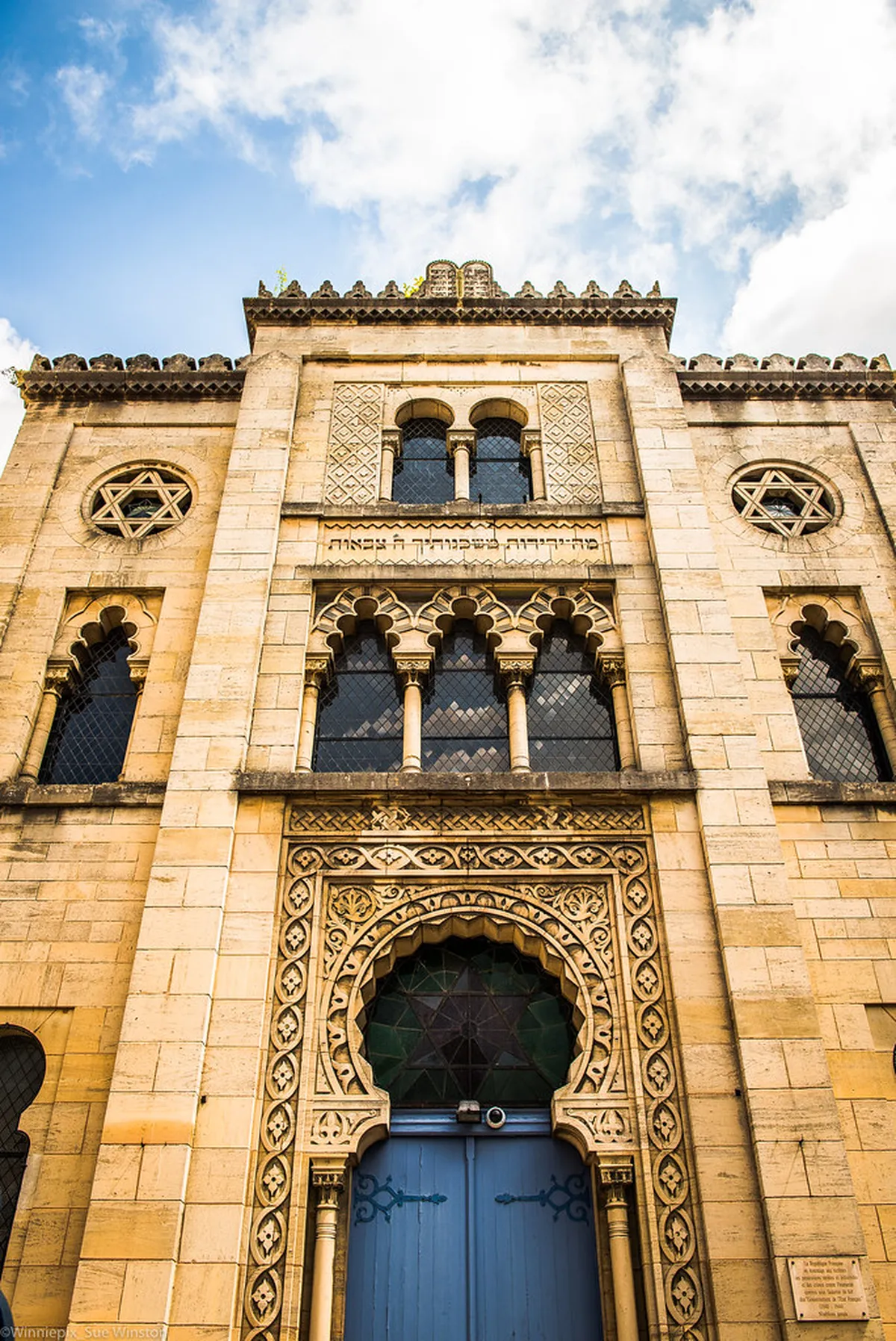
The exterior of the synagogue is characterized by its striking Romano-Byzantine stylistic influences and detailed stonework. A large central dome dominates the structure and creates a sense of grand vertical space for visitors. The facade features a massive rose window that incorporates the Star of David into its intricate stone tracery. This blend of traditional Jewish symbols with classical European shapes defines the overall aesthetic approach.
Architectural enthusiasts will notice the use of horseshoe arches above the windows and the main entrance. These elements draw inspiration from Moorish designs which were popular in European synagogue architecture during that time. The light-colored limestone used for the walls helps the building glow during the golden hour in Reims. You can capture excellent photos of these details on a Reims architecture walking tour through the city center.
The roofline is adorned with the Tablets of the Law, serving as a clear spiritual marker for the building. Decorative crenellations and small turrets give the structure a fortress-like appearance that suggests strength and permanence. Every stone was carefully placed to ensure the building would survive the test of time and weather. The symmetry of the front elevation creates a pleasing visual balance for anyone walking down Rue Clovis.
In 2025, the preservation of these exterior features remains a high priority for the French Ministry of Culture. Periodic restoration work ensures that the limestone remains clean and free from the effects of urban pollution. Visitors can appreciate the fine craftsmanship of the nineteenth-century stonemasons who worked on this project. The building serves as a perfect example of how different cultures can influence French structural design.
Interior Design and Spiritual Symbolism
The interior of the synagogue is designed to inspire awe through its use of light and height. A spacious nave leads the eye toward the Holy Ark, which is the focal point of the hall. The Ark features exquisite carvings and is framed by decorative columns that support a mini-dome structure. This area stores the sacred Torah scrolls and represents the heart of the Jewish faith.
Stained glass windows allow colorful light to filter into the sanctuary throughout the day. While not as famous as the cathedral glass, these windows display beautiful geometric patterns and religious symbols. The blue and gold tones used in the decoration create a serene atmosphere for prayer and reflection. These artistic choices were meant to connect the physical space with the spiritual world above.
- The Holy Ark: Crafted with intricate wood and stone details to house the sacred scrolls safely.
- The Women's Gallery: Located on the upper level to provide a dedicated space for female worshippers.
- Central Chandelier: A massive light fixture that illuminates the entire hall during evening services.
- Geometric Tiling: Detailed floor patterns that reflect the Orientalist influences of the overall design style.
The acoustics within the main hall were carefully planned to ensure that every word of the service is heard. Thick walls and the high dome work together to create a resonance that is typical of Byzantine structures. This functional aspect of the design highlights the architect's skill in blending beauty with practical utility. It remains a quiet sanctuary away from the busy streets of modern-day Reims.
Post-War Reconstruction and Art Deco Influence
Following the destruction of World War I, the city of Reims underwent a massive rebuilding process in the 1920s. The synagogue required extensive work to restore its dome and facade to their original nineteenth-century glory. Some elements of the Reims Art Deco reconstruction movement influenced the subtle repairs made during this time. This period added another layer of architectural history to the already complex identity of the building.
During World War II, the synagogue was tragically looted and used as a warehouse by occupying forces. The interior suffered greatly, but the main structural walls remained standing after the liberation of France. Post-war restoration efforts focused on returning the spiritual dignity to the interior spaces through careful renovation. Artisans worked for years to recreate the decorative elements that had been lost or destroyed.
A memorial plaque now stands at the entrance to honor the victims of the Holocaust from Reims. This addition transformed the building from a simple house of worship into a site of historical memory. It reminds every visitor of the human stories that are embedded within these limestone walls and floors. The architecture now serves a dual purpose as both a temple and a place of remembrance.
Today, the building is protected as a Monument Historique by the French government for its cultural value. This status ensures that any future changes must respect the original design and historical materials used. It stands as a symbol of the survival and rebirth of the city after multiple conflicts. The mixture of Romano-Byzantine and early twentieth-century repair work makes it a fascinating study for historians.
The Role of Religious Architecture in Reims
Reims is globally famous for its Gothic cathedral where the kings of France were once crowned. However, the diversity of the city's religious buildings tells a much broader story of French heritage. The Synagogue of Reims provides a necessary counterpoint to the Christian monuments found throughout the various districts. It showcases the pluralistic nature of French society during the late nineteenth and early twentieth centuries.
Architectural students often visit this site to study the transition between historical revival styles and modernism. The use of traditional Byzantine forms in a French urban context provides many valuable design lessons. It illustrates how architects in the 1800s sought to create specific identities through their choice of materials. The synagogue remains a centerpiece of the city's commitment to preserving diverse historical narratives.
Local schools often organize visits to the synagogue to teach students about art history and religious tolerance. Seeing the architecture firsthand helps young people understand the various cultures that built their home city. The building acts as an open textbook for those interested in the evolution of European structural design. It is a place where history, art, and community intersect in a very tangible way.
The surrounding neighborhood of Rue Clovis also features several other interesting examples of late-nineteenth-century residential architecture. Walking through this area allows you to see how the synagogue fits into the local urban fabric. The scale of the building is impressive yet respectful of the nearby homes and shops. It remains a quiet but powerful presence in the heart of a bustling modern city.
Visiting the Synagogue of Reims in 2025
Planning a visit to the Synagogue of Reims requires a bit of advanced preparation for travelers in 2025. The building is primarily a place of worship, so opening hours for tourists can be quite limited. It is best to contact the local Jewish community or the tourism office to check current schedules. Security measures are also in place to ensure the safety of the congregation and the historic site.
Expect to spend about 45 minutes to one hour exploring the exterior and interior of the building. Entry is often free, but donations for the continued maintenance of the structure are usually very welcome. Dress respectfully and maintain a quiet demeanor while inside the sanctuary to honor the spiritual nature of the space. Photography may be restricted during certain times, so always ask for permission before taking pictures.
The synagogue is located within walking distance of other major landmarks like the Palace of Tau and the Cathedral. This central location makes it easy to include in a full day of sightseeing around the city center. You can find several charming cafes and bakeries nearby to enjoy a snack after your architectural tour. The area is well-served by local buses and the modern tram system for easy access.
Guided tours are occasionally available and provide much deeper insights into the specific architectural choices made by Brunette. These tours often explain the hidden meanings behind the various decorative motifs found throughout the main sanctuary. In 2025, digital guides and mobile apps are also becoming popular ways to explore the site independently. Learning the stories behind the stones makes the visit a much more meaningful experience for everyone.
Frequently Asked Questions
Who was the architect of the Synagogue of Reims?
Ernest Brunette designed the Synagogue of Reims in the late nineteenth century. He was a prominent local architect known for his work during the city's major expansion. His choice of the Romano-Byzantine style was intended to reflect the ancient roots of the Jewish faith. Brunette's legacy remains visible through this building and several other structures in the region.
What architectural style is the Synagogue of Reims?
The Synagogue of Reims architecture is primarily Romano-Byzantine with significant Orientalist influences. This style features a large central dome, horseshoe arches, and intricate geometric stone carvings. It was a popular choice for European synagogues in the 1800s to distinguish them from Gothic churches. The design creates a unique aesthetic that blends Eastern and Western traditions.
When was the Synagogue of Reims built?
Construction of the synagogue took place between 1878 and 1879 to accommodate the local Jewish community. It was officially inaugurated in September 1879 during a period of growth for the city. The building has since undergone several restorations following damage in both World War I and World War II. It became a protected historic monument in France in 1989.
Can I visit the interior of the Synagogue of Reims in 2025?
Yes, the interior is occasionally open to the public for guided tours and special cultural heritage events. However, because it is an active house of worship, you should check schedules in advance. Visitors are encouraged to contact the Reims Tourism Office for the most current visiting hours. Always remember to follow local security protocols and dress respectfully during your visit.
Is the Synagogue of Reims a historical monument?
The Synagogue of Reims was officially listed as a Monument Historique by the French government in 1989. This classification provides legal protection and funding for the preservation of its unique architectural features. It recognizes the building's importance to the cultural and religious history of the Grand Est region. This status ensures the site remains a landmark for future generations to study.
The Synagogue of Reims architecture is a hidden treasure that offers deep insights into the city's diverse past. Its Romano-Byzantine features provide a stunning visual contrast to the more famous Gothic landmarks nearby. Travelers in 2025 should certainly make time to visit this site to appreciate its beauty and history. Exploring this building is a rewarding experience for anyone interested in the rich religious heritage of France. Plan your journey today to witness this incredible masterpiece in person.
Key Takeaways
- The Synagogue of Reims features a unique Romano-Byzantine style designed by Ernest Brunette.
- Built in 1879, the structure survived damage from both world wars and remains a historic monument.
- Key architectural features include a central dome, horseshoe arches, and a Star of David rose window.
- The building is located on Rue Clovis and is an essential stop for architecture enthusiasts visiting Reims in 2025.
Related reads: architecturebycity.com, architecture in reims, chagall stained glass reims cathedral.