
Astronomical Clock Strasbourg Cathedral History Guide
Explore the astronomical clock Strasbourg Cathedral history. Learn about this Renaissance marvel and its mechanics. Plan your 2025 visit to France today!
On this page
Strasbourg is a city of timeless beauty and grand stories. The Cathedral of Notre Dame stands at the heart of the historic center. Inside this church, you will find a legendary mechanical treasure. This guide explores the astronomical clock Strasbourg Cathedral history for modern travelers. You will discover why this clock is a world-class masterpiece of science. Visitors from every nation come to witness its complex daily performance. The clock is more than just a tool for telling the time. It is a symbol of human curiosity and artistic skill. We will look at how it has evolved over many centuries.
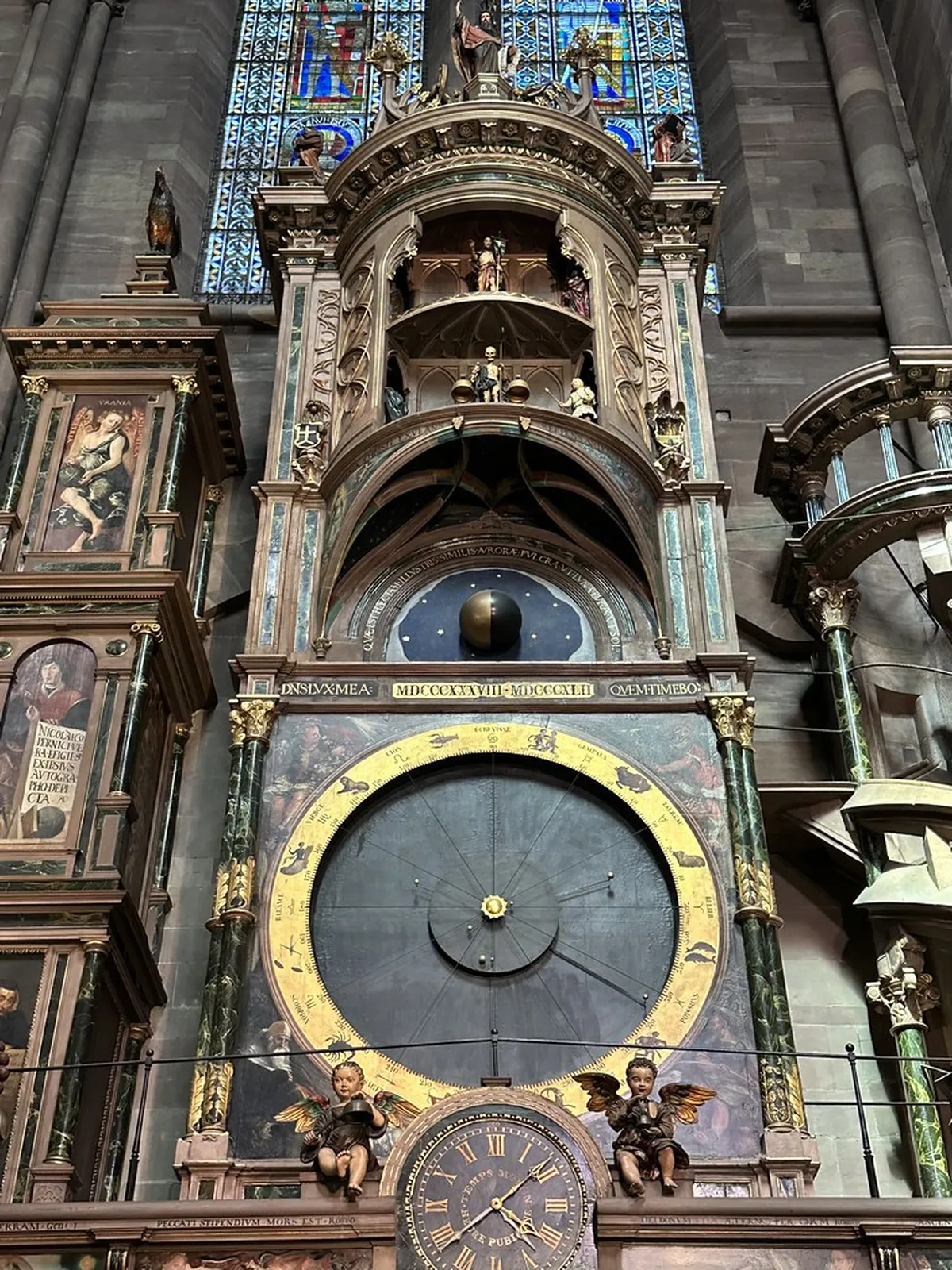
The clock sits in the south transept of the grand cathedral building. Its massive size and golden details capture the eyes of every visitor. The mechanism has survived wars, revolutions, and the passing of many eras. Today, it remains one of the most popular sites in architecture in Strasbourg today. You can see moving figures that tell stories from the Bible. The clock also tracks the stars and the seasons of the year. This article provides all the details you need for your 2025 visit. Let us dive into the fascinating history of this mechanical wonder.
The Origins of the First Medieval Clock
The story of the clock began in the middle of the 14th century. Workers started building the first mechanical version in the year 1352. It was known by locals as the Clock of the Three Kings. This early device was located across from where the current clock stands. It was a bold project for the medieval engineers of that era. They wanted to show the power of God through mechanical movement. The clock featured a famous mechanical rooster that crowed for the people. This rooster is now the oldest preserved automaton in the entire world. You can still see this ancient bird in the city museum today.
The first clock was much simpler than the version we see now. It focused mostly on religious themes and basic timekeeping functions. The mechanism operated for over two hundred years without many major repairs. However, the gears eventually began to wear down from constant daily use. By the 16th century, the first clock had stopped working entirely. The leaders of the cathedral decided that a better replacement was needed. They wanted a clock that reflected the new scientific knowledge of the time. This led to the creation of the second and more famous clock. The transition marked a shift from medieval faith to Renaissance science.
Building such a large device was a massive financial challenge for the church. They had to hire the best craftsmen from across the European continent. These workers understood the complex math required for accurate planetary tracking. The project took several years to complete because of its great complexity. People watched with wonder as the new frame rose up the wall. The first clock had set a very high standard for the city. It proved that Strasbourg was a center for high-quality engineering and art. This legacy continues to define the reputation of the cathedral today. We still marvel at the skills of those early medieval builders.
A Renaissance Masterpiece by Conrad Dasypodius
Conrad Dasypodius led the second major clock project starting in 1571. He was a brilliant professor of mathematics at the local university. Dasypodius worked with famous Swiss clockmakers named Isaac and Josias Habrecht. Together, they designed a device that could track the entire universe. This clock represented the peak of Renaissance scientific thought and artistic design. It was a collaborative effort between scientists, painters, and expert sculptors. The team wanted to create something that would last for many centuries. Their work on the Strasbourg Cathedral gothic architecture was truly groundbreaking for the time.
The second clock featured many new and exciting astronomical functions for viewers. It could display the positions of the sun and the moon accurately. The dial also showed the movements of the known planets in the sky. Artists decorated the wooden case with beautiful paintings and gold leaf. These paintings depicted the four great empires of the ancient world. They also showed the different ages of man from birth to death. The clock was a teaching tool for those who could not read. It explained the harmony of the stars and the path of life. Visitors were amazed by the detail of the painted figures.
This Renaissance version of the clock lasted until the French Revolution. During the revolution, many parts of the mechanism were sadly damaged or lost. The clock stopped moving in 1788 and sat silent for many decades. Dust gathered on the gears while the city changed around the church. People feared that the clock would never work again for the public. However, the beautiful outer case remained largely intact during those difficult years. It stood as a silent witness to the changing history of France. The spirit of the Renaissance lived on in the silent wooden figures. A new genius would eventually come to save the masterpiece.
The Engineering Genius of Jean-Baptiste Schwilgu
Jean-Baptiste Schwilgu was the man who saved the clock in the 1800s. He was a self-taught engineer with a passion for complex mechanical devices. Schwilgu had dreamed of repairing the clock since he was a young boy. He spent many years studying the old plans and the broken gears. In 1838, he finally received the commission to rebuild the famous mechanism. He did not just want to fix the old parts from the Renaissance. Schwilgu wanted to build a completely new movement with modern precision. He dedicated his life to this project for nearly four full years.
The engineer added an ecclesiastical computer to the base of the clock. This device can calculate the date of Easter for every future year. It is one of the most complex mechanical computers ever built by man. The machine accounts for leap years and the cycles of the moon perfectly. Schwilgu also improved the parade of the mechanical figures in the center. He used his knowledge of physics to make the movements more fluid. The result was a technical marvel that outperformed any other clock in Europe. His work ensured that the clock would function for generations to come. Today, his name is honored among the notable architects of Strasbourg history for his brilliant contributions.
Schwilgu completed the new clock mechanism in the year 1842. A grand celebration was held to mark the official restart of the clock. The entire city gathered to hear the rooster crow once again in joy. The current clock is essentially the work of this 19th-century master engineer. It uses the beautiful Renaissance case designed by Dasypodius centuries before him. This blend of styles makes the clock unique in the world of horology. It is a bridge between the Renaissance and the Industrial Revolution periods. The maintenance of the clock is still a very serious task in 2025. Experts check the gears every day to ensure everything runs smoothly.
Mechanical Figures and the Solar Noon Parade
The most popular feature of the clock is the daily midday parade. This show occurs at solar noon, which is 12:30 PM in Strasbourg. A group of mechanical figures comes to life to tell a story. First, a small angel rings a bell to signal the start. Another angel turns over an hourglass to show that time is fleeting. Then, the four ages of life pass before the figure of Death. A child, a youth, an adult, and an old man appear. Death strikes the hour with a bone to mark the end.
After the ages of man pass, the Twelve Apostles begin their parade. They walk in front of the figure of Christ on the balcony. Christ blesses each of the Apostles as they pass by his side. During this time, a large mechanical rooster flaps its golden wings. The bird crows three times to remind us of the story of Peter. This sequence is a highlight for every tourist visiting the cathedral in 2025. The movements are surprisingly smooth for a machine built so long ago. You can hear the clicking of the gears throughout the silent transept. It is a moment of pure magic for everyone watching.
The clock also features a large globe that shows the stars. This celestial sphere turns once every sidereal day with extreme mechanical accuracy. Below the sphere, you can see the chariots of the planetary gods. Each god represents a different day of the week in the calendar. For example, Diana represents Monday while Apollo represents the bright Sunday morning. These figures move slowly and change at the stroke of midnight daily. The clock combines religious stories with ancient mythology in a beautiful way. Every figure has a specific meaning that visitors can learn about during tours. The craftsmanship of these wooden statues is truly exceptional and detailed.
Planning Your Visit to the Clock in 2025
Visitors should plan ahead to see the clock show in 2025. The cathedral is free to enter for most of the day. However, you must buy a ticket for the special midday presentation. Tickets usually cost between 3 and 5 Euros for most adult visitors. You can purchase these at the cathedral entrance or the nearby office. The doors for the show open at 11:30 AM every day. It is best to arrive early to find a good viewing spot. The area around the clock can get very crowded during peak months. Summer and December are the busiest times for tourism in Strasbourg.
Once inside, you will see a short film about the clock history. This movie explains the complex mechanics and the story of the builders. The film is shown in several languages to help international travelers understand. After the film, the solar noon parade begins at exactly 12:30 PM. Photography is allowed but you should not use a bright camera flash. The dim light of the cathedral helps protect the ancient painted surfaces. You should respect the silence of the church during the mechanical performance. It is a spiritual experience for many people in the large crowd. Wear comfortable shoes as you will be standing for a while.
After the clock show, take time to explore the rest of the cathedral. The stained glass windows are some of the finest in all of France. You can also climb the tower for a view of the city. The clock is located near the Pillar of Angels in the transept. This pillar is a masterpiece of sculpture from the 13th century itself. Many people visit the clock and then go for a boat tour. The river provides a great view of the cathedral spire from the water. Strasbourg is a very walkable city with many wonderful sights to see. Make sure to check the official website for any holiday schedule changes.
Frequently Asked Questions
What time does the Strasbourg Cathedral clock show happen?
The main show happens at 12:30 PM every day. This time represents the solar noon in the city of Strasbourg. You should arrive at the south door by noon at latest. This ensures you have time to find a good viewing spot.
How much does it cost to see the astronomical clock?
Tickets for the midday presentation cost about 5 Euros in 2025. Entry to the cathedral itself is free during other opening hours. You can buy your tickets at the cathedral shop or the entrance. Group discounts are sometimes available for larger families or student tours.
Is the astronomical clock the original one from 1352?
No, the current mechanism was built by Jean-Baptiste Schwilgu in 1842. It is the third version of a clock in this cathedral. The outer case dates back to the second clock from the 1500s. The original 14th-century rooster is kept in a separate local museum.
Can I take photos of the astronomical clock show?
Yes, you can take photos of the clock and the parade. However, you must turn off your camera flash to protect the art. Tripods are generally not allowed because the space is very crowded. Please be respectful of other visitors while you take your pictures.
The astronomical clock Strasbourg Cathedral history is a tale of great human achievement. It brings together science, art, and faith in a single grand machine. Whether you love history or engineering, the clock will surely impress you. Plan your trip for 2025 to see this wonder in person. Do not miss the chance to see the Apostles parade at solar noon. It is a memory that will stay with you for many years. Visit our architecture guide for more travel tips. Enjoy your journey to the beautiful city of Strasbourg today!
Key Takeaways
- Arrive at the south transept by 12:00 PM for the 12:30 PM show.
- The current mechanism was completed in 1842 by Jean-Baptiste Schwilgu.
- Tickets are required for the midday parade and cost around 5 Euros.
- The clock features an ecclesiastical computer that calculates the date of Easter.
- The mechanical rooster is a replica of the oldest automaton in the world.
Related reads: medieval stained glass windows strasbourg, gothic spire engineering of notre dame de strasbourg, neustadt district architecture guide.