
MAMCS Museum Architecture Analysis in Strasbourg
Our 2025 MAMCS museum architecture analysis explores this modern landmark. Learn about its design and contemporary architecture in Strasbourg. Plan your visit!
On this page
This MAMCS museum architecture analysis explores a key modern landmark in France. The museum opened its doors in 1998 to celebrate modern art. It sits on the banks of the Ill River in Strasbourg. This building is a primary example of contemporary architecture in Strasbourg today.
Architect Adrien Fainsilber designed this massive glass and stone structure. He wanted to create a space that felt open and inviting. The building serves as a gateway between history and modern life. It offers a unique look at how museums function in 2025.
The Design Philosophy of Adrien Fainsilber
Adrien Fainsilber envisioned a building that respected the city's history. He chose a site near the historic Petite France district. This location allows for a dialogue between old and new styles. The result is a structure that feels both bold and grounded.
The architect focused on the concept of transparency throughout the project. He used glass to connect the interior with the urban landscape. Visitors can see the city while they browse the galleries. This connection makes the art feel part of the community.
The museum design follows a strict geometric logic. Clean lines and sharp angles define the exterior silhouette. This approach creates a sense of order and modern sophistication. It distinguishes the museum from the surrounding traditional architecture in Strasbourg today.
Scale plays a vital role in the museum's overall impact. The building is large but does not feel overwhelming. Fainsilber balanced the massive blocks with light-filled voids. This balance keeps the architecture feeling human and accessible.
The entrance invites people into a massive central nave. This space acts as a public street for the museum. It encourages movement and discovery for every visitor. The design successfully merges public space with private art galleries.
Structural Materials and Industrial Aesthetics
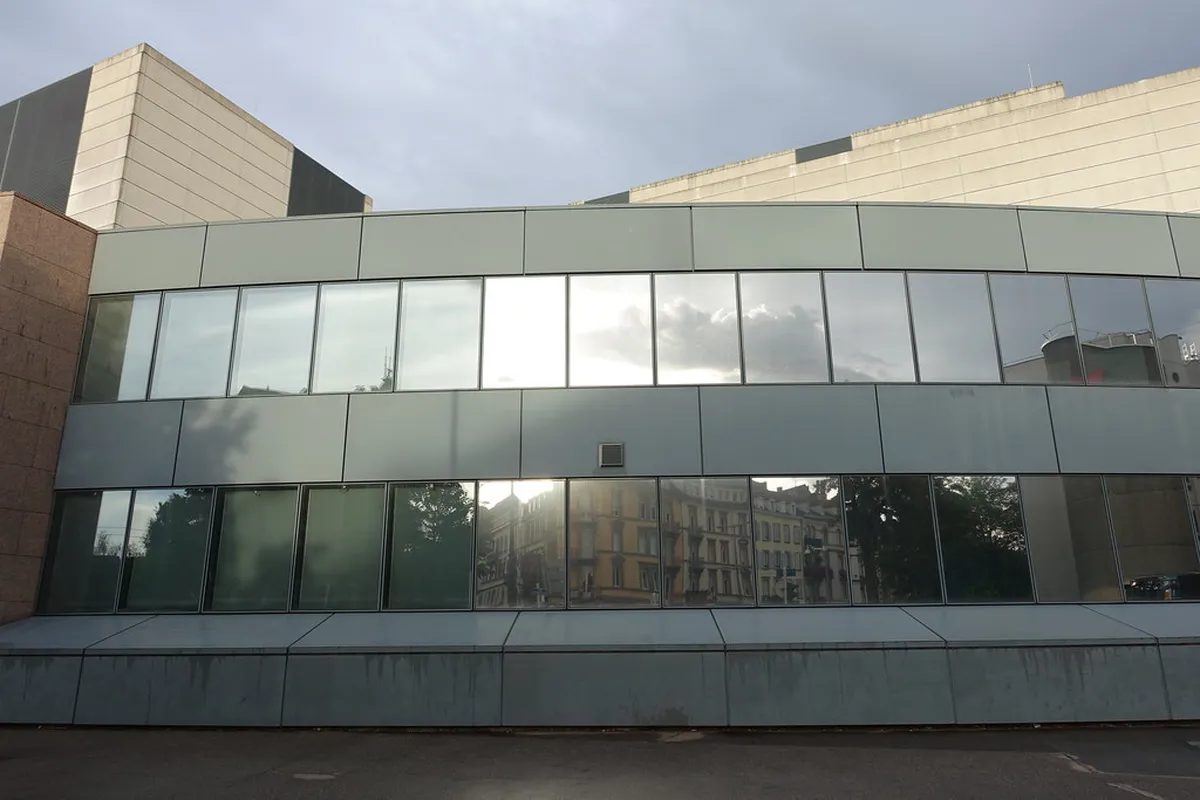
The material palette of MAMCS is both simple and effective. Pink granite covers large portions of the external facade. This stone pays homage to the famous Strasbourg Cathedral. It links the modern building to the city's ancient roots.
Steel and glass provide a sharp contrast to the solid stone. These industrial materials reflect the museum's focus on contemporary art. Large glass walls allow natural light to flood the interiors. This creates a bright and airy atmosphere for visitors.
Concrete is used internally to provide a neutral backdrop. The gray walls allow the artwork to stand out clearly. It also gives the museum a raw and honest character. Many 2025 visitors appreciate this minimalist and modern aesthetic.
Metal accents appear on the ceilings and support structures. These details highlight the engineering skill behind the museum's construction. The combination of materials ensures the building is durable and functional. It handles high visitor numbers without showing much wear.
The textures of the materials vary across the building. Polished stone surfaces sit next to rough concrete walls. Glass reflects the sky and the river outside the museum. This interplay of textures adds depth to the visual experience.
The Nave: A Central Architectural Spine
A massive central nave serves as the heart of MAMCS. It is 104 meters long and very high. This glass-roofed corridor connects all parts of the museum. It functions as an internal street for the public.
The nave provides a clear sense of orientation for visitors. You can easily find the different gallery wings from here. It also houses the museum shop and a library. This space is always free to enter for everyone.
Light is the most important element within the central nave. The glass roof lets in changing light throughout the day. This creates a dynamic environment that feels different every hour. It is a favorite spot for many architecture photographers.
Sculptures are often displayed within this grand corridor. The scale of the nave allows for very large artworks. It provides a transition between the city and the galleries. The design makes the art feel integrated into daily life.
The nave also offers views of the outdoor terrace. This connection to the outside world is a key feature. It prevents the museum from feeling like a closed box. People feel relaxed while moving through this spacious architectural spine.
Interior Gallery Layout and Lighting Logic
The galleries are organized into two distinct levels. One level focuses on modern art from the past. The other level showcases contemporary works from the present day. This logical layout helps visitors understand art history better.
Room sizes vary to accommodate different types of art. Some rooms are intimate for small sketches or photos. Other galleries are massive for large-scale installations and paintings. This flexibility is essential for Strasbourg architecture museums and exhibitions today.
Natural light is carefully controlled in the gallery spaces. Skylights provide soft illumination from above the art. Blinds and filters protect delicate works from sun damage. The lighting design ensures that art looks its best.
The flow between galleries is smooth and intuitive. There are no dead ends in the museum's primary circuit. Visitors can wander through the history of art without getting lost. The architecture guides you through the collection naturally.
White walls and wooden floors create a calm environment. These classic museum elements provide a sense of timelessness. They allow the colors of the art to remain dominant. The interior design supports the museum's educational mission perfectly.
Integration with the River and Urban Context
The museum sits directly on the banks of the Ill. Its long facade follows the curve of the water. This placement makes the building look like a ship. It connects the architecture to Strasbourg's maritime history.
Large terraces overlook the river and the old town. These outdoor spaces provide stunning views for museum guests. They are perfect for relaxing during a long art visit. The integration with nature is a highlight of the design.
The building helps bridge the gap between two neighborhoods. It sits between the historic center and modern suburbs. The museum acts as a cultural anchor for the area. It has transformed the waterfront into a vibrant public zone.
Pedestrian paths lead directly to the museum's front door. These paths connect with the city's extensive cycling network. Accessing the museum is easy for locals and tourists alike. The design promotes sustainable urban mobility in 2025.
The reflection of the building in the water is beautiful. At night, the museum glows like a glass lantern. This visual effect enhances the city's evening skyline significantly. It is a landmark that defines modern Strasbourg.
Practical Details for Your 2025 Visit
MAMCS is open every day except for Mondays. Standard adult tickets cost about 10 Euros in 2025. Discounts are available for students and large groups. Check the official website for special exhibition pricing.
The museum is located at 1 Place Hans-Jean-Arp. You can reach it easily by tram lines B or C. The stop is called Musee d'Art Moderne. It is a short walk from the central station.
- Opening Hours: 10:00 AM to 6:00 PM
- Café Art: Located on the top floor with views
- Accessibility: Full elevator access for all visitors
- Free Entry: First Sunday of every month
The rooftop terrace is a must-see part of the building. It offers panoramic views of the entire city center. You can see the cathedral spire from this high point. It is a great place to end your tour.
The museum shop offers unique books and design objects. Many items focus on the architecture of the building itself. You can find high-quality posters and local art guides. It is a great place to buy a souvenir.
Frequently Asked Questions
Who is the architect of the MAMCS in Strasbourg?
The museum was designed by French architect Adrien Fainsilber. He is famous for creating the Cité des Sciences in Paris. His work focuses on light and industrial materials. He completed the MAMCS project in 1998.
What are the main materials used in the museum?
The building uses pink granite, glass, and reinforced concrete. The stone matches the historic cathedral in the city. Glass walls provide transparency and natural light. Steel frames support the large central nave structure.
How long does it take to see the architecture?
You should plan for at least two hours. This time allows you to explore the central nave. You can also walk through the various gallery wings. Don't forget to visit the rooftop terrace for views.
Is the museum accessible for people with mobility issues?
Yes, the building is fully accessible for all guests. It features wide corridors and large modern elevators. Ramps are provided at the main entrance area. The staff is helpful with any specific needs.
The MAMCS is a masterpiece of modern design in France. It successfully blends industrial materials with traditional stone. This MAMCS museum architecture analysis shows its lasting value. Visit this iconic site in 2025 to experience it yourself.
Key Takeaways
- Adrien Fainsilber used pink granite to match the local cathedral style.
- The 104-meter long central nave acts as a public glass street.
- The building perfectly integrates with the river and historic city center.
- Natural light is the primary design element in the gallery spaces.
Related reads: architecturebycity.com, strasbourg tgv station glass canopy design, le vaisseau strasbourg building design.