
Richard Rogers European Court of Human Rights Guide
Explore the Richard Rogers European Court of Human Rights in Strasbourg. Discover its bold 2025 design features and get expert visiting tips in this guide.
On this page
The Richard Rogers European Court of Human Rights is a masterpiece of modern design in France. This iconic building stands as a powerful symbol of justice and transparency for all citizens. It reflects the democratic values of the institutions it houses within the beautiful city of Strasbourg. This guide explores the architectural brilliance of the site for your 2025 travel plans.
Richard Rogers designed this structure to look both inviting and highly functional for the judges. The building uses light and space to create an atmosphere of openness for the public. It is a key highlight for anyone interested in contemporary architecture in Strasbourg today. The following sections will detail the history and unique features of this metallic landmark.
Designing the Richard Rogers European Court of Human Rights
Richard Rogers applied his signature high-tech style to this significant judicial project in the nineties. He believed that public buildings should express their internal functions through their external physical forms. The project was completed in 1995 and immediately gained international acclaim for its bold aesthetic. It remains one of the most recognizable works in the portfolio of the Rogers partnership.
The architect focused on using industrial materials like stainless steel and transparent glass for construction. These materials create a sleek look that contrasts beautifully with the natural greenery nearby. Rogers wanted to avoid the traditional, intimidating look of older European courthouses and legal centers. His design emphasizes a spirit of accessibility and democratic participation for every single visitor.
The structure consists of two main parts that serve different administrative and judicial purposes. One section houses the courtrooms while the other contains the offices for the legal staff. This clear division of space helps the building function efficiently during busy daily operations. Every element of the layout was carefully planned to support the work of the judges.
Natural light plays a vital role in the design of the interior working spaces. Large windows allow sunlight to flood the rooms and provide views of the river. This connection to the outside world helps create a healthy environment for the employees. Rogers always prioritized the well-being of the people who would use his finished buildings.
The Symbolic Meaning of the Metallic Drums
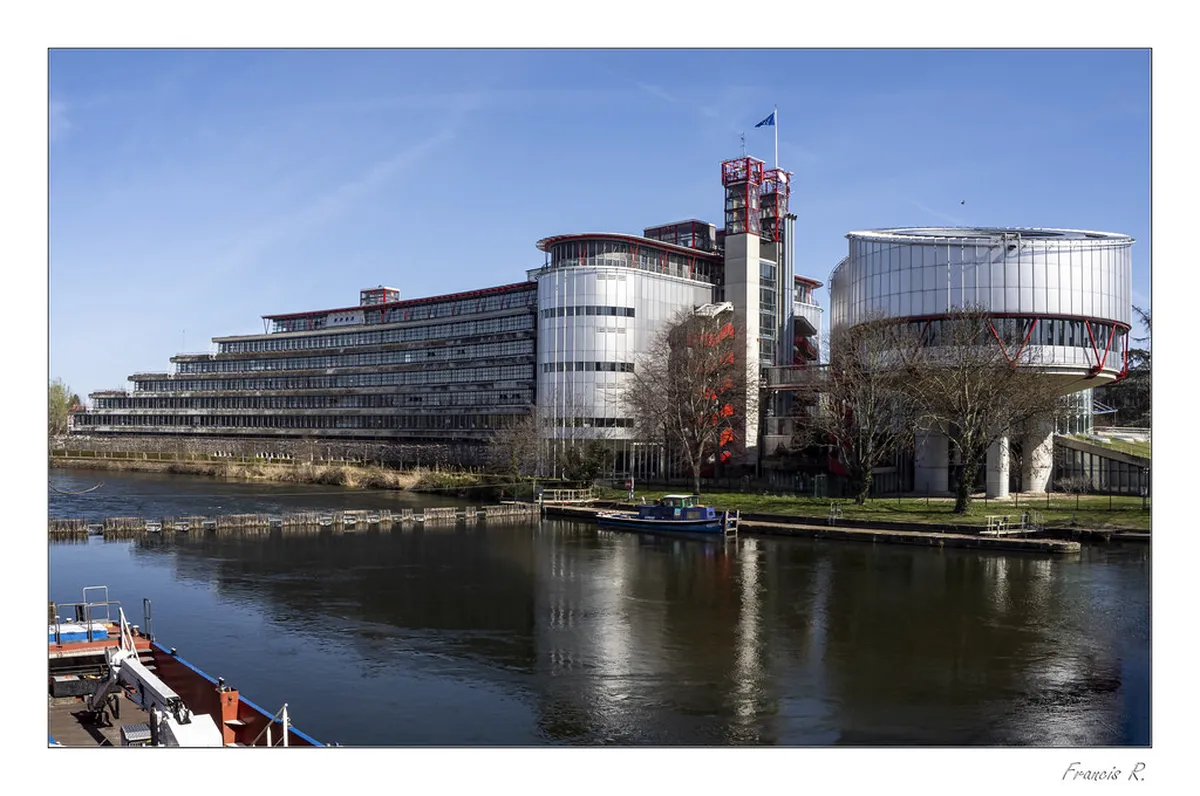
The two massive circular drums are the most striking visual features of the entire complex. These metallic cylinders house the main courtrooms where important legal hearings take place every day. They are clad in shimmering stainless steel that reflects the sky and the water. This choice of material ensures the building looks modern and clean in all weather conditions.
The circular shape of the drums symbolizes the equality of all nations before the law. Architects often use geometric forms to convey deep philosophical ideas through their structural work. In this case, the circles represent a balanced and fair system of international human rights. This powerful imagery is intentional and helps define the purpose of the court itself.
These drums appear to float above the ground because they are supported by narrow pillars. This design choice gives the heavy steel structures a surprising sense of lightness and grace. It creates a visual tension that draws the eye toward the center of the site. Visitors often stop here to admire the engineering required to achieve such a unique look.
Inside the drums, the courtrooms are designed to be acoustically perfect for legal proceedings. The interiors use warm wood finishes to provide a sense of dignity and calm focus. This contrast between the cold exterior steel and warm interior wood is a masterstroke. It creates a professional yet welcoming environment for the high-level judicial debates held here.
Strasbourg European Quarter Architecture Context
The court is a vital part of the European Quarter architecture Strasbourg collection of modern buildings. It sits near other famous structures like the Council of Europe and the European Parliament. These buildings together form a modern district that represents the unity of the European continent. Each structure brings a unique architectural voice to this important diplomatic area of the city.
The court building neighbors the European Parliament building Louise Weiss design which also features curved lines. Both architects used glass and steel to promote a feeling of institutional transparency and honesty. This shared design language helps unify the district despite the different functions of each building. They represent a departure from the traditional stone architecture found in the historic city center.
Walking through the European Quarter allows visitors to see the evolution of modern structural engineering styles. You can see how architects have adapted their designs to meet the needs of international organizations. The area is very walkable and offers many great spots for fans of urban design. It is a stark contrast to the medieval half-timbered houses found in other districts.
The integration of these modern buildings into the landscape was a major urban planning achievement. They sit along the banks of the Ill River and are surrounded by lush public parks. This mix of high-tech steel and soft green nature makes the area very attractive. It is a perfect example of how modern cities can grow while respecting natural beauty.
Materials and Construction Techniques Used
The construction of the court required advanced engineering and high-quality materials from across the region. Builders used over 2,500 tons of structural steel to create the framework for the complex. This steel provides the strength needed for the large spans and unique shapes of the drums. It also allows for the large glass surfaces that define the building's outer facade.
The stainless steel cladding was chosen for its durability and its ability to resist local weather. Strasbourg experiences a range of temperatures that can be hard on traditional building materials over time. Stainless steel remains bright and does not rust even after decades of exposure to the rain. This ensures the building will continue to look impressive for many generations to come.
Glass is another essential material that defines the character of the Richard Rogers project here. High-performance glazing helps regulate the temperature inside the offices and courtrooms throughout the year. It allows for transparency while maintaining the privacy needed for sensitive legal and judicial work. The glass panels were manufactured to strict specifications to ensure safety and energy efficiency.
Concrete was used for the foundations and the lower levels of the building for stability. These heavy bases are mostly hidden from view to maintain the lightweight appearance of the structure. The combination of concrete, steel, and glass creates a balanced and highly resilient architectural system. This technical precision is a hallmark of the Richard Rogers Partnership architectural style.
Environmental Sustainability and Innovation
Richard Rogers incorporated several sustainable features into the court building long before it became a trend. The design uses natural ventilation systems to reduce the need for expensive air conditioning units. Fresh air circulates through the offices using a system of controlled vents and high ceilings. This approach lowers energy consumption and improves the air quality for the people working inside.
The building also utilizes the nearby river water for its innovative cooling and heating systems. This geothermal approach is highly efficient and takes advantage of the local natural resources available. It demonstrates how high-tech buildings can work with the environment rather than against it daily. Many modern architects still visit this site to study these early sustainable design choices.
Natural light is maximized throughout the day to reduce the reliance on artificial electrical lighting systems. The orientation of the building helps capture the best sunlight during the cold winter months. This design choice helps lower the carbon footprint of the facility while improving worker productivity. It shows that good design can be both beautiful and environmentally responsible for society.
The surrounding landscape was also designed to support the local ecology and manage rainwater runoff. Large green spaces help absorb water and provide a habitat for local birds and insects. These parks are open to the public and offer a peaceful escape from the city. Rogers believed that the area around a building was just as important as the structure.
Frequently Asked Questions
Where is the European Court of Human Rights located?
The building is located at Allée des Droits de l'Homme in the city of Strasbourg. You can reach it easily by taking tram line E to the Robertsau Boecklin stop. It is situated right in the heart of the modern European Quarter district.
Can I tour the inside of the Richard Rogers building?
Public tours of the interior are generally restricted to pre-booked groups and legal professionals. However, you can attend public hearings if you register on the official website in advance. Most visitors enjoy the architecture by walking around the exterior paths and the river.
When was the European Court of Human Rights building completed?
The building was officially completed and inaugurated in 1995 after several years of construction. It was designed by the Richard Rogers Partnership to replace an older and smaller facility nearby. It has since become a landmark of modern architecture in eastern France.
What are the best photography spots for this building?
The best views are from the bridge on Quai Ernest Bevin across the Ill River. This spot allows you to capture the reflection of the steel drums in the water. Late afternoon light provides the best illumination for the stainless steel panels in 2025.
The Richard Rogers European Court of Human Rights is a true icon of modern structural design. Its use of steel and glass creates a sense of transparency that is perfect for justice. Visiting this site in 2025 offers a unique look at the future of civic architecture. Be sure to explore the nearby parks for the best views of the metallic drums. You will leave with a deep appreciation for the genius of Richard Rogers and his team.
Key Takeaways
- The building was designed by Pritzker Prize winner Richard Rogers in 1995.
- Two large stainless steel drums symbolize equality and house the main courtrooms.
- It is a key part of the modern European Quarter architecture in Strasbourg.
- Sustainable features include natural ventilation and river-based cooling systems.
- The best public views are found from the river bridges and surrounding parks.
Related reads: architecturebycity.com, architecture in strasbourg, palais de leurope brutalist elements.