
Viollet-le-Duc Restoration in Avignon Guide
Explore the Viollet-le-Duc restoration in Avignon. Learn about his work on the city walls and ramparts today. Visit these historic French sites in 2025!
On this page
Eugène Viollet-le-Duc was a pivotal figure in the 19th-century restoration of French medieval monuments. His work in Avignon focused heavily on the preservation of the city's ancient defensive structures. He approached each project with a unique blend of architectural expertise and historical imagination. In 2025, his influence remains visible across the sturdy stone fortifications that surround the old city center.
This Viollet-le-Duc restoration in Avignon saved several sections of the historic walls from total ruin. Many historians credit his intervention with maintaining the city's cohesive medieval aesthetic for future generations. Visitors today can see his distinct style in the crenellations and towers along the main circuit. His philosophy shaped how we view the intersection of military history and modern urban preservation.
Viollet-le-Duc’s Vision for Medieval Restoration
Viollet-le-Duc believed restoration meant returning a building to a state of completeness that never actually existed. He studied medieval construction techniques to understand the logic of 14th-century master masons and architects. This approach often prioritized the visual integrity of a monument over its raw archaeological history. In Avignon, he applied these principles to the extensive network of stone walls built by the Popes.
The architect was commissioned during a time when many medieval structures faced demolition for urban expansion. He argued that the ramparts were not just old walls but essential pieces of national identity. His sketches from the 1860s reveal a deep fascination with the geometry of Gothic military architecture. These detailed drawings provided the blueprint for his extensive work on the city's outer defensive perimeter.
His work reflects the 19th-century Romantic movement which celebrated the grandeur of the French middle ages. Critics sometimes argued that his restorations were too perfect or lacked the grit of historical reality. However, his technical skills ensured that these massive structures could survive the heavy vibrations of modern traffic. Today, his structural reinforcements continue to support the weight of the massive limestone blocks and parapets.
Modern preservationists in 2025 still debate the merits of his highly interventionist restoration style and techniques. While some prefer a more conservative approach, others admire the heroic scale of his architectural achievements. Viollet-le-Duc successfully bridged the gap between decaying ruins and vibrant, functional city landmarks for everyone to see. His legacy in Avignon is a testament to the power of dedicated architectural preservation and vision.
The Restoration of the Avignon City Walls and Ramparts
The Viollet-le-Duc restoration in Avignon primarily targeted the northern and western sections of the city fortifications. These areas were particularly vulnerable to erosion from the nearby Rhône River and neglect over several centuries. He focused on repairing the foundations and recreating the lost battlements that once protected the papal seat. This project ensured that the Avignon city walls and ramparts remained a continuous loop around the city center.
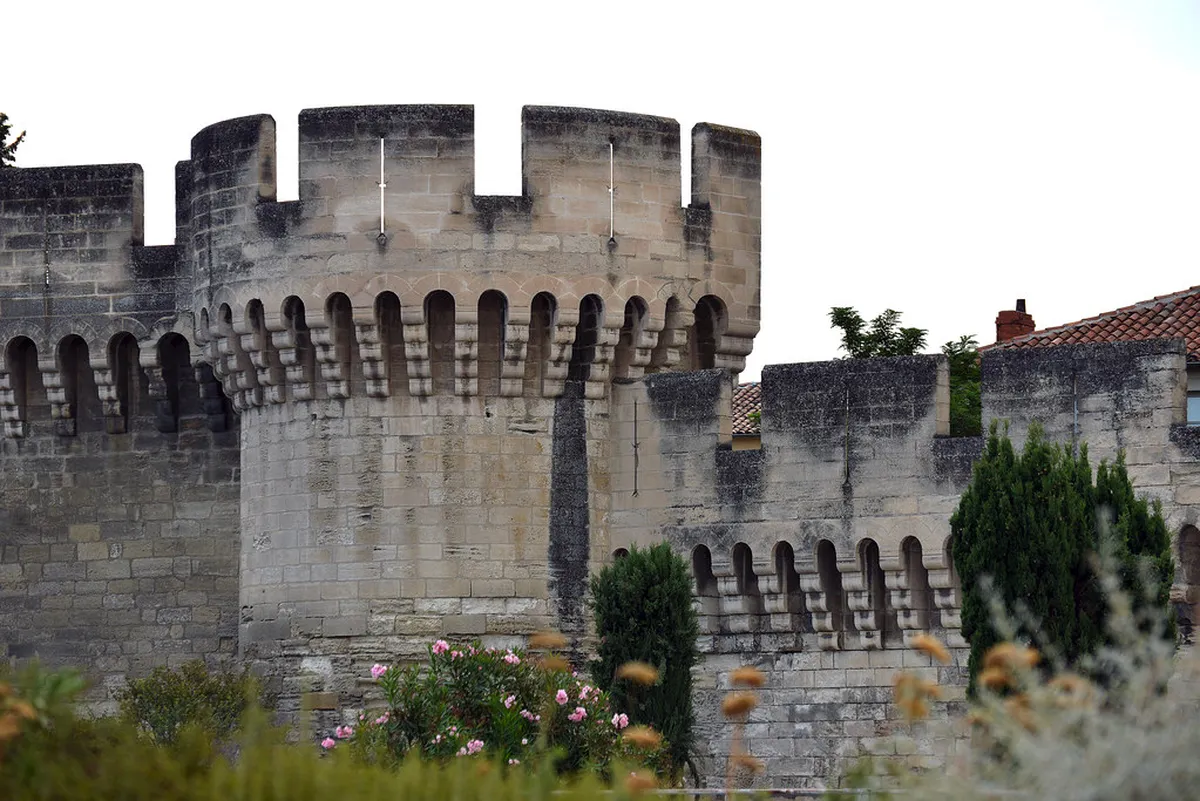
He used local limestone to match the original color and texture of the medieval masonry as closely as possible. The restoration included the addition of distinctive machicolations and decorative stonework that emphasize the city's power. Visitors can observe how he harmonized the 14th-century base with his 19th-century structural and stylistic additions. Each stone was carefully chosen to withstand the harsh Mistral winds that frequently sweep through the valley.
The project cost several million francs during the 1800s and took years of meticulous labor to complete fully. Workers had to balance the need for modern road access with the preservation of the historic wall layout. Viollet-le-Duc successfully negotiated these urban needs while maintaining the dramatic visual impact of the fortified enclosure. His work allows us to walk along the same paths used by medieval guards many centuries ago.
Many of the towers seen today were partially rebuilt or reinforced under his direct supervision and guidance. He added slate roofs to several towers to protect the internal wooden structures from dampness and decay. These roofs became a signature element of his style across many different restoration sites in southern France. The resulting silhouette is one of the most photographed features of the Avignon skyline in 2025.
Revitalizing the Fortified Gates of Avignon
The architect paid special attention to the fortified gates of Avignon city center during his extensive renovation. Gates like the Porte de l'Oulle were modified to allow for easier passage while retaining their defensive character. He often restored the drawbridge mechanisms and heavy iron portcullises that had long since fallen into disrepair. These elements provide a tangible link to the city's history as a heavily guarded papal stronghold.
Viollet-le-Duc wanted these gateways to serve as grand entrances for people arriving from the countryside or river. He added ornamental crests and heraldic symbols that reflected the history of the various popes and kings. This attention to detail transformed functional military checkpoints into impressive works of public art and civic pride. The gates now serve as the primary entry points for tourists exploring the historic district today.
Restoring these gates required a deep understanding of how medieval soldiers actually defended the city during a siege. He studied the placement of arrow slits and murder holes to ensure his restorations were historically plausible. These features were not just for show but represented the peak of medieval military engineering and design. Visitors can still see these defensive details when walking through the heavy stone arches of the city.
During 2025, several of these gates host small historical exhibitions about the 19th-century restoration process itself. These displays show the before and after photographs of the structures before Viollet-le-Duc began his work. Seeing the original state of the ruins highlights the massive scale of the architectural transformation he achieved. It is a fascinating look into the birth of modern heritage management in Western Europe.
Impact on Avignon’s Medieval Military Defense Systems
Viollet-le-Duc was an expert in the evolution of medieval military defense systems in Avignon and elsewhere. He understood that the ramparts were part of a complex network of ditches, towers, and internal passageways. His restoration work highlighted the strategic importance of the city's location on the banks of the Rhône River. He sought to preserve the psychological impact of the walls as much as their physical stone structures.
The architect reinforced the internal walkways, known as the Chemin de Ronde, for structural stability and public safety. These paths allowed the papacy to move troops quickly between different sectors of the city during times of conflict. By strengthening these corridors, he allowed modern visitors to experience the tactical advantages of the high vantage points. The views from the top of the ramparts offer a clear perspective on the city's layout.
He also addressed the drainage issues that had caused many sections of the lower walls to crumble over time. New gutter systems and water channels were integrated into the stonework to prevent future water damage from rain. This practical engineering was just as important as the aesthetic choices he made for the exterior facade. These hidden improvements have allowed the walls to survive into the 21st century with minimal structural failure.
His work on the moats and outer embankments helped define the modern boundary of the UNESCO World Heritage site. While the moats are now mostly filled with roads or gardens, their historical footprint remains quite visible. Viollet-le-Duc ensured that the transition between the old city and the new suburbs was clearly marked by history. His influence extends beyond the stone to the very way the city has grown and developed.
Visiting the Restored Ramparts in 2025
Exploring the work of Viollet-le-Duc is a must for any architecture enthusiast visiting Avignon in 2025. The main entrance to the accessible rampart walk is located near the famous Pont d'Avignon and the Garden. Admission for the high-level walk typically costs between 5 and 8 Euros for an adult ticket. Walking the four-kilometer perimeter at ground level is free and offers excellent views of the restored masonry.
Most sections of the walls are open to the public from 9:00 AM until 6:00 PM daily. It is best to visit in the early morning to avoid the heat and the largest tourist crowds. Wear comfortable walking shoes as the stone paths can be uneven and steep in several different locations. The route provides incredible photo opportunities of the Palais des Papes and the surrounding Provencal countryside.
You can find the most impressive examples of his restoration work near the Porte de la République entrance. This area showcases the grand scale and decorative precision that the architect brought to the entire Avignon project. Informational plaques are located at various points along the wall to explain the specific architectural features you see. These signs often include diagrams showing the medieval layers beneath the 19th-century stone restoration work.
Local tour guides offer specialized architectural walks that focus specifically on the 19th-century interventions in the city. These tours provide deep insights into the controversy and praise that followed Viollet-le-Duc throughout his long career. Booking a tour in advance is recommended during the busy summer months of July and August. Discovering the hidden details of the walls will give you a new appreciation for Avignon's enduring stone heritage.
Frequently Asked Questions
What was the main goal of the Viollet-le-Duc restoration in Avignon?
The main goal was to preserve and complete the city's medieval defensive walls. He wanted to save the structures from urban decay and provide a cohesive historical appearance. His work ensured the ramparts remained a permanent fixture of the city's landscape.
Can you walk on the Avignon city walls today?
Yes, visitors can walk along several sections of the upper ramparts for a small fee. The ground-level path around the entire four-kilometer circuit is also available for free. It is a great way to see the architectural details up close in 2025.
How did Viollet-le-Duc change the look of the Avignon ramparts?
He added crenellations, machicolations, and pointed roofs to many of the towers along the wall. These additions gave the walls a more finished and dramatic medieval appearance than they had previously. His style emphasized the military grandeur of the 14th-century papal era.
Where is the best place to see his work in Avignon?
The areas near the Porte de l'Oulle and the Porte de la République offer the best views. These sections showcase his extensive repairs and the stylistic choices he made for the gates. You can see the blend of original stone and 19th-century restoration clearly here.
The Viollet-le-Duc restoration in Avignon remains a landmark achievement in the field of historic preservation. His visionary work protected the city's soul while allowing it to adapt to the modern era's needs. Visitors in 2025 can experience a unique blend of 14th-century power and 19th-century architectural passion. Plan your walk along the ramparts today to witness this incredible stone legacy in person.
Key Takeaways
- Viollet-le-Duc saved the Avignon ramparts from potential 19th-century demolition and decay.
- The restoration added iconic architectural features like machicolations and tower roofs to the city walls.
- Visitors can walk the 4km wall circuit to see the 19th-century masonry and military designs.
- The project successfully integrated medieval military history with modern urban planning and city preservation.
- A small fee is required to access the upper walkway near the Jardin des Doms.
Related reads: architecturebycity.com, architecture in avignon, palais des papes architecture.