
Carcassonne Hoarding Galleries History Guide
Learn about Carcassonne hoarding galleries history. Discover medieval defense secrets and tips for your 2025 visit in our guide. Book your tour now!
On this page
Carcassonne stands as a crown jewel of medieval military architecture in southern France. Its massive double walls hold many secrets of ancient warfare. The Carcassonne hoarding galleries history reveals how defenders protected these stone walls from invaders. These wooden structures offered a critical advantage during long sieges. Today, visitors can still see reconstructions of these unique defensive features. They provide a fascinating look into the ingenuity of medieval engineers. Exploring these ramparts helps us understand the brutal reality of historical combat.
The Function of Medieval Wooden Hoardings
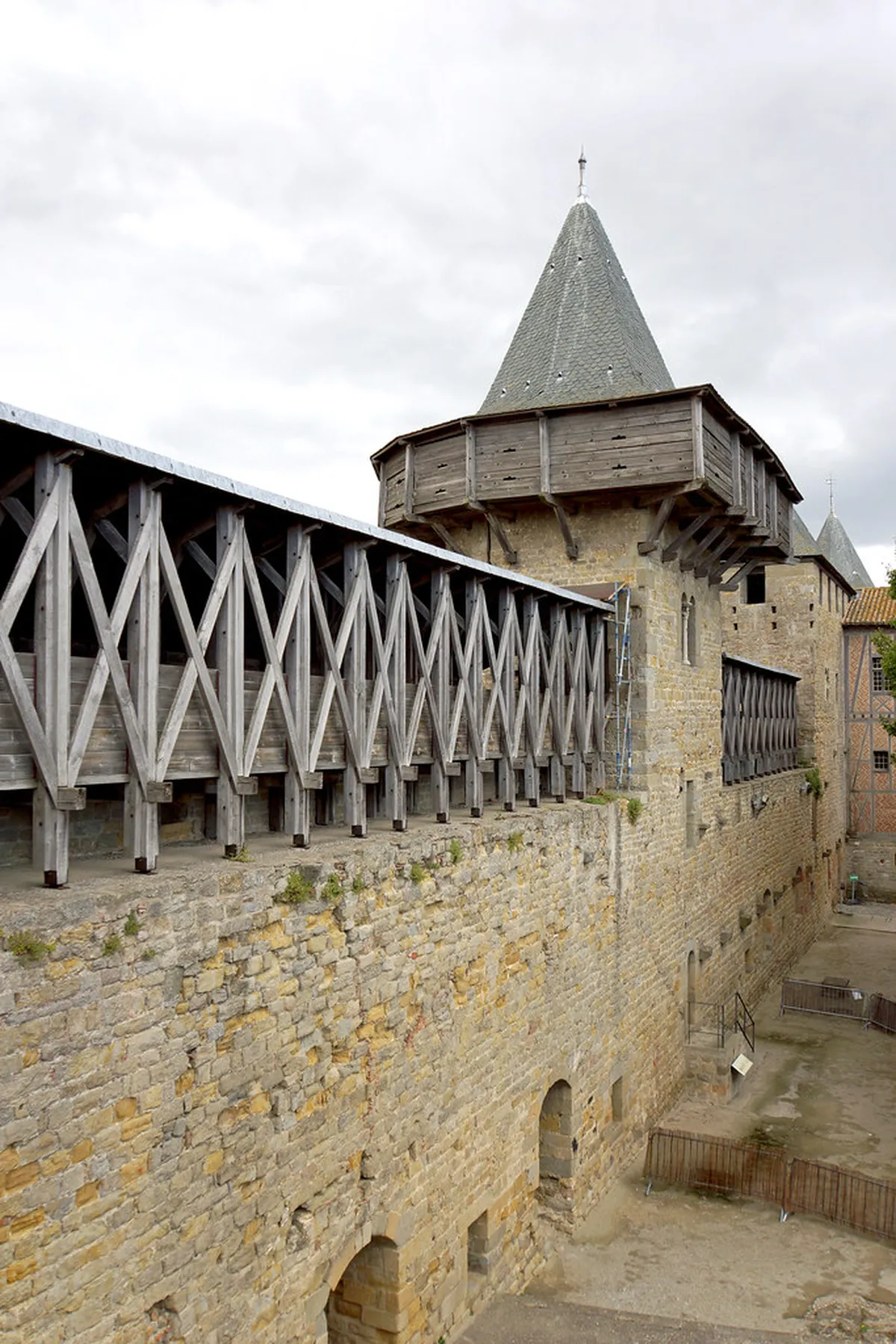
Hoardings were temporary wooden galleries attached to the top of castle walls. They allowed defenders to see the base of the fortifications safely. Without them, soldiers had to lean over the battlements to see enemies. This movement often exposed them to enemy fire from below. Hoardings solved this problem by providing a covered walkway outside the wall. These structures were essential for dropping heavy objects on attackers. They also allowed archers to fire directly downward through specialized floor slots.
Medieval builders designed these galleries to be removable during times of peace. They typically sat on large wooden beams called joists. These beams fitted into square holes in the stone masonry. You can still see these holes, known as putlog holes, across the Cité walls. The galleries protected the stone curtains from being undermined by miners. They effectively removed the blind spots at the wall's foot. This made the Cité de Carcassonne fortifications nearly impossible to breach by direct assault.
Defenders used various projectiles from within these wooden corridors. They dropped large stones, boiling liquids, or heavy beams on the enemy. The wooden walls of the hoarding protected them from returning arrows. Some hoardings were even covered in wet animal hides to prevent fire. Fire was the greatest threat to these wooden defensive systems. Attackers often tried to launch flaming projectiles to burn them down. Despite this risk, the tactical advantages far outweighed the dangers for the garrison.
Architectural Design and Construction Materials
The construction of hoardings required high-quality timber and skilled carpentry. Medieval builders in France preferred oak or pine for these structures. Oak provided great strength and resistance to rotting over time. The galleries were often pre-fabricated on the ground before a siege. This allowed for rapid assembly when an enemy army approached the city. Carpenters used complex joints and iron nails to secure the heavy frames. The resulting structure was robust enough to hold many fully armed soldiers.
- Support Beams: Heavy horizontal timbers that projected out from the stone.
- Plank Flooring: Thick wooden boards with gaps for vertical defense.
- Protective Roofing: Sloped wooden roofs to deflect arrows and rain.
- Shutters: Hinged wooden panels that could be opened for shooting.
The weight of the hoarding was balanced against the thick stone walls. Beams were anchored deep into the masonry for maximum stability. This design allowed the gallery to hang over the edge safely. The walkway was wide enough for two soldiers to pass each other. It created a continuous defensive ring around the most vulnerable sections of the city. Modern reconstructions use traditional methods to show this incredible medieval engineering.
Visitors in 2025 can observe the precise spacing of the support holes. Each hole correlates to a specific defensive position on the ramparts. The scale of these wooden works was truly massive in Carcassonne. They covered miles of stone walls during the height of the medieval period. This layer of wood added a softer look to the harsh stone fortress. It serves as a reminder of the evolving nature of military technology.
Viollet-le-Duc and the 19th-Century Restorations
Carcassonne would look very different today without the work of Eugène Viollet-le-Duc. In the 19th century, the city was in a state of terrible ruin. Many of the original wooden features had long since rotted away. Viollet-le-Duc conducted extensive research to understand the original medieval layout. He aimed to restore the city to its 13th-century glory. His work on the Viollet-le-Duc Carcassonne restoration remains famous among architects today.
The architect reconstructed several sections of the wooden hoardings to show their function. He used the existing putlog holes to determine the exact placement. Some critics argue his restorations were more idealistic than purely historical. However, his work saved the city from total destruction by the government. He believed that architecture should represent the spirit of its most important era. This philosophy guided his reconstruction of the defensive galleries and tower roofs.
Viollet-le-Duc used the hoardings to tell a story of medieval defense. He ensured the new timber was treated to survive the modern climate. You can see these reconstructed hoardings near the Narbonnaise Gate today. They give the walls a complete and intimidating appearance for modern tourists. The contrast between the dark wood and golden stone is visually striking. These structures help us visualize how the city appeared to medieval knights.
The Transition from Wood to Stone Machicolations
As siege technology improved, wooden hoardings eventually became obsolete. The invention of more powerful fire-based weapons made wood too dangerous. Architects began to build permanent defensive galleries out of solid stone. These structures are known as machicolations and are built into the wall. They served the same purpose as hoardings but were fireproof. You can see the transition between these styles throughout the Carcassonne walls. Some towers retain the holes for wood, while others feature stone corbels.
Stone machicolations were much heavier and more expensive to construct. They required skilled stonemasons instead of just carpenters for the project. The design usually featured decorative stone brackets supporting the overhanging parapet. This change reflected the increasing wealth and power of the French crown. Stone provided a permanent solution that did not require maintenance every few years. It also allowed for more elaborate defensive designs on the towers.
Carcassonne is unique because it displays both defensive styles in one location. This makes it a living museum of military architectural evolution. Scholars study these transitions to understand the timeline of medieval warfare. The shift to stone happened gradually over several decades in the late Middle Ages. By the 15th century, most major fortresses had moved away from wooden galleries. Carcassonne stands as a rare place where wood still plays a role.
Practical Tips for Visiting the Ramparts in 2025
A visit to the fortifications is a highlight of any trip to France. To see the hoardings, you must purchase a ticket for the rampart walk. This ticket allows access to the inner wall and the Count's Castle. Plan for at least two hours to explore the entire defensive circuit. The views of the surrounding countryside from the galleries are truly spectacular. Wear comfortable walking shoes as the stone steps are often uneven and steep.
The best time to visit the walls is early in the morning. This helps you avoid the large tour groups that arrive by midday. Summer temperatures in Carcassonne can reach over 30°C (86°F) quite easily. Bringing water and a hat is essential for your comfort on the walls. Many visitors enjoy visiting the Carcassonne ramparts during the golden hour before sunset. The lighting makes the wooden hoardings and stone walls glow beautifully for photos.
Tickets for the ramparts cost approximately 11 Euros for adults in 2025. Children and students often receive discounted entry or free admission. You can book your tickets online to skip the long ticket lines. The walk is not wheelchair accessible due to the many historical stairs. However, the ground-level views of the hoardings are still very impressive. Don't forget to visit the museum inside the castle for more details.
Frequently Asked Questions
What exactly were hoarding galleries used for in medieval times?
Hoarding galleries were wooden balconies built on top of castle walls. They allowed defenders to drop stones and fire arrows at enemies below. They protected soldiers from being seen by attackers during a siege. These structures were essential for covering the blind spots at the wall base.
Are the wooden hoardings in Carcassonne original from the Middle Ages?
The current wooden hoardings are detailed reconstructions from the 19th century. The original medieval wood rotted away hundreds of years ago. Architect Viollet-le-Duc rebuilt them using historical evidence and existing beam holes. They accurately represent how the city looked during the 13th century.
Why did they use wood instead of stone for the early galleries?
Wood was much faster and cheaper to build than heavy stone structures. It could be assembled quickly when an enemy was spotted nearby. Builders could also remove the wood during times of peace to save costs. Later, stone machicolations replaced them because wood was too vulnerable to fire.
Can I walk inside the hoardings at Carcassonne today?
Yes, visitors can walk through some of the reconstructed hoarding sections. You must buy a ticket for the rampart walk to access these areas. It provides a unique perspective of the defensive systems from a soldier's view. Be sure to check the official site for seasonal opening hours.
The Carcassonne hoarding galleries history is a testament to medieval defensive genius. These wooden structures turned the city walls into a deadly vertical battlefield. Understanding their design helps us appreciate the complexity of ancient military life. Visit the ramparts today to see these incredible reconstructions for yourself. Explore the history of the Cité and book your walking tour today for an unforgettable experience.
Key Takeaways
- Hoarding galleries were wooden balconies used for vertical defense.
- The square holes in the walls are called putlog holes.
- Viollet-le-Duc restored the galleries during the 19th century.
- Stone machicolations eventually replaced wood to prevent fire damage.
Related reads: architecturebycity.com, architecture in carcassonne, double wall defense system architecture.