
Guide to the Cité de Carcassonne Fortifications
Visit the Cité de Carcassonne fortifications in 2025 to see Europe's largest double-walled fortress. Learn about history, architecture, and planning tips today!
On this page
The legendary Cité de Carcassonne fortifications stand today as a true marvel of medieval engineering and design. This massive fortress overlooks the modern city from a strategic hilltop in the scenic Aude region. Visitors traveling in 2025 will discover one of the most complete medieval defensive structures in the world. Walking along these ancient walls offers a unique perspective on the long military history of southern Europe.
Learning about the diverse architecture in Carcassonne helps travelers appreciate the complex layers of this historic landmark. The city remains a prime example of how different cultures influenced building styles over many centuries. Each stone and tower tells a story of survival, conquest, and eventual preservation by dedicated architects.
The Origins of the Cité de Carcassonne Fortifications
The history of these walls began with the Roman Empire during the late third century. Engineers built the foundation to protect vital trade routes between the Atlantic and the Mediterranean. You can still find original Roman brickwork at the base of several towers along the circuit. This early masonry provided a solid base for the much taller walls built during later centuries.
After the Roman period, the Visigoths occupied the site and expanded the existing defensive structures. They added more height to the walls to counter new threats from the surrounding mountain passes. These additions ensured that the citadel remained a powerful stronghold throughout the early middle ages in France. The strategic location made the fortress almost impossible to capture during several famous medieval sieges.
The Crusader period brought even more significant changes to the overall layout of the stone defenses. New ruling families added secondary lines of protection to create a more formidable barrier against invading armies. These builders utilized advanced masonry techniques to ensure the walls could withstand the force of heavy projectiles. The result was a massive defensive system that intimidated rivals for hundreds of years.
Today, the site is recognized as a UNESCO World Heritage monument for its historical and architectural value. It represents the pinnacle of medieval military planning and remains a symbol of regional power and pride. Thousands of visitors explore the grounds every year to marvel at the sheer scale of the construction. The site remains a vital part of the French cultural landscape for all generations to enjoy.
Exploring the Double Wall Defense System Architecture
The double wall defense system architecture provides a masterclass in concentric military planning for modern visitors. This unique layout features two distinct rings of stone walls separated by a narrow open space. Defenders could use this corridor to trap enemies who managed to breach the first line of defense. This layout made the fortress nearly impregnable before the widespread use of modern heavy artillery.
The inner wall contains several towers that still reflect the original Roman layout and defensive style. These towers are mostly semi-circular to provide a wider field of view for archers guarding the battlements. The stone masonry shows a mix of local materials gathered from the surrounding hills during different phases. Engineers carefully placed each stone to ensure the structure remained stable during long and difficult military sieges.
The outer wall was added during the thirteenth century to modernize the defenses against new siege engines. This secondary ring of stone significantly increased the difficulty for any army trying to scale the heights. It stands lower than the inner wall to ensure defenders on the inside maintained a height advantage. This clever design choice allowed archers on the inner wall to fire over the outer ring safely.
- Inner Ramparts: The taller primary wall featuring fifty-two massive stone towers for defense.
- The Lices: The flat open space between the two walls used for patrolling and maneuvers.
- Outer Ramparts: The secondary wall added in the 1200s to create a concentric defense system.
The Role of the Count’s Castle in Defense
The Chateau Comtal serves as the central fortress within the larger Cité de Carcassonne fortifications for security. This inner castle contains many unique architectural features like defensive wooden hoarding and a deep surrounding moat. It functioned as the ultimate stronghold for the ruling Trencavel family during the height of regional wars. The castle layout was designed to be self-sufficient during long periods of isolation and enemy blockades.
Builders constructed a bridge and a heavily guarded gatehouse to control access to the castle grounds. This entrance featured multiple portcullises and murder holes to stop attackers from entering the main courtyard. The inner rooms provided luxury for the nobles while maintaining a very high level of military readiness. Every corner of the building served a specific purpose in the overall strategy of the medieval defenders.
The high keep offered a commanding view of the entire valley and the surrounding city of Carcassonne. Sentries could spot approaching armies from miles away and sound the alarm for the garrison to prepare. This early warning system was crucial for the survival of the inhabitants during times of sudden conflict. The castle remains one of the most popular areas for tourists to explore within the main citadel.
Famous Restoration Work by Eugene Viollet-le-Duc
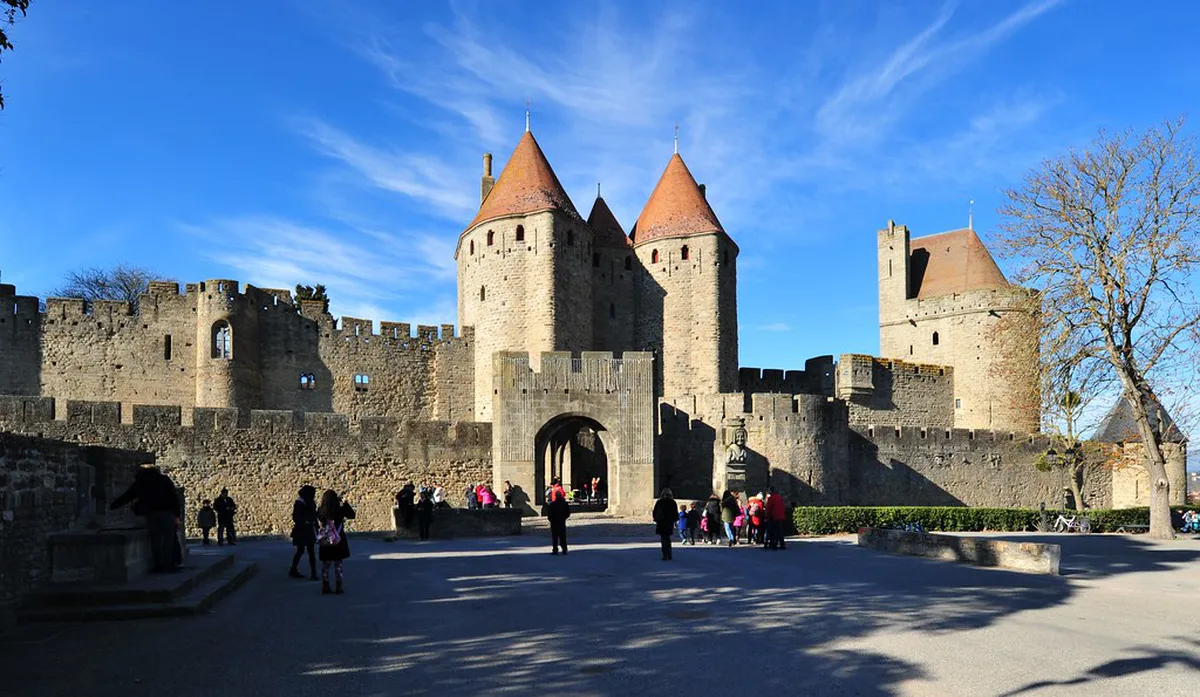
In the nineteenth century, the architect Viollet-le-Duc began a massive restoration to save the crumbling ruins from total destruction. He replaced many of the flat Roman roof tiles with pointed slate roofs common in northern France. Although controversial at the time, his vision preserved the site for future generations of travelers and historians. His work transformed a group of decaying ruins into a beautiful and complete medieval dreamscape.
The restoration project took several decades to complete and required a significant amount of funding and labor. Workers carefully repaired the damaged towers and reinforced the foundations of the massive stone walls across the site. Viollet-le-Duc studied ancient texts to ensure his designs captured the spirit of the original medieval architecture. This dedication to detail helped create the iconic skyline that people recognize from all around the world.
Many modern critics argue that some of the restored elements are not historically accurate to the local region. However, without this intervention, the entire fortress might have been dismantled for use as a local stone quarry. The city honors the architect today with a statue located near the main entrance of the citadel walls. His legacy is inextricably linked to the survival and fame of this historic French landmark.
Essential Tips for Touring the Ancient Ramparts
Exploring the magnificent Carcassonne ramparts requires at least three hours to fully appreciate the scale and complex details. Travelers should wear comfortable walking shoes to navigate the uneven stone paths and steep stairs of the towers. It is best to purchase your tickets online in advance to avoid long queues during the summer. Early morning visits offer the best light for photography and much cooler temperatures for walking the walls.
The walk along the battlements provides stunning panoramic views of the modern town and the distant Pyrenees mountains. You can see how the city expanded beyond the walls into the lower plains over the last century. Be sure to carry a bottle of water as there are few shops located directly on the ramparts. The experience of walking where medieval knights once stood is truly a highlight for any history lover.
Most visitors enter through the Narbonnaise Gate, which features two massive towers and a very heavy drawbridge. This area can get quite crowded, so patience is required during the peak tourist season in late July. Consider visiting in the late afternoon to see the sunset cast a golden glow over the ancient masonry. The lighting makes the entire fortress look like something from a classic fairy tale or an old movie.
Frequently Asked Questions
How many towers are in the Cité de Carcassonne fortifications?
The entire fortress complex features a total of fifty-two massive stone towers spread across the two walls. These towers were built during various historical periods including Roman, Visigothic, and medieval French eras of construction. Each tower has a unique design and served a specific purpose in the overall defense of the city. You can explore many of these structures during a guided tour of the upper ramparts today.
When is the best time to visit the walls in 2025?
The best time to visit the fortifications is during the spring months of April and May or in October. The weather is usually mild and pleasant for walking outside without the intense heat of the summer sun. Crowds are much smaller during these periods, allowing for a more peaceful and educational experience at the site. Visiting during the winter can be cold but offers a very quiet look at the ancient architecture.
Can you walk on the ramparts for free?
Visitors can explore the lower streets of the medieval city for free at any time of the day. however, access to the upper ramparts and the Chateau Comtal requires a paid ticket for all adult visitors. These funds go directly toward the ongoing maintenance and preservation of the historic site for future generations. It is worth the price to see the incredible views and the interior of the castle rooms.
Is the site accessible for people with mobility issues?
The medieval city has many cobblestone streets and steep hills that can be challenging for people with limited mobility. The upper ramparts are mostly reached by narrow stone staircases that are not accessible for wheelchairs or strollers. However, certain parts of the lower city and the main squares are easier to navigate with some assistance. It is recommended to check the official website for specific accessibility maps before you plan your trip.
The Cité de Carcassonne fortifications remain one of the most spectacular historical sites to visit in all of France. Travelers in 2025 will be captivated by the deep history and the stunning architecture of this massive citadel. Whether you love military history or beautiful views, these walls offer something special for every type of visitor. Plan your journey today to experience the magic of this perfectly preserved medieval wonder in person.
Key Takeaways
- Wear sturdy walking shoes for the uneven medieval stone paths.
- Book tickets online to skip the long lines at the castle.
- Visit during the early morning for the best photography light.
Related reads: architecturebycity.com.