
Viollet-le-Duc Carcassonne Restoration Guide
Explore the Viollet-le-Duc Carcassonne restoration and its history. Discover the architect's legacy and plan your 2025 visit to this French gem.
On this page
The Viollet-le-Duc Carcassonne restoration saved one of the most beautiful sites in southern France. Eugene Viollet-le-Duc was the visionary architect who led this massive preservation project during the nineteenth century. He transformed a crumbling ruins into a majestic fortress that millions of tourists visit every year. This guide explores his life and the controversial methods he used to rebuild the city walls.
Carcassonne stands as a testament to the power of Gothic Revival architecture in the modern era. The architect spent decades researching medieval designs to ensure the fortress regained its former military glory. You will find incredible details in every tower and gate throughout the ancient city today. Understanding his work is essential for anyone interested in the history of Cité de Carcassonne fortifications and design.
The Architect Eugene Viollet-le-Duc
Eugene Viollet-le-Duc was born in Paris during the early nineteenth century to a wealthy family. He became the most influential architect in the history of French historical monument restoration. His work redefined how the world views medieval military architecture and structural logic today. Many modern scholars still study his unique approach to preserving important historical national monuments.
He did not follow traditional training at the Fine Arts school in Paris during his youth. Instead, he traveled across France to study ancient buildings and ruins with his own eyes. This practical experience gave him a deep understanding of how medieval masons constructed their walls. He published many books that served as guides for future restoration projects across all of Europe.
Viollet-le-Duc viewed architecture as a blend of artistic beauty and strict engineering logic for every project. He believed that a restorer must understand the soul of a building before starting any work. His passion for the Middle Ages drove him to save dozens of sites from complete destruction. This dedication eventually led him to the massive task of restoring the city of Carcassonne.
His career included work on famous sites like Notre-Dame de Paris and the Mont Saint-Michel abbey. However, his most ambitious project remains the complete reconstruction of the walls in the city of Carcassonne. He worked on this site from 1844 until his death in the year 1879. His legacy continues to shape the identity of southern France and the city itself.
The Condition of Carcassonne in 1840
The Cité de Carcassonne stood in a state of terrible decay during the mid-nineteenth century. Local residents frequently used the ancient stones to build new houses and shops in the lower town. Large sections of the outer walls had completely collapsed into the surrounding dry moats and ditches. The once-mighty fortress looked like a pile of rubble to the people living nearby.
The French government actually planned to demolish the entire city to make way for new developments. They saw the ruins as a dangerous eyesore that provided no value to the local community. Fortunately, historical writers like Prosper Mérimée fought to save the site from this tragic fate. They convinced the state that the city was a vital part of French cultural history.
Viollet-le-Duc arrived at the site and found families living inside the crumbling medieval towers. The interiors were filled with trash and the roofs had long since rotted away from rain. He documented the damage with hundreds of detailed sketches and precise architectural measurements for his plans. This data proved that the city could be saved through a careful and organized restoration.
The restoration project provided many needed jobs for local stonemasons and traditional craftsmen in the region. These workers learned ancient techniques from the master architect while they rebuilt the massive stone walls. They used traditional lime mortar to bind the heavy stones together for maximum durability and strength. This effort revived local crafts that had been forgotten for many generations in southern France.
The Viollet-le-Duc Carcassonne Restoration Process
The Viollet-le-Duc Carcassonne restoration began with the strengthening of the inner ramparts and the main gates. Workers cleared away the modern houses that had been built against the ancient medieval stone walls. This allowed the architect to see the original foundation of the fortress for the first time. He insisted on using local stone to ensure the new work matched the old style.
The project moved slowly because of the massive scale of the double walls and towers. Viollet-le-Duc oversaw every small detail of the construction work to ensure high quality throughout the site. He focused on restoring the defensive features like the drawbridges and the heavy iron portcullis gates. These elements were essential for recreating the feeling of a true medieval military stronghold.
He applied his theory of restoration which aimed to reach a state of total structural completion. This meant he did not just repair cracks but rebuilt entire sections based on historical logic. He often imagined how the city looked at its peak during the thirteenth century for inspiration. This approach created the iconic skyline that we see when approaching the city today.
The architect also worked on the beautiful Basilica of Saints Nazarius and Celsus inside the city. He restored the stained glass windows and the delicate stone carvings on the church exterior walls. His work balanced the Romanesque and Gothic styles that exist within the single religious structure. This church remains a highlight for visitors exploring the history of architecture in Carcassonne.
Structural Changes and Controversial Choices
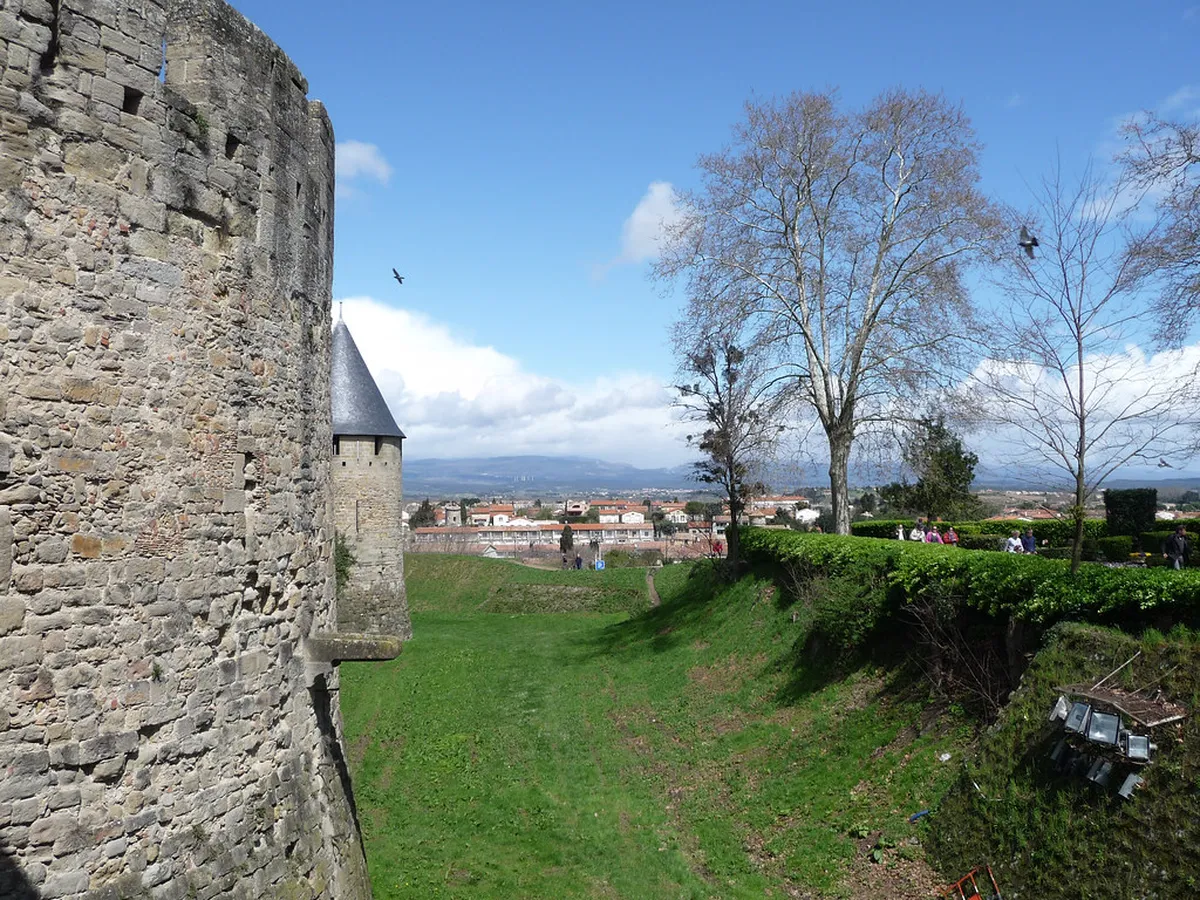
Many modern experts still debate the restoration controversies surrounding this famous and historic site. Viollet-le-Duc chose to add pointed roofs to many of the towers across the city. He used dark northern slate for these roofs instead of the traditional red southern tiles. Critics claim this style is not historically accurate for the Occitanie region of France.
Traditional towers in southern France usually featured flat tops or very shallow roofs with clay tiles. Viollet-le-Duc argued that the pointed design was better for shedding water and protecting the stone. He believed that his design represented the ideal form of a medieval fortress for the nation. This decision forever changed the visual character of the city for all future generations.
The architect also added decorative crenellations and wooden hoards to the top of the ramparts. Some of these features were based on his own theories rather than physical archaeological evidence. He wanted the city to look like a perfect fairy tale castle from the Middle Ages. His romantic vision of history is what makes the city so popular with tourists today.
Despite these criticisms, most historians agree that he saved the city from total and permanent ruin. Without his intervention, the stones would have been hauled away for local building projects long ago. The city is now a UNESCO World Heritage site because of his dedicated preservation work. His controversial choices helped create a global icon for the country of France.
Visiting the Restored Fortress in 2025
Planning a trip to see the restoration work in 2025 is a wonderful idea for families. The medieval city remains open to the public every day throughout the entire calendar year. You should arrive early in the morning to avoid the largest tourist crowds from tour buses. Walking the Carcassonne ramparts offers the best views of the restoration details.
The tour of the Chateau Comtal architectural features is highly recommended for all history lovers. You can see the original models that Viollet-le-Duc created during the restoration process inside. The museum explains the engineering challenges he faced while rebuilding the massive central castle structures. This visit provides a deep understanding of the scale of the nineteenth-century project.
Tickets for the castle and the high ramparts cost approximately 11 euros for adults in 2025. Children under eighteen years old can enter the site for free with a valid ID. Many local guides offer specialized architectural tours that focus specifically on the work of Viollet-le-Duc. These tours help you identify the original medieval stones versus the nineteenth-century additions.
Wear comfortable walking shoes because the cobblestone streets are quite uneven and steep in some areas. Bring a water bottle to stay hydrated during the hot summer months in southern France. There are many fountains located within the city where you can refill your bottle for free. The city is especially beautiful at night when the restoration work is fully illuminated.
The Global Legacy of the Restoration
The work at Carcassonne influenced restoration projects in many other countries around the entire world. Viollet-le-Duc showed that it was possible to save massive historic structures through careful engineering. His books on architecture became standard textbooks for students in the United States and Europe. He is often called the father of modern historic preservation for his innovative techniques.
The city serves as a living museum of the Gothic Revival movement from the nineteenth century. It has appeared in dozens of famous movies and television shows because of its perfect look. The restoration created a romantic version of the past that continues to capture our modern imagination. People from every continent travel to France to see this architectural masterpiece in person.
Modern restorers still use some of the same lime-based materials that Viollet-le-Duc preferred for stone. They continue to maintain the walls using his detailed plans and sketches from the 1800s. The French government invests millions of euros annually to keep the fortress in excellent condition. This ongoing care ensures that his vision will survive for many more centuries to come.
The Viollet-le-Duc Carcassonne restoration remains his most complete and impressive achievement as an expert architect. It stands as a bridge between the medieval past and our modern world today. Visitors leave the city with a sense of wonder at what human dedication can achieve. His work reminds us that history is worth saving for the benefit of future generations.
Frequently Asked Questions
Why did Viollet-le-Duc use slate roofs in Carcassonne?
Viollet-le-Duc used slate because he believed it was more durable than traditional clay tiles. He also felt that pointed slate roofs matched the ideal Gothic style of a fortress. This choice remains controversial because slate is not native to the southern region of France.
How long did the restoration of Carcassonne take?
The restoration project started in 1844 and continued for over thirty years until the architect died. His students and assistants finished the remaining work using his detailed drawings and construction plans. The entire process saved the city from being demolished by the French government.
Is the Carcassonne restoration historically accurate?
The restoration is a mix of historical fact and the architect's romantic vision for the site. While many structures follow the original medieval layout, some features were added for visual impact. You can learn more about these details by studying the architecture in Carcassonne with a local guide.
What other buildings did Viollet-le-Duc restore in France?
He restored many famous buildings including the cathedral of Notre-Dame in Paris and the walls of Avignon. He also worked on the pierrefonds castle and the abbey of Saint-Denis near the capital. His style defined the French Gothic Revival movement during the entire nineteenth century.
The Viollet-le-Duc Carcassonne restoration is a masterpiece of preservation and creative architectural vision. It saved a national treasure from destruction and created a global destination for all history lovers. Visiting the city in 2025 allows you to step back into a beautifully restored medieval world. Plan your trip today to see the incredible legacy of France's most famous architect.
Key Takeaways
- Eugene Viollet-le-Duc saved Carcassonne from planned demolition in the 1840s.
- The restoration added iconic pointed slate roofs that are still debated by experts.
- The city is a UNESCO World Heritage site and a prime example of Gothic Revival style.
- Visitors should allow at least two hours to walk the restored ramparts for the best views.
Related reads: architecturebycity.com.