
Les Quatre Sans Cul Monument Meaning and History
Learn the Les Quatre Sans Cul monument meaning in Chambéry. Explore Fontaine des Éléphants architecture and the history of General de Boigne today.
On this page
Chambéry is a beautiful city in France that holds many secrets within its historic and winding cobblestone streets. The famous Fontaine des Éléphants stands as the most iconic landmark for travelers exploring this alpine region. Many people visit the site but few truly understand the deeper Les Quatre Sans Cul monument meaning today. This impressive structure tells a story of military glory, massive wealth, and incredible generosity to the local community.
The Origins of the Elephant Fountain
The monument was constructed in 1838 to honor the great General de Boigne for his many local services. This famous military leader donated his massive personal wealth to help build schools and hospitals in the city. His lasting legacy remains visible throughout the historic streets of modern Chambéry for every curious visitor to see. The fountain stands as a testament to his successful career and his deep love for his home region.
Pierre-Victor Sappey was the talented sculptor chosen to design this unique bronze and stone masterpiece for the public. He envisioned a monument that would blend European architectural traditions with the exotic themes of the Far East. The result was a fountain that immediately captured the imagination of the residents living in the Savoyard capital. It remains the most photographed and beloved site for anyone traveling through this part of southeastern France today.
The central location of the fountain makes it a perfect starting point for any walking tour of the town. It sits at the intersection of several major streets that lead toward the historic castle and the local cathedral. Visitors often gather here to admire the intricate details of the bronze work and the flowing mountain water. The site has served as the symbolic heart of the community for nearly two full centuries of history.
Early reactions to the fountain were mixed because of its unusual and daring design for the nineteenth century era. Some people found the giant elephants to be too strange for a traditional French city in the mountains. However, the monument quickly became a source of local pride and a recognizable symbol for the entire region. It represents the global connections that the city developed through the adventures of its most famous military son.
Understanding Les Quatre Sans Cul Monument Meaning
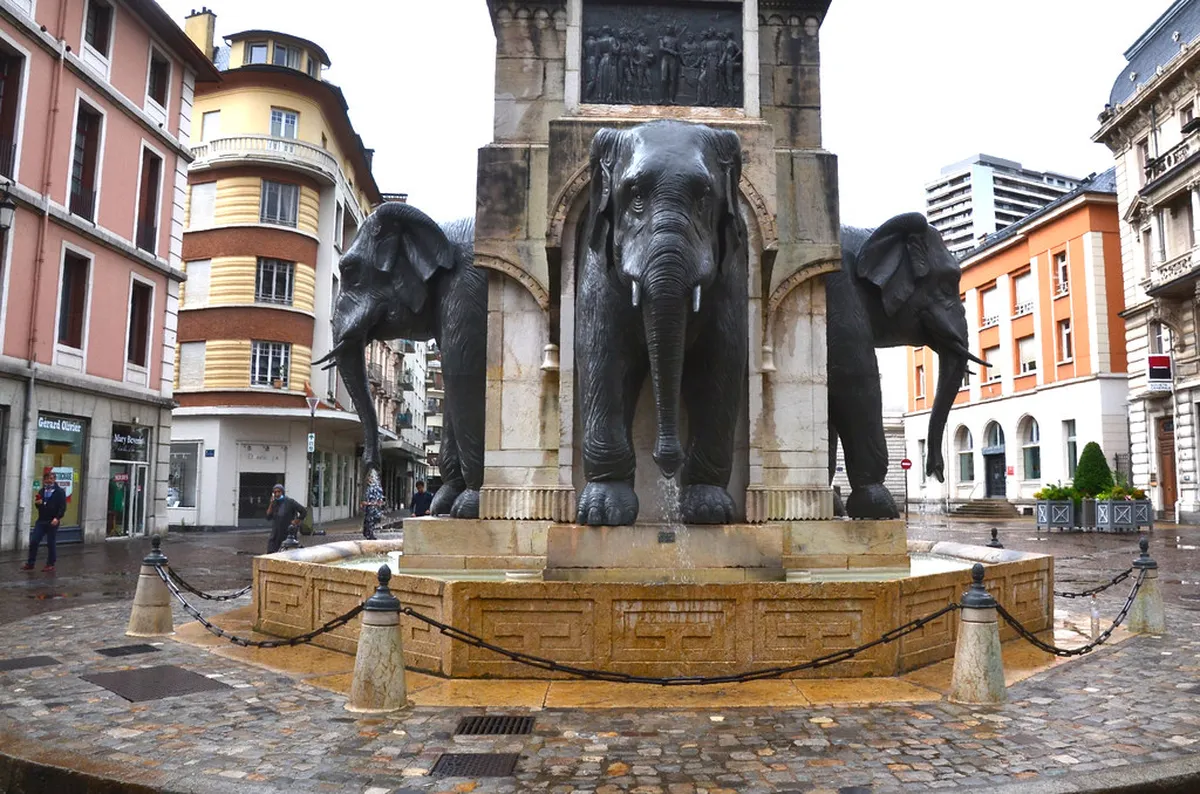
The unusual name Les Quatre Sans Cul translates directly to the four without butts in the local French dialect. This humorous nickname was given to the fountain by the townspeople shortly after the official unveiling in 1838. It describes the physical appearance of the four elephant statues that form the base of the tall monument. You can only see the front halves of these massive animals as they emerge from the stone column.
The back halves of the four elephants are completely hidden within the central limestone pillar of the fountain structure. This artistic choice by Pierre-Victor Sappey was intended to save space while maintaining a sense of grand scale. However, the local citizens found the visual effect to be quite funny and began using the cheeky nickname. The Les Quatre Sans Cul monument meaning is deeply rooted in this playful and observant Savoyard sense of humor.
Using this nickname is a sign of being a true local who understands the history of the city well. While the official name is the Fountain of the Elephants, most residents prefer the much more colorful alternative. It highlights the friendly and lighthearted nature of the people who live in this historic mountain community today. The name has been passed down through generations and remains the most common way to identify the site.
The meaning of the monument goes beyond the funny name and relates to the journey of General de Boigne. The elephants appearing to emerge from the stone represent his return to France from the distant lands of India. It symbolizes the meeting of two different worlds and the exotic experiences he brought back to his home. This blend of humor and history makes the site one of the most fascinating landmarks in all France.
Fontaine des Éléphants Architecture and Design
The Fontaine des Éléphants architecture is a masterclass in nineteenth-century urban design and symbolic storytelling through stone. It stands seventeen meters tall and features a high central column made from high-quality limestone from the local region. A bronze statue of General de Boigne sits at the very top of the monument in a noble pose. He is depicted wearing his military uniform and holding symbols of his many professional and personal achievements.
Four massive bronze elephants are arranged in a cross shape at the base of the tall central stone pillar. Water flows steadily from their trunks into a large basin that surrounds the entire bottom of the historic structure. This dynamic element adds a sense of life and movement to the heavy bronze and stone of the fountain. The sound of the splashing water creates a peaceful atmosphere in the middle of the busy city center.
The design includes various military trophies and maps that represent the specific battles won by the General in India. These intricate details are carved into the stone and cast in bronze with incredible precision and artistic skill. The fountain serves as a visual biography of a man who lived a life full of global adventure. It remains a unique example of Neo-classical design with strong Orientalist influences from the early nineteenth century period.
Extensive restoration work was completed in recent years to ensure the fountain remains in perfect condition for the year 2025. Experts carefully cleaned the bronze elephants and repaired the internal plumbing to keep the water flowing for future generations. These efforts preserve the artistic integrity of the monument while protecting it from the harsh alpine weather conditions. The site continues to shine as a golden example of Savoyard craftsmanship and dedicated historical preservation efforts.
The Legacy of General de Boigne in France
General de Boigne was a legendary figure whose military career in India brought him immense fame and vast personal wealth. He returned to his hometown of Chambéry with the intention of using his fortune to improve the local community. The General de Boigne legacy in urban design can be seen in the wide boulevards he helped to fund. He was a visionary who believed in progress and the importance of public infrastructure for all citizens.
His return to the region of Savoie marked a period of significant growth and modernization for the entire alpine city. He founded a home for the elderly and provided the funds necessary to build a modern hospital for everyone. These acts of charity were unprecedented at the time and earned him the eternal gratitude of the local people. The elephant fountain was built as a way for the city to say thank you to him.
The General also focused on education by supporting schools and libraries throughout the city during his final years of life. He wanted to ensure that the youth of Chambéry had access to the best possible learning opportunities and resources. This commitment to the future of the city is why he is still remembered so fondly by residents today. His influence helped transform a small mountain town into a sophisticated and well-planned regional capital city center.
Exploring the architecture in Chambéry reveals how his taste for grand and orderly design shaped the modern look of the town. The street named after him is lined with elegant buildings that reflect the prosperity he brought to the region. His story is one of a local boy who saw the world and returned to make his home better. This legacy of generosity is what truly defines the spirit of the Les Quatre Sans Cul monument.
Frequently Asked Questions
What is the Les Quatre Sans Cul monument meaning?
The name means the four without butts in the local French dialect of the Savoie region. It refers to the four elephant statues that only show their front halves to the public. The back halves of the animals are hidden inside the central stone column of the fountain structure.
Why are there elephants on a fountain in France?
The elephants represent the time General de Boigne spent in India as a successful military commander and leader. He earned his massive fortune there and used it to help build and modernize the city of Chambéry. The statues are a tribute to his exotic travels and his incredible generosity to his hometown.
Who was the artist behind the Elephant Fountain?
The monument was designed and created by the famous sculptor Pierre-Victor Sappey in the early nineteenth century. He was known for his ability to combine different cultural styles into single cohesive pieces of public art. His work on this fountain remains his most famous contribution to the history of European sculpture.
Where is the Fontaine des Éléphants located?
The fountain is located in the heart of Chambéry at the intersection of Rue de Boigne and Boulevard de la Colonne. It serves as a central meeting point for locals and a popular landmark for tourists visiting the city. You can easily find it by walking through the main historic district of the town center.
The Les Quatre Sans Cul monument meaning is a wonderful blend of local humor and profound historical respect for a hero. This landmark remains a must-see destination for anyone visiting the French Alps in the upcoming year of 2025. It captures the unique spirit of a city that honors its past while maintaining a sense of fun. Make sure to visit this iconic site to experience the magic of Chambéry for yourself during your trip.
Key Takeaways
- The monument honors General de Boigne for his philanthropy and military service.
- The nickname refers to the elephants appearing without their back halves.
- The fountain is a prime example of 19th-century architecture in Chambéry.
Related reads: architecturebycity.com, elephant fountain restoration details, chateau des ducs de savoie.