
Bernard Zehrfuss' Gallo-Roman Museum Architecture
Discover the unique Gallo-Roman Museum architecture by Bernard Zehrfuss in Lyon. Explore this underground masterpiece and its link to Roman ruins today.
On this page
The Gallo-Roman Museum in Lyon stands as a modern architectural wonder in the heart of France. Architect Bernard Zehrfuss designed this unique structure to hide inside the steep and historic Fourviere hill. It preserves the ancient history of Lugdunum with a striking and very bold brutalist architectural flair. This 2025 guide explores the Gallo-Roman Museum architecture by Bernard Zehrfuss in great and helpful detail.
The Brutalist Vision of Bernard Zehrfuss
Bernard Zehrfuss was a visionary master of modern French architecture during the late twentieth century. He won the prestigious Prix de Rome in 1939 for his innovative and bold designs. The museum in Lyon stands as his most daring and technically complex structural achievement. It perfectly blends raw concrete surfaces with the natural landscape of the historic Fourviere hill.
Zehrfuss rejected traditional museum designs that placed large and imposing buildings on top of the ground. He believed that the modern architecture should never compete with the nearby ancient Roman ruins. The choice of brutalism allowed him to create a neutral background for delicate archaeological finds. This specific approach ensures that the focus remains on the history of the vast Roman Empire.
The museum was officially inaugurated in 1974 after several years of very difficult construction work. Engineers had to excavate thousands of tons of earth to make room for the hidden structure. The resulting building is almost entirely invisible from the streets of the old city below. It remains a primary example of how modern design can respect ancient and sensitive heritage sites.
Integrating Structure with Roman Ruins
Zehrfuss wanted the building to remain completely hidden from the historical and beautiful city of Lyon. He chose to bury the museum deep within the slopes of the sacred Fourviere hillside. This design protects the visual integrity of the nearby Roman ruins and theaters in Lyon. Visitors experience the past without the distractions of the modern and busy urban city skyline.
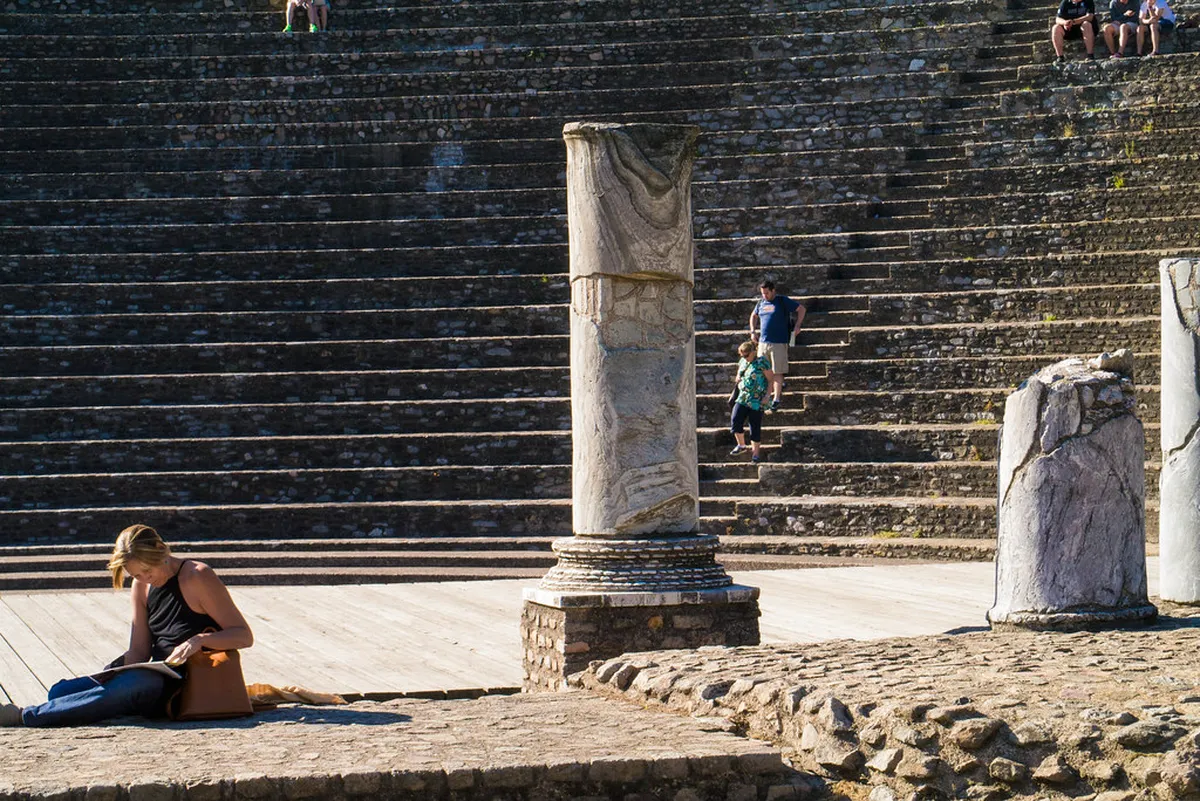
The museum sits directly adjacent to the Great Theater and the smaller ancient Odeon site. Zehrfuss carefully aligned the museum levels with the natural contours of the ancient hillside site. This creates a seamless transition between the indoor exhibits and the outdoor archaeological park. You can walk from a modern concrete gallery straight onto an ancient stone Roman stage.
The integration of the building required precise engineering to support the heavy and wet hillside earth. Massive concrete pillars were sunk deep into the ground to ensure the long-term structural stability. These pillars are left exposed to show the raw power of the modern construction materials. They echo the strength of the Roman walls that have stood for over two thousand years.
The Iconic Spiral Ramp and Spatial Flow
The interior of the museum features a grand descending ramp for all of the visitors. This clever spiral design allows for a continuous and logical flow through ancient Roman history. It guides you naturally from the prehistoric era down to the end of the Roman period. The absence of traditional stairs makes the entire museum experience feel fluid and connected.
As you descend the ramp, the spaces open up to reveal large and significant archaeological treasures. The ramp provides different perspectives on the artifacts from various heights and many angles. This architectural technique keeps the visitor engaged with the collection throughout the entire museum visit. It creates a sense of discovery as new objects appear around every single concrete curve.
The spatial layout is designed to handle large crowds without feeling too cramped or busy. Wide pathways allow people to stop and admire the mosaics without blocking any other visitors. Zehrfuss understood that a museum needs to balance movement with quiet moments of deep reflection. The ramp serves as both a walkway and a viewing platform for the ancient history.
Framing the Ancient Theatre of Fourviere
Large bay windows offer stunning views of the archaeological sites from within the modern galleries. You can observe the Ancient Theatre of Fourviere acoustics while standing inside the museum. These windows act as massive frames for the historic landscape that sits right outside. Zehrfuss created a constant dialogue between the ancient stone and the modern gray concrete walls.
The windows are strategically placed to highlight specific features of the outdoor ancient Roman theaters. They allow visitors to compare the artifacts inside with the structures they originally came from. This visual connection reinforces the context of every item displayed within the thick museum walls. It makes the history feel alive and connected to the physical geography of modern Lyon.
During the golden hour, the sunlight hits the ancient theater and creates many beautiful shadows. The museum architecture captures this light and brings it deep into the underground gallery spaces. This creates a dramatic atmosphere that enhances the mystery of the grand Roman civilization. It is a masterful use of borrowed scenery to improve the internal museum gallery environment.
Materiality and Natural Light in the Museum
Raw concrete defines the unique character of this famous and subterranean museum building space. Zehrfuss used texture to create a sense of timelessness and immense structural concrete strength. The board-marked concrete surfaces show the marks of the wooden forms used during construction. This honesty in materials is a core principle of the mid-century brutalist architecture movement.
Narrow skylights provide soft natural light for the delicate and very colorful ancient mosaic floors. This lighting strategy protects the artifacts from the damage caused by the direct summer sunlight. It also highlights the structural forms and the textures of the gray concrete interior walls. The interplay of light and shadow adds a layer of depth to the underground galleries.
The museum uses a minimalist color palette to avoid distracting from the many Roman artifacts. Gray concrete and natural stone provide a calm environment for the study of ancient history. This aesthetic choice makes the vibrant colors of the ancient mosaics stand out much more. Zehrfuss proved that simple materials can create a very sophisticated and elegant public space.
Practical Guide for Visiting Lugdunum in 2025
The museum is open from Tuesday to Sunday for visitors throughout the entire calendar year. Tickets for adults cost approximately seven euros during the early months of the year 2025. You should allow at least two full hours to explore every level and every gallery. Follow this practical guide for Lyon architecture lovers to plan your trip.
The site is fully accessible for people with limited mobility thanks to the long ramps. You can reach the museum easily by taking the funicular from the Vieux Lyon station. The walk from the funicular station to the entrance takes less than five short minutes. Make sure to wear comfortable shoes for exploring both the museum and the ruins.
The museum gift shop offers a great selection of books about Roman history and architecture. You can also find a small cafe nearby for a quick snack or cold drink. The archaeological park outside is free to enter and perfect for a relaxing afternoon walk. Visiting both sites together provides a complete picture of the Roman history of Lyon.
Legacy of Gallo-Roman Museum Architecture
The Gallo-Roman Museum architecture by Bernard Zehrfuss continues to inspire architects around the world. It demonstrated that brutalism could be both sensitive and deeply respectful of historical contexts. Many modern museums now use similar subterranean strategies to protect sensitive landscape views. This building remains a celebrated landmark within the architectural community of France today.
The museum was awarded the Label Patrimoine du XXe siècle for its outstanding design quality. This recognition highlights its importance as a masterpiece of twentieth-century French structural design. It serves as a teaching tool for students studying modern and ancient urban planning. The structure proves that concrete can be a beautiful and versatile material for art.
Preservation efforts ensure that the concrete remains in excellent condition for future visitor generations. The museum staff works hard to maintain the original vision of Bernard Zehrfuss today. You can experience this enduring legacy during your next architectural tour of the city. It is a timeless monument that bridges the gap between the past and the present.
Frequently Asked Questions
Why is the Gallo-Roman Museum built underground?
Bernard Zehrfuss designed it underground to protect the view of the historic Roman ruins. This keeps the focus on the historical landscape rather than a large modern building.
What is the best way to get to the museum?
Take the funicular from the Vieux Lyon metro station toward the Fourviere hill area. The museum is located just a short walk from the top of the hill station.
Is the Gallo-Roman Museum suitable for children?
Yes, the museum features interactive displays and large models that children find very engaging. The open ramps also provide a safe and easy way to move around the space.
Can I take photographs inside the museum?
Photography is allowed inside the museum as long as you do not use a flash. This helps protect the sensitive colors of the ancient mosaics and the wall paintings.
Are guided tours available in English?
The museum offers audio guides in multiple languages including English for a small fee. Group tours can also be booked in advance through the official museum website directly.
The Gallo-Roman Museum architecture by Bernard Zehrfuss is a masterpiece of modern design and heritage. It offers a unique way to experience the ancient roots of this beautiful French city. Plan your visit soon to witness how concrete and history blend together so perfectly. This site remains a must-see destination for every architecture enthusiast visiting Lyon in 2025.
Key Takeaways
- Underground brutalist design by Bernard Zehrfuss preserves the landscape.
- Spiral ramp creates a seamless flow through ancient Roman history.
- Large windows frame the Ancient Theatre of Fourviere for visitors.
Related reads: architecturebycity.com, architecture in lyon, the odeon lyon archaeological site.