
Roman Ruins and Theaters in Lyon Guide
Explore the best Roman ruins and theaters in Lyon. Discover historical sites on Fourvière Hill with our expert 2025 travel guide. Plan your trip now!
On this page
Lyon houses some of the most impressive Roman ruins and theaters in Lyon today. This historic city was once known as Lugdunum and served as a Roman capital. Travelers visiting France in 2025 can explore these massive stone structures for free. These ancient ruins provide a deep look into the daily life of ancient Roman citizens.
Most of these archaeological treasures sit high on the famous Fourvière Hill for all to see. This location offered a strategic view over the Saône and Rhône rivers many centuries ago. You can still see the careful planning of the ancient Roman architects in the layouts. Walking through these sites feels like stepping back two thousand years in time for every visitor.
This historical guide will explore the major theaters and other significant Roman structures in the city. We will cover the Great Theatre, the Odeon, and the hidden amphitheater sites around the area. You will also learn about the museum that protects these ancient French treasures from the elements. Let us begin our journey through the historic heart of ancient Lugdunum and its monuments.
The Grand Ancient Theatre of Fourvière
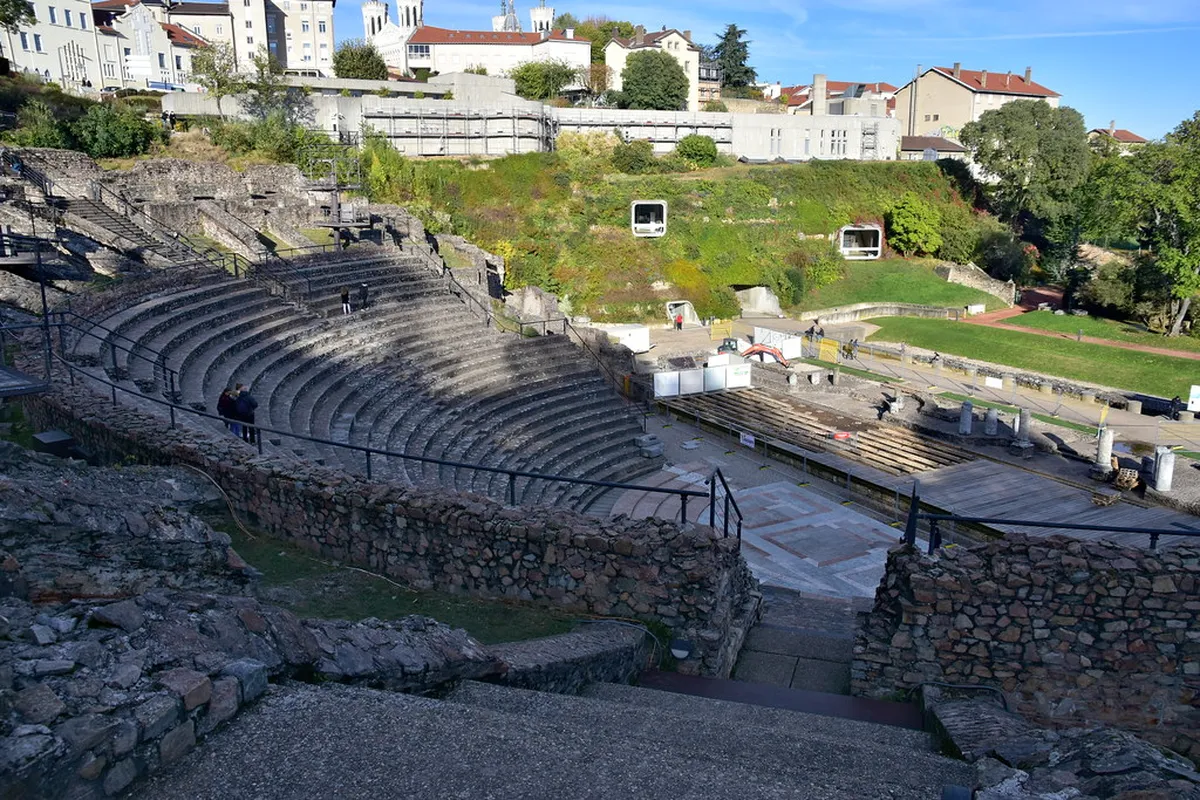
The Great Theatre remains one of the oldest and largest monuments of its kind in ancient France. Emperor Augustus ordered its construction in 15 BC to serve the growing city of Lugdunum. The structure underwent several expansions to eventually seat over ten thousand spectators during the second century. It served as the primary venue for major dramatic performances and public gatherings for the Romans.
Architects used a mix of local granite and limestone to build these incredibly sturdy stone structures. The Ancient Theatre of Fourvière acoustics are still perfect for modern performances even today. You can see the orchestra pit where musicians played during the grand plays of the Roman era. The steep seating area offered everyone a clear view of the stage and the city below.
The theater consists of a semicircular cavea built directly into the side of the steep hill. This design allowed the Romans to use the natural slope for the many rows of seating. Huge vaulted galleries once supported the upper levels and allowed for easy movement of the large crowds. Modern visitors can still see the remains of these impressive architectural features while walking the grounds.
During the summer months, the site hosts the famous Nuits de Fourvière cultural and music festival. Performers use the same stage that actors used two thousand years ago under the summer stars. It is a unique experience that connects modern French culture with the deep roots of the past. Booking tickets in advance is essential for anyone visiting during the busy 2025 summer festival season.
The site is open daily from 7 AM to 7 PM and offers free entry for everyone. You should wear sturdy walking shoes because the stone steps can be quite uneven and steep. Bringing a bottle of water is also a smart idea during the warm summer months in Lyon. This landmark is truly the crown jewel of the Roman ruins and theaters in Lyon.
Exploring the Roman Odeon of Lyon
The Odeon archaeological site sits right next to the larger Great Theatre on Fourvière Hill. This smaller theater was built during the late first or early second century for more intimate events. It specifically hosted musical performances, poetry readings, and political speeches for the elite members of society. Only the most important citizens of Lugdunum could attend the exclusive events held inside this space.
While the Great Theatre held ten thousand people, the Odeon only seated about three thousand lucky guests. This smaller size allowed for a roof to cover the entire structure for better sound quality. The acoustic environment was much more controlled than the open air of the massive main theater nearby. This made it the perfect place for subtle musical instruments and delicate vocal performances of the era.
One of the most striking features of the Odeon is the decorative floor in the orchestra. It features a beautiful mix of colored marbles imported from across the entire Roman Empire. You can see green marble from Greece and red porphyry from the distant deserts of Egypt. These expensive materials showed the incredible wealth and power of Lyon during its peak Roman years.
The remains of the stage wall show where statues once stood to decorate the grand performance area. Large columns made of fine stone supported a wooden roof that has long since disappeared into history. Visitors can walk through the semicircular seating rows to appreciate the scale of the smaller building. It provides a more quiet and reflective atmosphere compared to the bustling main theater site nearby.
Photographers often prefer the Odeon because of the intricate patterns and colors found in the ancient stones. The site offers many unique angles to capture the contrast between the ruins and the modern city. Plan to spend at least forty-five minutes exploring the details of this specific archaeological treasure in 2025. It is a vital part of the Roman ruins and theaters in Lyon complex.
The Lugdunum Museum Architectural Design
The Gallo-Roman Museum architecture is a masterpiece of modern design that blends with the ancient site. Architect Bernard Zehrfuss designed the building to be almost invisible from the outside of the hill. He buried the structure into the side of the cliff to respect the historical landscape above. This creates a unique experience where you descend into the history of the ancient Roman city.
Inside the museum, a long concrete ramp spirals down through the various levels of the historical exhibits. The raw concrete walls provide a neutral background that makes the ancient artifacts stand out clearly. Large windows offer spectacular views of the theaters while you learn about their long and complex history. It is a perfect example of how modern architecture can enhance our understanding of the ancient past.
The museum collection includes massive stone mosaics that once decorated the floors of wealthy Roman villas. You will also find bronze statues, daily household items, and ancient jewelry worn by the Roman citizens. One of the most famous items is the Lyon Tablet which records a speech by Emperor Claudius. These items tell the story of the people who built the Roman ruins and theaters in Lyon.
Visitors can see the remains of ancient shops and houses that once lined the streets of Lugdunum. The museum preserves these structures in their original locations to provide a sense of the urban layout. You can walk through the old foundations and imagine the busy market life of the second century. This immersive approach makes the history feel much more alive for students and families visiting today.
A standard adult ticket for the museum costs around seven Euros in the current 2025 season. Students and young children often get discounted rates or free entry with a valid identification card. The museum is closed on Mondays so plan your trip for later in the week to avoid disappointment. It is an essential stop for anyone wanting to understand the full context of the ruins.
The Amphitheatre of the Three Gauls
The Amphitheatre of the Three Gauls is located on the slopes of the Croix-Rousse hill in Lyon. This site was built in 19 AD to host the annual meeting of the sixty Gallic tribes. It served as a place for religious ceremonies and political displays of loyalty to the Roman Emperor. It is a different kind of structure than the theaters found on the neighboring Fourvière Hill.
In its early years, the amphitheater was quite small and only held about three thousand tribal delegates. It was later expanded to hold nearly twenty thousand people for public games and gladiator fights. This shows how quickly the city grew in importance within the administrative structure of the Roman Empire. The site also has a darker history as the location of early Christian martyrdoms in the city.
Today, only a small portion of the original seating and the central arena floor remains visible to visitors. Modern apartment buildings and streets now surround the site, showing how the city has changed over time. You can view the ruins from the street level through a protective metal fence for free. It is a shorter stop but still very important for understanding the religious life of Lugdunum.
The amphitheater sits near the historic silk-weaving district of Lyon which is also worth a visit in 2025. You can easily walk between these different historical layers of the city in a single afternoon trip. Look for the informative plaques that explain the layout of the amphitheater during its peak years of use. This site completes the story of the major Roman ruins and theaters in Lyon.
To reach this site, you can take the metro to the Croix-Paquet station and walk up the hill. The climb is a bit steep but the historical significance of the location makes it worth the effort. Many local walking tours include this amphitheater as a key point in their historical itineraries for visitors. It offers a quieter experience away from the larger crowds found at the main Fourvière theaters.
Practical Tips for Roman Ruins and Theaters in Lyon
Exploring the diverse architecture in Lyon requires comfortable shoes and a good city map. The best way to reach the Fourvière ruins is by using the funicular railway from Saint-Jean station. This vintage train takes you directly to the top of the hill in just a few minutes. It saves you from a very long and tiring walk up the steep hillside streets.
The funicular costs the same as a standard bus or metro ticket in the Lyon transport system. You can buy a daily pass to use the trains and buses as much as you like. Make sure to validate your ticket before boarding the funicular to avoid any fines from the inspectors. This is the most efficient way to access the Roman ruins and theaters in Lyon today.
We recommend visiting the ruins early in the morning during the 2025 summer season to avoid the heat. The sun can be very strong on the open stone benches of the theaters by midday. Most tour groups arrive around 10 AM so getting there at 8 AM gives you some peace. You will have much better opportunities for photos without hundreds of other tourists in the background.
There are several small cafes and bakeries located near the entrance of the theaters for a quick snack. You can also bring a picnic to enjoy on the grass areas surrounding the ancient stone structures. Please remember to take all your trash with you to keep these historical sites clean for others. Respecting the monuments ensures they will remain in good condition for another two thousand years of history.
The Lyon City Card is a great option for travelers planning to visit multiple museums and sites. It includes access to the Lugdunum Museum and unlimited use of the city transport system for the duration. You can buy these cards for one, two, or three days depending on your travel plans. It often pays for itself after visiting just three or four major attractions in the city.
Frequently Asked Questions
Are the Roman ruins in Lyon free to visit?
Yes, the outdoor theaters on Fourvière Hill are completely free for the public to visit. You only need to pay an entry fee if you want to enter the Lugdunum Museum. The ruins are located very close to the Notre-Dame de Fourvière basilica on the hilltop.
How do I get to the Roman theaters from the city center?
The easiest way is to take the funicular from the Vieux Lyon metro station. Look for the line headed toward Fourvière and get off at the Minimes station. This station is just a short two-minute walk from the entrance of the theater site.
Can you walk on the ancient Roman steps in Lyon?
Yes, visitors are allowed to walk and sit on most of the original stone steps today. This makes it a very interactive experience for families and students who want to feel the history. Please be careful as the stones can be slippery when it rains or during the winter.
What is the best time of year to see the ruins?
Spring and fall offer the best weather for exploring the Roman ruins and theaters in Lyon. The temperatures are mild and the crowds are much smaller than during the peak summer months. Visiting in late May or early September is ideal for the most comfortable experience.
The Roman ruins and theaters in Lyon offer a unique window into the ancient world of Gaul. You can explore massive theaters, beautiful mosaics, and innovative modern museum designs all in one place. Plan your visit for 2025 to experience the history and culture of this magnificent French city firsthand. We hope this guide helps you enjoy the incredible archaeological treasures of Lyon during your next journey.
Key Takeaways
- Visit the Fourvière Hill theaters for free any day of the week.
- Use the funicular railway to save time and energy when climbing the hill.
- Spend at least two hours exploring both the theaters and the Lugdunum Museum.
- Wear comfortable walking shoes with good grip for the ancient stone steps.
- Check the local festival schedule for performances in the Great Theatre during summer.
Related reads: architecturebycity.com, renaissance architecture in vieux lyon, lyon confluence contemporary architecture.