
Les Docks de la Joliette Conversion Guide 2025
Discover the Les Docks de la Joliette conversion in Marseille. Learn about this industrial heritage site and its stunning 2025 adaptive reuse transformation.
On this page
Marseille is a historic French city with very deep maritime roots and unique coastal culture. The Les Docks de la Joliette conversion stands as a powerful symbol of its urban renewal. This massive 19th-century warehouse now houses many modern offices and various trendy boutique shops. Visitors in 2025 will find a vibrant and bustling community hub within these stone walls.
This ambitious project showcases the best of industrial heritage architecture Marseille currently has to offer travelers. It honors the historical past while serving the functional modern needs of the local population. The building spans exactly 365 meters along the waterfront to match the days of the year. Its massive mathematical design reflects the organized nature of global trade during the Victorian era.
Origins of the Les Docks de la Joliette
The original structure was built between the years 1858 and 1864 in the port city. Paulin Talabot led the construction of this massive industrial complex during the 19th century era. He drew heavy inspiration from the famous St Katharine Docks located in the city of London. This project represented the growing economic power of the port of Marseille at that time.
The building features four inner courtyards that represent the four seasons of the entire year. There are also fifty-two doorways which correspond directly to the weeks in a standard calendar. This symbolic architecture makes it one of the most interesting structures in the South of France. Investors spared no expense when they constructed this massive warehouse for the international shipping industry.
For many decades these warehouses stored precious goods like spices and oils from distant exotic lands. Massive steamships docked directly alongside the stone walls to unload their heavy cargo for storage. It was once the beating heart of trade for the entire Mediterranean Sea region for years. The sheer scale of the masonry work reflects the immense wealth of the French Empire.
Modern shipping methods eventually made these old warehouses obsolete for large commercial transport and storage. The buildings sat empty for a long period before the city decided to start a renovation. This neglect almost led to the destruction of a significant piece of French maritime history and art. Thankfully the urban planners recognized the inherent value of the original stone and iron materials.
The primary construction materials include local limestone and durable cast iron for the internal support beams. These elements provide a strong industrial aesthetic that remains popular with modern architects and designers today. Walking through the corridors feels like stepping back into a time of great industrial expansion. The historic atmosphere is carefully preserved despite the many modern additions throughout the large complex.
Architectural Vision for the Conversion
The architecture firm 5+1AA reimagined the entire space for a new generation of urban users. Their brilliant work won the prestigious Best Refurbished Building award at the global MIPIM ceremony recently. The main goal was to open the building to the general public and the city. They created a long ground-floor street for pedestrians to walk through the massive stone structure.
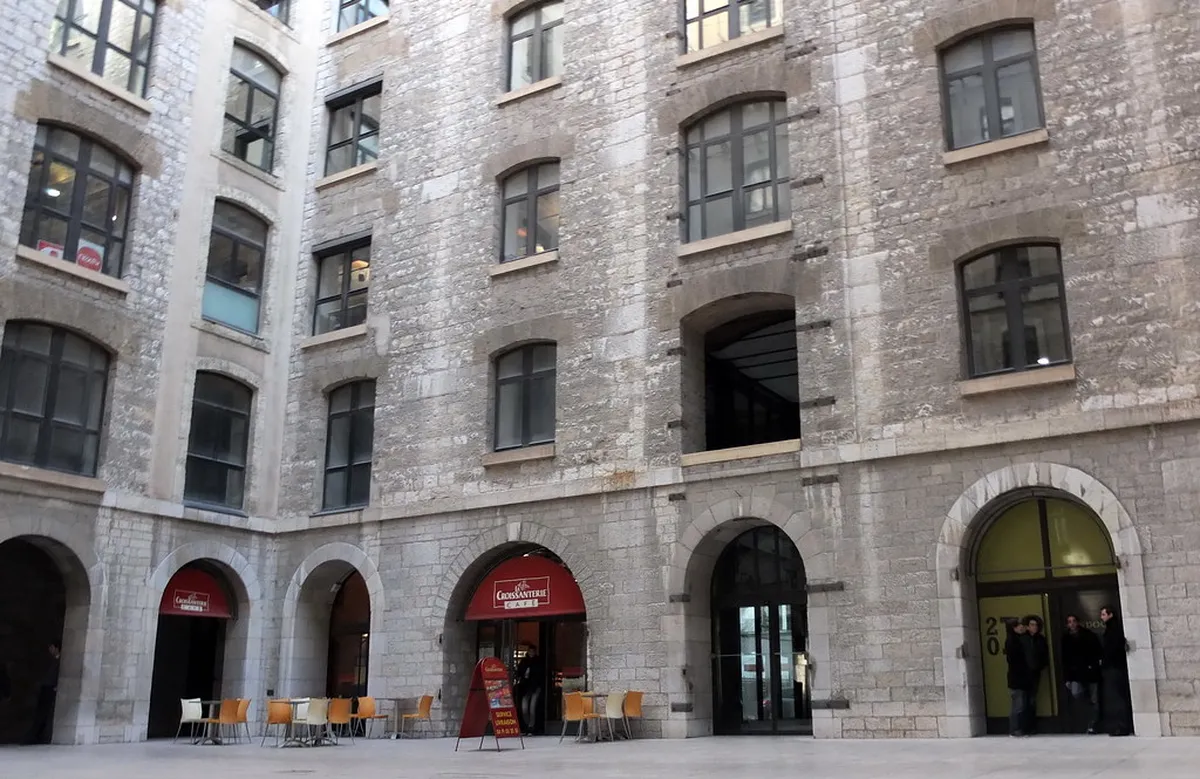
Each courtyard in the building features its own unique and distinct architectural personality and design theme. One specific courtyard features beautiful blue ceramic tiles that represent the nearby Mediterranean Sea and sky. Another courtyard uses lush green vegetation and climbing plants to create a peaceful natural environment. These spaces provide essential light and fresh air to the modern offices located above them.
The renovation team carefully preserved the original stone facade to keep the historical identity of the site. Skilled workers cleaned the 19th-century masonry with specialized tools to reveal the natural beauty of limestone. They added modern glass and metal details to create a striking visual contrast between old and new. This blend of styles is a hallmark of contemporary architecture in Marseille right now.
The interior spaces were gutted to make room for flexible work environments and retail retail zones. Designers kept the original brick vaulted ceilings to add character to the new commercial office spaces. Large industrial windows were refurbished to allow natural light to flood into the deep floor plates. The result is a workspace that feels both historic and cutting-edge for professional creative teams.
Sustainability was a core component of the entire conversion process during the early design phases. The thick stone walls provide excellent thermal mass which helps to regulate the indoor temperature naturally. This reduces the need for expensive air conditioning during the hot summer months in the south. The open courtyards also encourage natural cross-ventilation throughout the entire length of the massive building.
Retail and Dining at Les Docks Village
The ground floor of the complex is now known as the vibrant Les Docks Village area. It hosts over 80 unique boutiques and several high-end restaurants for visitors to enjoy today. Local Provencal brands sit comfortably next to famous international names along the main interior pedestrian street. It has become a premier shopping destination for fashion lovers visiting Marseille in the year 2025.
Foodies will love the diverse culinary options ranging from fresh seafood to traditional French bakery goods. You can find many cafes that offer comfortable outdoor seating within the various interior courtyards. The atmosphere is very relaxed and provides a perfect escape from the busy city streets outside. It is a great place to experience the famous Mediterranean lifestyle and local hospitality culture.
Special events and pop-up markets happen here throughout the entire calendar year for the local community. Seasonal craft fairs and contemporary art shows often fill the wide stone corridors with creative energy. It is an excellent place to meet local residents and see how the city lives today. The village acts as a social bridge between the old port and the new district.
The retail spaces are designed to look like modern boutiques with high ceilings and glass fronts. Many shops occupy the original storage vaults which creates a very unique atmosphere for commercial shopping. You can find everything from handmade jewelry to luxury home decor within this historic industrial setting. Prices vary from affordable local snacks to high-end designer items for international luxury travelers.
The village is open daily from 10:00 AM until 7:00 PM for most retail shopping outlets. Many restaurants stay open later in the evening to serve dinner to the local office workers. It is best to visit during the weekday to avoid the large weekend crowds of tourists. Security is present throughout the building to ensure a safe and pleasant experience for all guests.
A Model for Global Adaptive Reuse
The success of this project serves as a model for other cities with industrial heritage sites. It demonstrates how massive warehouses can be transformed into productive and beautiful modern urban spaces. The project has inspired similar renovations in other European port cities like Genoa and Barcelona recently. It proves that preserving history can be economically viable for private investors and local governments.
The conversion has significantly increased the property values in the surrounding La Joliette neighborhood over time. New residential buildings and luxury hotels have opened nearby to take advantage of the renewed area. The docks are now a central anchor for the wider Euroméditerranée urban renewal project in France. This initiative has transformed the northern waterfront into a modern business and cultural district center.
You can easily walk from the docks to the stunning MuCEM museum architecture located just a short distance away. These two landmarks represent the dual nature of Marseille as a city of history and innovation. The path between them offers great views of the active port and the Mediterranean Sea. Tourists can spend an entire day exploring the architectural wonders of this specific coastal area.
The project also created thousands of new jobs for the local economy during and after construction. It houses major corporate headquarters and small creative startups side by side in the upper floors. This mix of industries creates a dynamic and resilient economic environment for the city of Marseille. The building is now more productive than it ever was during its industrial shipping peak.
Future plans for the area include more green spaces and improved public transport connections for residents. A new tram line stops right in front of the building for easy access from the center. Planners want to make the district even more walkable and environmentally friendly in the coming years. The Les Docks de la Joliette conversion remains the shining centerpiece of this ongoing urban evolution.
Frequently Asked Questions
What is the history of Les Docks de la Joliette?
The docks were built in the 1850s to serve as the main warehouse for Marseille. Paulin Talabot designed the building with stone and iron to store global trade goods. It was converted into a mixed-use space in the 1990s and 2010s. Today it serves as a major hub for offices and retail shopping.
Can you visit Les Docks de la Joliette for free?
Yes, the ground floor retail area and courtyards are completely free to enter for everyone. You can walk through the entire 365-meter interior street without paying any admission fees. Some specific events or exhibitions might require a ticket but the general site is public. It is open every day for visitors to explore.
Where is Les Docks located in Marseille?
It is located in the Euroméditerranée district in the northern part of the city waterfront. You can easily reach it by taking the tram or the metro to the Joliette stop. It is within walking distance of the MuCEM museum and the old port area. The building is hard to miss due to its massive size.
The Les Docks de la Joliette conversion is a masterpiece of modern urban planning and design. It bridges the gap between the industrial history and the bright future of Marseille today. Visitors in 2025 should not miss the chance to walk through its stunning seasonal courtyards. Experience the best of French architecture by visiting this iconic site on your next trip.
Key Takeaways
- Visit the four symbolic courtyards to see the different seasonal themes and designs.
- Use the local tram system to reach the Joliette district easily from the city center.
- Check the local event calendar for seasonal markets and art shows held in the village.
Related reads: architecturebycity.com, la friche belle de mai renovation, silo darenc concert hall history.