
Centre Pompidou High-Tech Architecture Style Guide
Explore the Centre Pompidou high-tech architecture style in Paris. Learn about its 2025 features, history, and design in this expert guide. Plan your visit today!
On this page
The Centre Pompidou high-tech architecture style redefined the skyline of Paris during the late twentieth century. This bold building stands in the heart of the historic Marais district. It represents a radical shift from traditional French building methods and classical aesthetics. Architects Renzo Piano and Richard Rogers created this masterpiece as a vibrant cultural machine. Visitors in 2025 still find its skeletal design both shocking and deeply inspiring.
This structure remains one of the most famous contemporary landmarks in Paris for global travelers. It serves as a national museum, a library, and a center for musical research. The design emphasizes transparency and movement throughout the entire seven-story frame. It challenges the idea that a museum must look like a solid stone palace. Every element of the building works to support the massive open spaces inside.
The History of the Beaubourg Vision
The project began in nineteen seventy-one through an international design competition held by President Georges Pompidou. Over six hundred architects from around the world submitted their creative plans for this site. Piano and Rogers won with a design that looked like an industrial refinery. Their vision focused on creating a flexible space that could evolve over time. This approach was revolutionary for the conservative landscape of central Paris back then.
Construction took place between nineteen seventy-one and nineteen seventy-seven amid significant local public controversy. Many residents disliked the bright colors and exposed metal pipes in their old neighborhood. They called the building an eyesore that ruined the charm of the nearby streets. However, the building eventually became a beloved icon of modern French cultural identity. It proved that architecture in Paris could be both functional and daring.
The architects wanted the building to act as a social tool for the people. They designed a large sloping piazza in front of the main entrance for gatherings. This square remains a popular spot for street performers and tourists to relax. The design encourages interaction between the urban environment and the museum itself. It helps the structure feel like a living part of the local community.
Technical innovation was at the core of the entire construction process from the start. The team used massive steel trusses to support the weight of the building. These trusses allowed for the creation of giant internal floors without any support columns. This gives the curators total freedom to arrange art exhibits in any configuration. The flexibility of the interior space is a hallmark of the high-tech movement.
The Famous Inside Out Design Concept
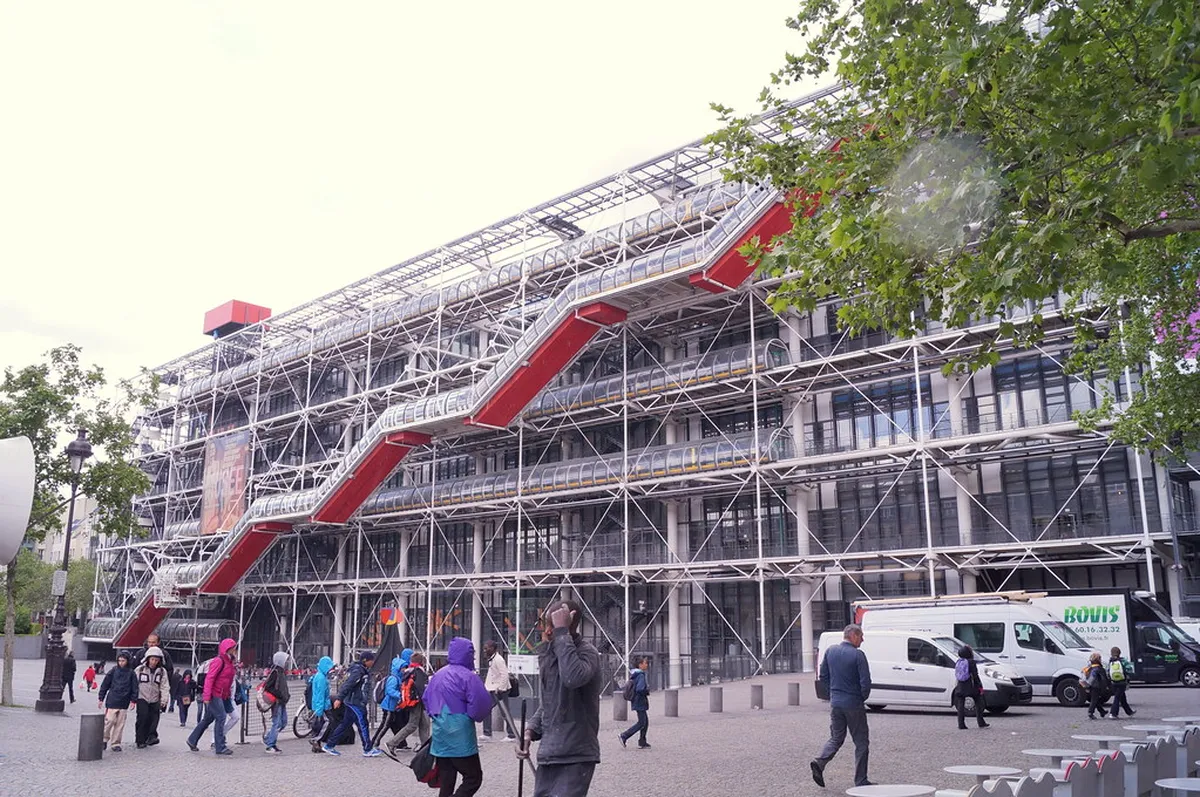
The most striking feature of the Centre Pompidou high-tech architecture style is its external infrastructure. The architects decided to place all the functional systems on the outside of the building. This includes the heating pipes, water lines, electrical wires, and even the elevators. Moving these systems outside freed up over forty thousand square meters of internal floor space. It allows the museum to maximize the area used for displaying modern art.
Each external pipe follows a strict color code to signify its specific technical purpose. Blue pipes carry air for the climate control systems throughout the entire building. Green pipes represent the plumbing and water circulation required for the large facility. Yellow pipes protect the electrical wires that provide power to every gallery floor. Red pipes signify the movement of people via elevators and the main escalator.
This color system makes the building look like a complex and colorful machine. It allows observers to understand how the structure functions just by looking at it. The design celebrates the beauty of industrial components rather than hiding them behind walls. This honesty in construction is a key principle of the high-tech architectural philosophy. It turns the technical equipment into a form of public art for everyone.
Modern visitors often compare the building to a giant set of colorful building blocks. The bright primary colors contrast sharply with the gray stone of the surrounding buildings. This visual tension creates a dynamic energy in the Place Georges-Pompidou every single day. The building does not try to blend in with its historic neighbors at all. Instead, it asserts its own unique identity through bold geometry and vibrant hues.
Structural Engineering and the Gerberettes
The structural integrity of the building relies on a unique component called a gerberette. These are large cast-steel brackets that connect the internal trusses to the external columns. Each gerberette acts like a see-saw to balance the weight of the massive floor plates. This engineering solution was vital for creating the wide and open galleries found inside. There are hundreds of these specialized steel pieces visible on the exterior of the building.
The use of prefabricated steel parts allowed for faster construction than traditional masonry methods. Engineers produced these massive components in factories before transporting them to the center of Paris. This industrial process reflects the spirit of the space age during the nineteen seventies. The precision required for these steel connections was very high for that time period. It demonstrates the technical excellence required to build such a complex modern structure.
Strong steel columns provide the primary vertical support for the entire six-story museum frame. These columns are visible from the street and highlight the strength of the metal. The building feels lightweight and transparent despite its massive overall size and heavy weight. Large glass panels fill the spaces between the steel beams to let in light. This creates a sense of openness that many traditional museums lack completely.
High-tech architecture often emphasizes the visibility of joints and connections within a building. At the Pompidou, you can see every bolt and weld that holds the structure together. This transparency allows students and fans to study the engineering as they walk around. It removes the mystery of how a large building stays standing in the city. The structure is a literal textbook of modern engineering and industrial design.
The Caterpillar Escalator and Urban Views
A giant glass tube known as the caterpillar crawls up the western facade of the building. This tube houses the main escalators that take visitors to the upper museum floors. Riding this escalator provides a unique cinematic experience of the Paris urban landscape. As you ascend, the rooftops of the city begin to reveal themselves to you. It is one of the best rooftops for Paris architecture photography available today.
The escalator was designed to be a festive way to enter a cultural institution. It turns the simple act of moving between floors into a grand public event. You can see the Eiffel Tower and Notre Dame from various points on the ride. The transparent glass walls provide a panoramic view that changes with the weather and light. This feature makes the building feel accessible and welcoming to the general public.
The top floor of the building features a large terrace with amazing views. This area hosts a restaurant and a space for rotating outdoor art installations. Many people visit the Pompidou just to experience the view from the sixth floor. The perspective of the historic city from this high-tech platform is truly unforgettable. It offers a perfect bridge between the old world and the new world.
Movement is a central theme in the Centre Pompidou high-tech architecture style throughout the day. The flow of people through the glass tubes mimics the flow of fluids in pipes. This constant motion gives the building a sense of life and vibrant energy. It never feels static or boring because of the people visible inside the tubes. The building and its visitors are part of the same dynamic system.
Planning Your 2025 Visit to Beaubourg
Visitors in 2025 should check the official schedule for any planned renovation work updates. The museum is located at Place Georges-Pompidou in the fourth arrondissement of Paris. It is easily reachable via the Rambuteau or Les Halles metro stations nearby. The center is generally open from eleven in the morning until nine at night. This allows for beautiful sunset views over the city from the upper decks.
General admission for the museum usually costs around fifteen euros for most adult visitors. You should book your tickets online in advance to avoid the long entry lines. The first Sunday of every month often offers free admission to the permanent collections. The museum hosts the largest collection of modern and contemporary art in all of Europe. You will find works by Picasso, Matisse, and many other famous modern masters.
The library inside is free to the public and is very popular with local students. It offers a quiet place to work with a great view of the piazza. Make sure to explore the Stravinsky Fountain located just next to the main building. This fountain features whimsical sculptures that move and spray water in a playful way. It complements the industrial style of the museum with colorful and kinetic art pieces.
Give yourself at least three hours to fully explore the galleries and the terrace. Wear comfortable shoes as you will be walking across very large open floor plans. The gift shop on the ground floor has an excellent selection of architecture books. You can also find unique design objects that reflect the spirit of the building. It is a perfect place to find a souvenir for any art lover.
Frequently Asked Questions
What defines the Centre Pompidou high-tech architecture style?
This style is defined by its exposed structural skeleton and externalized utility systems. It uses industrial materials like steel and glass to create a modern machine aesthetic. The color-coded pipes on the exterior indicate the different functions of the building systems.
Who were the architects of the Centre Pompidou?
Renzo Piano and Richard Rogers were the primary architects who designed the structure. They worked with the engineering firm Ove Arup and Partners to realize the vision. Their collaborative effort won the international design competition in nineteen seventy-one.
Why is the building so colorful?
The colors are part of a functional code used to identify different mechanical systems. Blue is for air, green is for water, yellow is for electricity, and red is for elevators. This makes the technical parts of the building easy to understand and visually interesting.
Is the Centre Pompidou closing for renovations soon?
The building has major renovation plans starting in late 2025 to modernize its infrastructure. Some sections may close periodically for repairs over the next few years. Visitors should always check the museum website for the latest 2025 operational updates.
The Centre Pompidou remains a vital symbol of architectural innovation and creative freedom in Paris. It successfully challenged the traditional rules of museum design with its high-tech approach. The building continues to inspire architects and art lovers from all over the world today. Visit this landmark in 2025 to experience the unique blend of industrial engineering and modern art. It is a must-see destination for anyone interested in the future of urban design.
Key Takeaways
- The building features a radical inside-out design with all technical systems visible on the exterior.
- A strict color-coded system identifies the purpose of every external pipe and tube.
- The interior provides vast open spaces thanks to massive steel trusses and gerberette brackets.
- The glass caterpillar escalator offers some of the best panoramic views of the Paris skyline.
- Plan your 2025 visit in advance to navigate potential renovations and enjoy the world-class art.
Related reads: architecturebycity.com, louis vuitton foundation architecture review, philharmonie de paris jean nouvel design features.