
Sainte-Chapelle Stained Glass Architecture
Explore the Sainte-Chapelle stained glass architecture. Learn about Gothic design and book your 2025 trip to Paris to see these windows.
On this page
Sainte-Chapelle stands as a glowing masterpiece of medieval design in the heart of modern Paris. This royal chapel was built by King Louis IX to house sacred religious relics. The Sainte-Chapelle stained glass architecture remains its most famous and impressive feature for all visitors.
The structure consists of two distinct levels that serve very different architectural and spiritual purposes. You will find the lower chapel intimate while the upper chapel feels truly celestial. Most travelers visit specifically to see the massive walls of colorful and historic glass. It represents a peak of the high Gothic period within the bustling French capital city.
The Brilliance of Rayonnant Gothic Style
Sainte-Chapelle is the ultimate example of the Rayonnant Gothic style found throughout northern France. This specific movement focused on achieving a sense of weightlessness within large stone buildings. Architects reduced the size of stone supports to allow for much larger window openings. This design shift allowed light to become the primary medium of the interior space.
The walls appear to be made entirely of glass rather than heavy and solid stone. Thin pillars called mullions hold the massive windows in place against the high vaulted ceilings. This technique created a spiritual atmosphere that felt closer to heaven for the royal court. You can see how Gothic architecture in Paris evolved through this innovative use of light.
The upper chapel was originally reserved for the king and his most trusted inner circle. Its verticality draws the eye upward toward the intricate rib vaults and the golden stars. Every surface is decorated with vibrant paint or gold leaf to enhance the visual effect. This creates a shimmering environment that changes constantly with the movement of the sun.
Building this chapel took less than seven years to complete during the middle thirteenth century. Such rapid construction is rare for Gothic buildings which often took many decades to finish. This speed ensured a stylistic unity that is hard to find in other medieval cathedrals. The chapel remains a pure expression of the king's divine right and artistic vision.
Analysis of the 1,113 Stained Glass Scenes
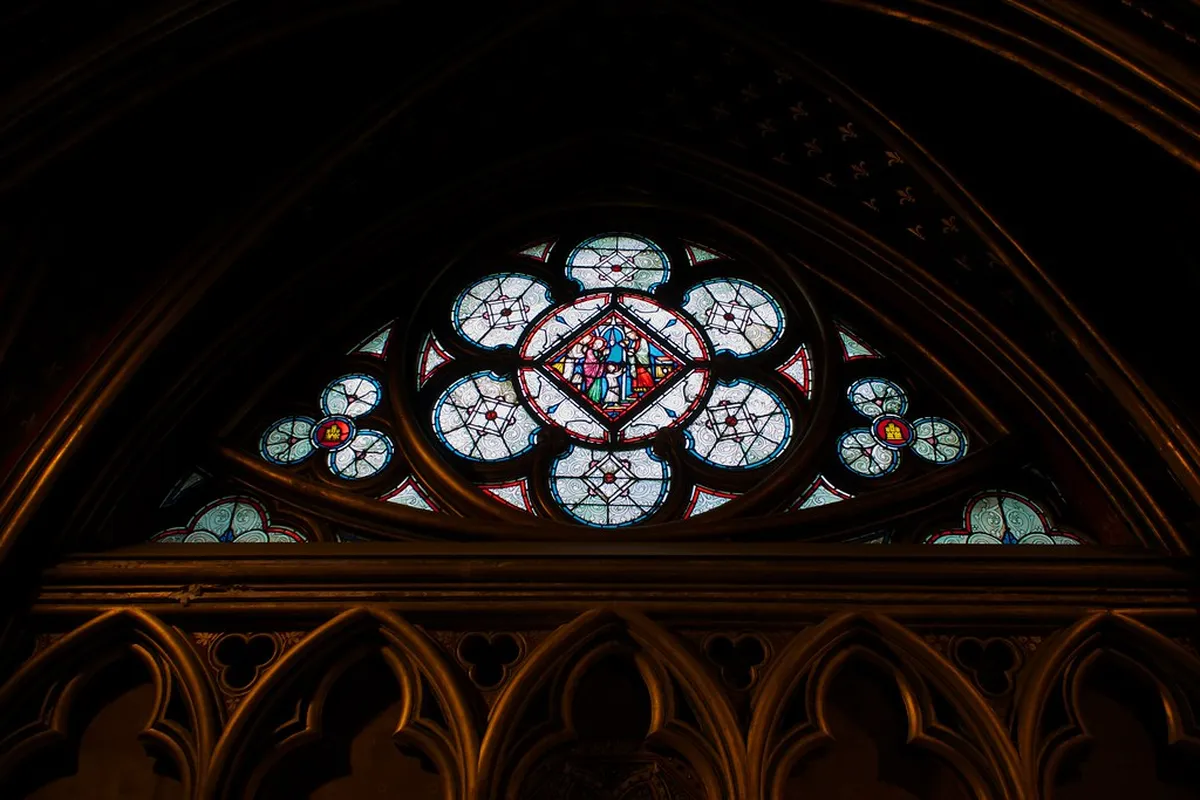
The upper chapel contains fifteen massive stained glass windows that reach fifteen meters in height. These windows depict over one thousand individual scenes from the Old and New Testaments. The narrative begins with the book of Genesis and moves through the history of Israel. It ends with the arrival of the sacred relics in the city of Paris.
You should read the windows from left to right and from the bottom to top. This flow allows you to follow the biblical stories in their proper chronological and spiritual order. The colors used are dominated by deep blues and vibrant reds made from metallic oxides. These pigments have retained their intensity for nearly eight hundred years of French history.
- The Genesis Window: Shows the creation of the world and the lives of Adam and Eve.
- The Passion Window: Illustrates the final days of Jesus Christ with emotional and artistic clarity.
- The Relics Window: Documents how King Louis IX acquired the Crown of Thorns for France.
The large rose window on the western wall provides a different visual style and era. It was rebuilt in the late fifteenth century using the more complex Flamboyant Gothic artistic style. This window depicts the Apocalypse and the final judgment with intricate stone tracery and color. It creates a powerful visual conclusion to the biblical narrative for every person watching.
Engineering Secrets of the Stone Structure
Supporting such massive windows required incredible engineering skills from the medieval masons and architects involved. The weight of the roof is concentrated on external buttresses rather than the internal walls. This allows the walls to be thin enough to hold the delicate stained glass panels. Iron bars were also hidden within the masonry to provide extra stability against the wind.
The use of iron was very advanced for the mid-1200s and helped preserve the chapel. These metal chains wrap around the building to prevent the stone from pushing outward too far. You will notice how the structure feels light despite the immense weight of the lead roof. It is a perfect balance of physics and artistic beauty that defies modern expectations.
Modern visitors can appreciate this architecture in Paris by looking closely at the exterior pillars. These supports are deep and narrow to provide maximum strength without blocking the precious sunlight. The harmony between the stone and the glass shows the genius of the master builder. Each element serves a functional purpose while contributing to the overall aesthetic of the chapel.
Recent restoration projects have cleaned the stone and replaced broken pieces of the historic glass panels. This work ensures that the structural integrity remains sound for future generations of global travelers. The cleaning process revealed the original colors of the stone and the brilliance of the glass. You can now see the chapel as it looked during the reign of Saint Louis.
Light and Color Theory in the Upper Chapel
The light inside Sainte-Chapelle changes dramatically depending on the time of day and weather. Morning light brings out the deep blues while the afternoon sun highlights the warm red tones. This shifting environment was designed to evoke a sense of the divine and the eternal. The glass acts as a filter that transforms ordinary sunlight into a celestial experience.
Medieval viewers believed that light was a physical manifestation of God's presence on the earth. By filling the space with color, the architects were creating a literal house of God. The stained glass also served as a visual Bible for those who could not read. Every pane of glass tells a story through color, gesture, and symbolic religious iconography.
The pigments were created by adding minerals to the molten glass during the manufacturing process. Cobalt produced the famous blue while copper was used to create the rich ruby red shades. These materials were very expensive and showed the immense wealth of the French royal family. The result is a jewel box effect that remains unmatched by any other building.
Photographers should visit during a sunny day to capture the best reflections on the stone floor. The light often projects the colors of the windows onto the carved statues of the apostles. This interaction between light and sculpture adds another layer of depth to the visual experience. It is a truly immersive environment that engages all of your senses at once.
Planning Your 2025 Visit to Sainte-Chapelle
You should book your tickets online in advance for your visit to Paris in 2025. The chapel is located at 10 Boulevard du Palais on the historic Île de la Cité. Security is quite strict because the chapel is located within the Palace of Justice complex. Allow at least thirty minutes to pass through the security checkpoints before your entry time.
The chapel is open daily from 9:00 AM until 7:00 PM during the peak summer months. Winter hours are usually shorter with the doors closing around 5:00 PM as the sun sets. Standard adult tickets cost approximately 13 to 15 Euros depending on the specific booking platform. Many visitors choose a combined ticket that includes entry to the nearby historic Conciergerie prison.
Consider visiting early in the morning to avoid the largest crowds of the busy afternoon. The upper chapel can feel quite crowded because the space is relatively small for many tourists. You should bring a pair of binoculars to see the details of the higher windows. This will allow you to appreciate the craftsmanship of the smallest glass panels clearly.
Check the official website for any planned closures or special evening concert events during your trip. These concerts offer a unique way to experience the acoustics and the atmosphere of the chapel. Listening to classical music surrounded by the glowing glass is a highlight for many travelers. Ensure you wear comfortable shoes as you will be standing for most of your tour.
Frequently Asked Questions
What is the best time of day to see the Sainte-Chapelle stained glass?
The best time to visit is on a sunny morning between 10:00 AM and 12:00 PM. This timing allows the sun to hit the southern windows directly for maximum brilliance. You will see the most vivid colors and reflections during these bright morning hours.
Can you take photos of the stained glass inside the chapel?
Yes, you are allowed to take photos for personal use inside both levels. However, you must turn off your flash to protect the historic pigments and the stone. Using a tripod is generally not allowed because the chapel space is very crowded.
How long should I spend at Sainte-Chapelle to see everything?
Most visitors spend about forty-five minutes to one hour exploring the two levels of the chapel. This gives you enough time to read some of the window panels and take photos. You may want more time if you are studying the Paris museums of architecture during your trip.
The Sainte-Chapelle stained glass architecture is a true wonder of the medieval world that you must see. Its combination of light, color, and engineering creates an unforgettable experience for every traveler in 2025. Make sure to include this Gothic gem on your next walking tour of the city. You will leave with a deep appreciation for the artistry of the past and the beauty of Paris.
Key Takeaways
- Book timed entry tickets online to save time and avoid long security lines.
- Visit on a sunny morning to see the most vibrant colors in the upper chapel.
- Bring binoculars to view the high biblical scenes located fifteen meters above the floor.
Related reads: architecturebycity.com, notre dame flying buttresses design, saint denis basilica gothic origins.