
Cryptoporticus Gallo-Roman Architecture Guide
Visit the Cryptoporticus Gallo-Roman architecture in Reims. Discover ancient Roman ruins in Reims with our 2025 site guide. Explore history today!
On this page
Reims is home to one of the most impressive ancient sites in France. This monument showcases the best of Cryptoporticus Gallo-Roman architecture from the second century. Visitors can explore these underground galleries located right beneath the modern city center. It offers a rare glimpse into the ancient world of the Roman Empire.
The structure once supported the grand forum of the ancient city of Durocortorum. Today, it remains one of only a few such sites preserved in the world. Walking through these stone halls feels like stepping back nearly two thousand years. It is a must-see destination for any architecture lover visiting Reims in 2025.
Origins of the Ancient Roman Forum
The Cryptoporticus was built around the year 200 AD during the Pax Romana. It served as a foundation for the monumental forum in the heart of the city. Ancient Durocortorum was the capital of the Roman province of Belgic Gaul at that time. This location was a major crossroads for trade and political power in the region.
The forum was the center of social and commercial life for all citizens. Above these galleries stood grand temples, markets, and public offices for local administrators. The underground design provided structural stability for the massive buildings constructed on the surface. It represents the peak of Roman engineering and urban design in northern France.
Archaeologists discovered these hidden remains during urban redevelopment projects in the mid-twentieth century. Most of the original forum was destroyed during the medieval period and subsequent wars. However, the underground levels remained protected by layers of earth and modern pavement. They now serve as a testament to the city's long and complex history.
Preservation efforts have allowed these ancient stone galleries to remain open for public viewing. The site is a protected national monument that draws thousands of history enthusiasts every year. It highlights the importance of Reims as a historical hub for Western European civilization. You can feel the weight of history as you descend into the cool darkness.
Structural Features of Cryptoporticus Gallo-Roman Architecture
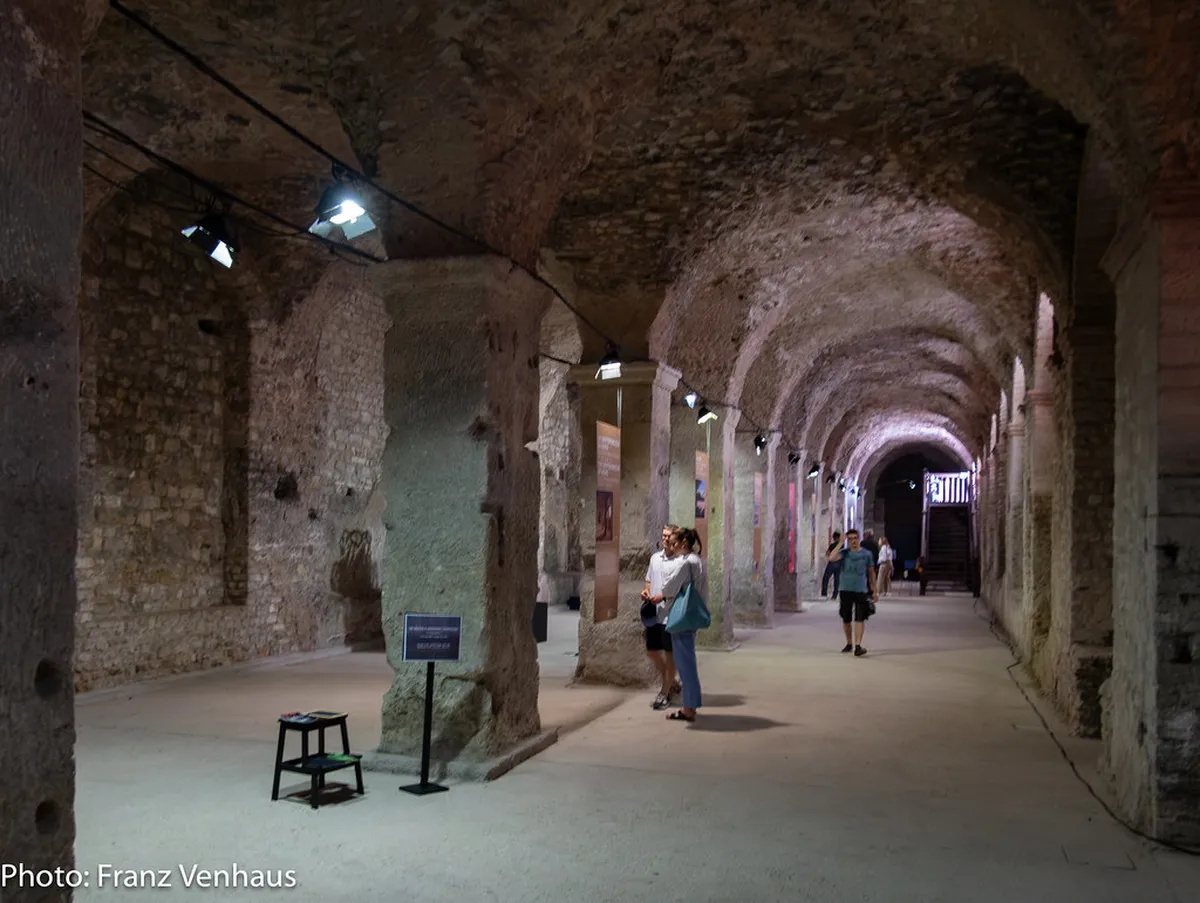
The architecture consists of three long galleries arranged in a distinct U-shaped plan. These tunnels feature sturdy barrel vaults made from high-quality local limestone and mortar. Each gallery measures about five meters wide and nearly six meters in height. The scale of the construction demonstrates the immense wealth of the ancient province.
Small windows near the top of the walls provided limited light and ventilation. These openings are called oculi and allowed air to circulate through the dark tunnels. This design kept the interior cool during the summer and dry during the winter. It was a perfect environment for storing perishable goods or escaping the heat.
The walls are decorated with simple yet elegant patterns of stone and brick. You can still see the marks left by the original Roman stonemasons and builders. These details show the precision required to support the heavy structures built on the forum level. The arches distribute weight evenly to ensure the tunnels do not collapse over time.
Architects today study these ruins to understand ancient building techniques and structural mechanics. The use of local materials highlights the efficiency of Roman construction in different climates. Cryptoporticus Gallo-Roman architecture remains a fascinating study in durability and functional urban design. It is a highlight of any architectural tour through northern France.
Exploring the Roman Ruins in Reims
The site is part of a larger collection of Roman ruins in Reims scattered throughout the city. You should start your visit at the Place du Forum to see the entrance. The surrounding area features many cafes where you can relax before heading underground. It is located in the most historic part of the city center.
Once inside, you will notice the incredible silence compared to the busy streets above. The atmosphere is damp and cool, which creates a very mysterious feeling for visitors. You can walk along the entire length of the surviving galleries at your own pace. Information boards explain the history and function of each part of the structure.
Entry to the Cryptoporticus is currently free for all visitors as of 2025. This makes it one of the best budget-friendly historical activities in the entire region. The site is typically open from May until September during the peak tourist season. Always check the local tourism office for specific daily opening hours and holiday closures.
Photography is allowed inside the galleries, but you should avoid using a flash. The soft lighting helps preserve the ancient stone and creates a dramatic visual effect. Many visitors spend about thirty to forty-five minutes exploring the various sections of the ruin. It is a quick but highly impactful experience for any traveler.
The Legacy of Roman Durocortorum Planning
Reims was once known as Durocortorum and was larger than many other Roman cities. The urban grid established during that era still influences the modern street layout today. Engineers used advanced surveying tools to create a logical and efficient city map. This Roman Durocortorum urban planning ensured that the city could grow and prosper.
The Cryptoporticus was the anchor point for the entire north-south and east-west axes. It connected the main market areas with the residential districts of the ancient capital. This strategic placement allowed for the easy movement of goods and people across the city. Most Roman cities followed this standard model to maintain order and civic pride.
The ruins show how the Romans integrated public spaces with functional storage and infrastructure. They valued beauty and utility equally when designing their most important civic buildings. The forum was not just a marketplace but a symbol of Roman civilization and law. It stood as a reminder of the power and reach of the empire.
Walking through the modern city, you can still find traces of this ancient grid. Many streets follow the exact paths laid down by Roman engineers two millennia ago. The Cryptoporticus remains the most visible link to this forgotten urban masterpiece. It provides essential context for the architectural development of Reims through the ages.
Essential Tips for Your 2025 Visit
Wear comfortable walking shoes because the stone floors can be uneven and slippery. Bring a light jacket even if the weather is warm outside the entrance. The temperature underground stays consistently cool throughout the day and evening. It is a refreshing break from the midday sun during the summer months.
The site is located near other major landmarks like the Reims Cathedral and City Hall. You can easily include it in a broader walking tour of the historic district. Many people visit the Cryptoporticus after seeing the famous Porte de Mars nearby. These sites together provide a complete picture of Roman influence in the city.
Consider booking a guided tour if you want a deeper look into the archaeological history. Local guides offer fascinating stories about the daily lives of the people who lived here. They can point out subtle details in the masonry that you might otherwise miss. Tours are often available in several languages during the busy summer months.
Plan your Reims architecture tour planning to include this site during the early afternoon. This is when the light hits the oculi most effectively for great photos. The site is usually less crowded during the weekdays than on the weekends. It is a peaceful place to reflect on the passage of time.
Frequently Asked Questions
What exactly is a Cryptoporticus in Gallo-Roman architecture?
A Cryptoporticus is a covered corridor or gallery located partially or entirely underground. In Gallo-Roman architecture, these structures often supported the foundations of a city's main forum. They provided a level surface for heavy buildings and offered storage or cooling spaces. The example in Reims is one of the best-preserved versions of this design.
Is there a fee to enter the Cryptoporticus of Reims?
Entry to the Cryptoporticus is currently free for the public in 2025. It is maintained by the city as an open archaeological site for everyone. You do not need to book tickets in advance for general admission. This makes it a great addition to any budget-friendly travel itinerary in France.
When is the best time to visit the Roman ruins in Reims?
The best time to visit is during the summer months from June to August. The site is generally open to the public from May through September each year. It remains closed during the winter to protect the ancient structure from frost and dampness. Afternoon visits offer the best lighting through the small ventilation windows.
Where is the Cryptoporticus located within the city?
The entrance is located at the Place du Forum in the center of Reims. It is within easy walking distance of the cathedral and the main shopping streets. You will see a small staircase leading down below the modern street level. Look for the historical markers near the cafes on the square.
The Cryptoporticus of Reims is a stunning example of ancient engineering and design. It offers a unique window into the Roman past of this famous French city. Seeing these ruins in 2025 provides a deeper appreciation for the roots of European architecture. Make sure to include this underground marvel on your next trip to the region. Start your journey with professional Reims architecture tour planning to see it all.
Key Takeaways
- The Cryptoporticus is a rare second-century underground gallery located at the Place du Forum.
- Entry is currently free and the site is open seasonally from May to September.
- It is a primary example of Gallo-Roman engineering used to support the ancient city's forum.
- The interior remains naturally cool, making it a great summer escape for travelers.
Related reads: architecturebycity.com, architecture in reims.