
Flying Buttresses of Reims: Gothic Engineering Secrets
Learn how the flying buttresses of Reims revolutionized Gothic architecture. Explore technical details, 2025 tips, and structural history. Visit Reims today!
On this page
The flying buttresses of Reims represent the absolute peak of medieval engineering in northern France. These massive stone structures provide the necessary support for the soaring heights of the great cathedral nave. You will notice how they define the exterior silhouette of this famous UNESCO World Heritage site today. Architects designed these supports to handle the immense lateral pressure from the heavy stone vaulted ceilings.
Understanding Gothic architecture in Reims requires a close look at these external skeletal systems. They allowed builders to replace thick solid walls with expansive and colorful stained glass windows. This innovation transformed the interior into a space filled with divine light and celestial atmosphere. Visitors in 2025 can still marvel at the precision of these ancient limestone construction techniques.
The Technical Mechanics of Lateral Thrust
The flying buttresses of Reims serve a vital structural purpose for the integrity of the building. These arches collect the outward pressure, or lateral thrust, generated by the heavy ribbed vaulting inside. Without these external supports, the tall nave walls would eventually buckle and collapse under the weight. Engineers in the thirteenth century calculated these forces with incredible accuracy using simple geometric principles.
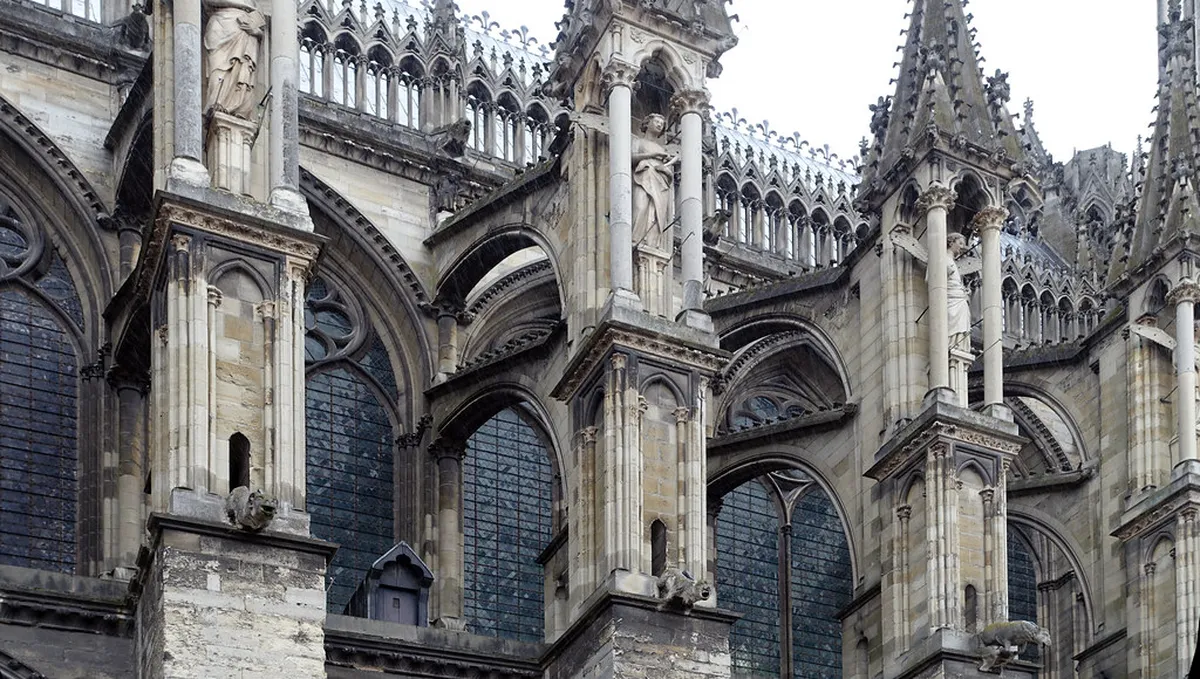
Each buttress consists of a massive outer pier and a graceful arching bridge to the wall. The bridge transmits the weight from the upper levels down into the heavy foundation blocks below. This system effectively separates the supporting structure from the enclosure walls of the cathedral itself. It creates a rigid exoskeleton that keeps the entire 38-meter high nave perfectly stable and secure.
The specific design at Reims features a double-flight system for maximum stability against strong wind loads. Upper arches counteract the pressure from the roof timber while lower arches support the main vaulting. This sophisticated layout shows the advanced technical knowledge possessed by the master builders of the era. Modern structural analysis confirms that these medieval designs are remarkably efficient at distributing complex physical loads.
Structural stability remains the primary reason for the unique external appearance of the Notre-Dame de Reims. The placement of each pier correlates exactly with the internal bays of the long cathedral nave. This creates a rhythmic pattern that guides the eye toward the heavens along the entire exterior. You can see how the stones are carefully jointed to resist compression over many centuries.
Artistic Detail and the Angelic Pinnacles
The flying buttresses of Reims are not merely functional components of the massive stone building. Each exterior pier is topped with a decorative pinnacle that serves a very important physical purpose. These heavy stone caps add vertical weight to the pier to help resist the outward thrust. This clever integration of art and science is a hallmark of the High Gothic design style.
You will find beautiful statues of angels housed within small tabernacles on every single supporting pier. These sculptures give the cathedral its famous nickname as the Cathedral of Angels among local residents. The fine details on these figures demonstrate the high level of craftsmanship available in medieval France. Even at great heights, the stone carvers included intricate feathers and expressive facial features for observers.
Examining the reims cathedral facade details reveals how decoration masks the raw engineering of the supports. Crockets and finials decorate the edges of the arches to break up the harsh structural lines. This creates a sense of lightness that contradicts the actual weight of the massive limestone blocks. The result is a structure that looks like a delicate lace crown from a distance.
During your visit in 2025, bring binoculars to see the gargoyles perched along the upper buttress flights. These functional water sprouts protect the limestone by directing rainwater far away from the main foundations. They often take the form of mythical beasts or stylized animals with wide gaping stone mouths. This combination of drainage and decoration showcases the holistic approach of Gothic master masons.
Limestone Selection and Medieval Masonry
Constructing the flying buttresses of Reims required vast amounts of high-quality stone from local French quarries. Masons primarily used Lutetian limestone, which is known for its durability and warm yellow color. This material allowed for the creation of thin arches that could still support incredible downward pressure. The transport of these heavy blocks required complex pulley systems and sturdy wooden scaffolding towers.
Each stone was precisely cut by hand to fit into a specific location within the arch. Medieval builders used iron cramps and lead to secure the most critical joints against environmental movement. This attention to detail ensured that the cathedral survived wars, fires, and the passage of time. The masonry techniques used here influenced church construction projects across the entire European continent for generations.
The sheer scale of the project meant that construction lasted for several decades during the 1200s. Multiple generations of stone masons dedicated their entire lives to perfecting these elegant external support systems. You can still see the individual marks left by different craftsmen on the hidden stone surfaces. These marks helped project managers track the production and quality of every single architectural element.
Material science played a huge role in the longevity of the Reims Cathedral support structures. The builders understood how to layer the stone to prevent moisture from causing internal cracks. Modern restorers still use these traditional methods to maintain the integrity of the flying buttresses today. Preserving the original limestone is a top priority for the French heritage departments in 2025.
The Interior Revolution of Light
The implementation of flying buttresses completely changed the experience of being inside the Reims Cathedral. Because the walls no longer had to support the roof, they could be significantly thinned. This allowed for the installation of massive clerestory windows that flood the nave with natural light. The interior space feels incredibly airy and vertical compared to older Romanesque style stone buildings.
Stained glass cycles at Reims are among the most famous examples of medieval art in the world. The flying buttress system provides the rigid frame necessary to hold these fragile glass panels safely. Without the external support piers, the walls would be too weak to support such large openings. You can experience the colorful light patterns on the floor during the bright morning hours.
The height of the nave reaches a staggering 38 meters thanks to the external stone bracing. This verticality was intended to draw the gaze of the faithful upward toward the divine realm. The soaring columns inside seem to defy gravity as they transition into the complex ceiling ribs. This architectural magic is only possible because the flying buttresses handle the heavy lifting outside.
Visitors often overlook the buttresses while standing inside the quiet and peaceful cathedral sanctuary. However, the shadows of the external piers create a rhythmic play of light across the glass. This interaction between the exterior skeleton and the interior volume defines the genius of the Reims design. It remains a powerful example of how engineering can create a profound spiritual and sensory atmosphere.
Restoration and Preservation Efforts in 2025
Maintaining the flying buttresses of Reims is a constant challenge for modern architectural preservation teams in France. Pollution and acid rain can erode the delicate limestone surfaces over several decades of exposure. Specialists use advanced laser cleaning technology to remove soot without damaging the original medieval stone carvings. In 2025, several sections of the southern flank are undergoing careful structural monitoring and repair.
The cost of these restoration projects often runs into millions of euros every single year. Funding comes from a mix of government grants and private donations from heritage enthusiasts worldwide. These efforts ensure that the cathedral remains safe for the thousands of tourists who visit daily. Expert masons must sometimes replace severely weathered stones with new blocks from the original historic quarries.
Climate change presents new risks to the stability of the ancient flying buttress systems today. Increased storm intensity and temperature fluctuations can cause the stone to expand and contract significantly. Engineers install digital sensors to track any minute movements in the masonry over long periods of time. This data helps them predict where future reinforcements might be needed to prevent structural failure.
Preservation work in 2025 also focuses on protecting the famous angel statues from further decay. Some original sculptures have been moved to the nearby Palace of Tau for better environmental protection. High-quality replicas now stand in their place on the exterior piers to maintain the visual harmony. This balance of protection and display keeps the history of Reims alive for future generations.
Planning Your Architecture Visit in 2025
To see the flying buttresses of Reims clearly, you should walk around the entire cathedral exterior. The best views are found from the gardens located on the eastern side of the building. Here, you can see the complex layering of the arches as they surround the semicircular apse. Morning light provides the best conditions for capturing the textures of the ancient French limestone.
Check the reims architecture tour planning guide for updated opening hours and local ticket prices. Most of the exterior viewing areas are free and open to the public throughout the day. Consider booking a guided tour to gain access to the upper galleries for a closer view. These tours offer a unique perspective on the engineering details that are invisible from the ground.
Reims is easily accessible from Paris via a high-speed TGV train in under one hour. This makes it a perfect day trip for anyone interested in technical architectural history or engineering. Expect to spend at least two hours exploring the different levels of the cathedral exterior. Bring a camera with a good zoom lens to photograph the angels on the pinnacles.
The city of Reims offers many other Gothic sites that complement your visit to the main cathedral. You should explore the nearby Basilica of Saint-Remi to compare its earlier architectural support systems. Visiting both locations provides a complete picture of how the flying buttress evolved over time. Wear comfortable walking shoes as the stone paths around the historic center can be quite uneven.
Frequently Asked Questions
Why are the flying buttresses of Reims so famous?
They are famous for their perfect technical execution and beautiful decorative pinnacles. These supports allowed for the massive windows that define the High Gothic style in France. Many historians consider them the most elegant example of medieval structural engineering ever built.
How many flying buttresses does Reims Cathedral have?
The cathedral features dozens of flying buttresses that surround the entire nave and the apse. Each bay of the building corresponds to a specific external support pier for stability. This creates a repetitive and harmonious structural rhythm that is visible from many city streets.
Can you climb the buttresses at Reims Cathedral?
Public access is generally restricted to the interior floors and specific upper tower tours. However, specialized architectural tours sometimes allow visitors to walk along the upper gutters and galleries. Always check the official cathedral website for the latest 2025 tour availability and safety rules.
What happens if a flying buttress fails?
A failure would cause the lateral thrust of the vaults to push the walls outward. This would lead to severe cracking and the eventual collapse of the stone ceiling. Modern engineers monitor the buttresses constantly to ensure this never happens to the historic structure.
The flying buttresses of Reims remain a testament to the ingenuity of medieval French architects. These structures successfully bridge the gap between heavy stone engineering and ethereal artistic beauty. Visiting this cathedral in 2025 offers a unique chance to see history and physics in action. Plan your trip today to experience the majesty of this Gothic masterpiece in person.
Key Takeaways
- Flying buttresses allow for taller naves and larger stained glass windows.
- The Reims buttresses feature unique angel statues on every supporting pier.
- Lutetian limestone is the primary material used for these Gothic structures.
- Regular maintenance in 2025 is essential to protect the stone from erosion.
Related reads: architecturebycity.com, architecture in reims, saint remi basilica architecture history.