
Maison Kammerzell Facade Woodcarvings Guide 2025
Explore the intricate Maison Kammerzell facade woodcarvings in Strasbourg. Learn about history, symbols, and art in this 2025 architecture guide. Visit today!
On this page
Maison Kammerzell stands as a legendary icon in the heart of Strasbourg. This historic building features the stunning Maison Kammerzell facade woodcarvings. Many visitors admire these details while exploring the Palais Rohan Strasbourg architecture nearby. This 2025 guide provides a deep study of these intricate Renaissance artistic patterns.
The house represents the peak of Alsatian regional craft during the late sixteenth century. Its timber-framed structure displays exceptional carvings that tell stories of faith and human nature. Every panel offers a glimpse into the creative minds of medieval master craftsmen. You will find thousands of unique details across the massive wooden exterior walls.
History of the Kammerzell Woodcarvings
The foundation of this iconic house dates back to the middle of the fifteenth century. However, the famous wooden upper floors were added much later in the year 1589. A wealthy cheese merchant named Martin Braun commissioned these incredible Maison Kammerzell facade woodcarvings. He wanted his home to reflect his immense wealth and social standing.
Braun hired the most skilled woodworkers in the region for this massive artistic project. These craftsmen used dark oak to ensure the carvings could withstand the harsh European weather. The wood was seasoned for years before the intricate chiseling work actually began. This careful preparation allowed the fine details to survive for over four centuries.
The building is a vital part of the Grande Ile UNESCO heritage buildings collection today. It serves as a bridge between late Gothic traditions and the new Renaissance styles. Researchers still study the tool marks to understand ancient wood carving techniques. The house remains the most decorated half-timbered structure in the entire world.
In 2025, the facade remains remarkably intact despite centuries of exposure to city pollution. Regular restoration projects ensure that the fine lines of the carvings stay very sharp. Specialized conservators use traditional oils to protect the oak from moisture and insects. This dedication preserves the artistic legacy for thousands of curious travelers every single year.
Symbolism of the Seventy-Five Figures
The exterior of Maison Kammerzell features a total of seventy-five distinct carved human figures. These characters represent a mix of biblical scenes and classic mythological stories from antiquity. Each figure occupies a specific place within the geometric patterns of the timber frames. They serve as a visual encyclopedia for people who could not read books.
One section of the facade focuses on the theological virtues of Faith, Hope, and Charity. These figures remind onlookers of the spiritual values that guided life in the sixteenth century. The carving of Charity is particularly detailed, showing a mother caring for several small children. Each virtue is identified by specific symbols like anchors, crosses, or burning hearts.
Moving along the beams, you will discover carvings of famous historical and mythical heroes. Figures like Hector of Troy and Alexander the Great appear in elaborate period costumes. These carvings celebrated the humanist ideals that were spreading across Europe during the Renaissance. They represented the strength and wisdom that the merchant class highly admired.
- The Zodiac Signs: Twelve panels depict the astrological symbols used for navigation.
- The Musicians: Various figures play flutes, lutes, and harps along the corner beams.
- The Senses: Carvings representing sight, sound, touch, taste, and smell are clearly visible.
The corner pillars are the most heavily decorated parts of the entire front facade. Large figures of the Evangelists hold their sacred books while watching over the busy square. These carvings are larger in scale to provide a structural visual balance to the house. The depth of the carving creates dramatic shadows during the bright afternoon sun.
The Five Senses and the Four Ages
The Maison Kammerzell facade woodcarvings include a fascinating series dedicated to the five senses. Sight is represented by a figure holding a mirror to reflect the surrounding world. Hearing features a man leaning in closely to catch a faint or distant sound. These secular themes show the growing interest in human experience during the late 1500s.
Next to the senses, you can find the representation of the four ages of man. These carvings depict the transition from vulnerable childhood to the wisdom of old age. A young boy playing with toys stands near a man holding a heavy staff. This sequence encourages visitors to reflect on the fleeting nature of human existence.
The detail in the clothing of these figures is historically accurate for the year 1589. You can see individual buttons, lace patterns, and heavy fabric folds in the dark oak. The craftsmen managed to make the hard wood look like soft velvet and silk. This technical skill is why the house is considered a masterpiece of sculpture.
Each panel is framed by ornate scrolls and floral motifs known as grotesque patterns. These decorative elements were very popular in the German Renaissance style of architecture. They fill the spaces between the main figures to create a sense of visual abundance. The result is a facade that feels alive with constant movement and energy.
Architectural Harmony with the Cathedral
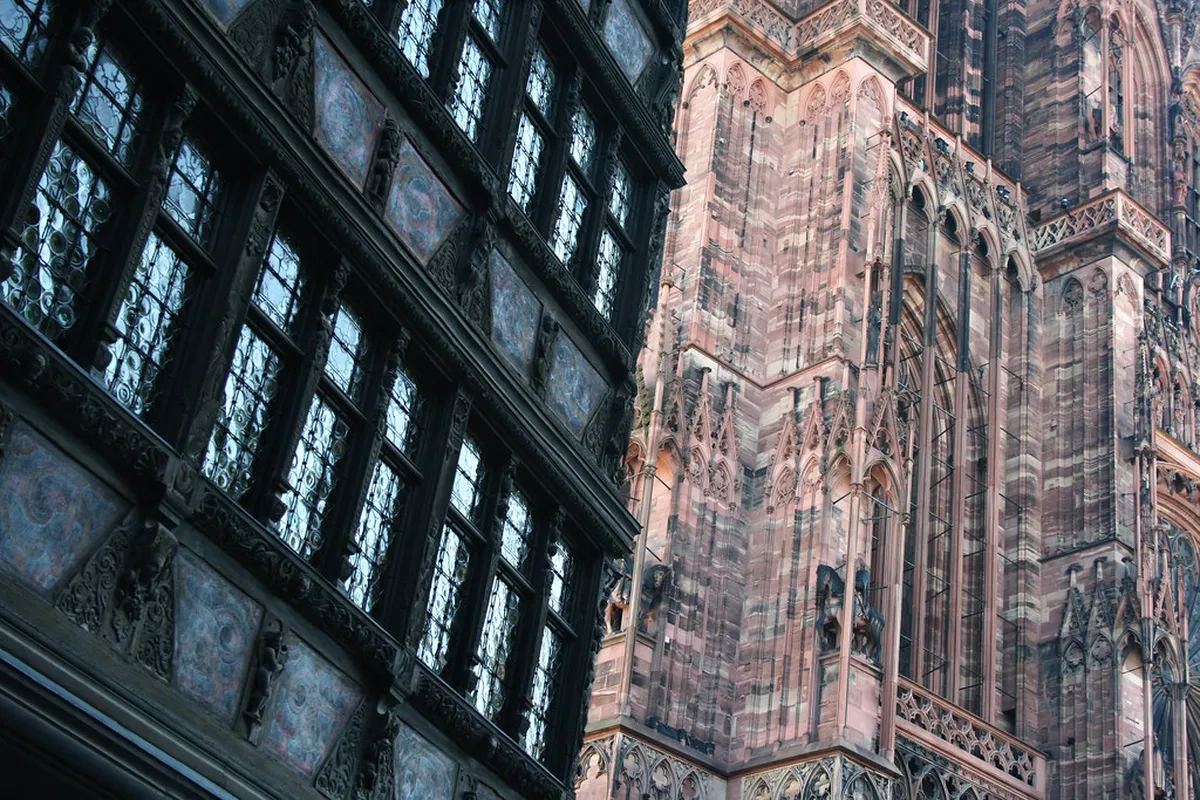
Maison Kammerzell sits directly across from the majestic Strasbourg Cathedral Gothic architecture on the main square. The dark, ornate wood provides a sharp contrast to the pink sandstone of the church. This proximity was intentional to show the connection between the church and the city. The house matches the vertical energy of the cathedral through its many tall floors.
The stone ground floor dates back to 1427 and features traditional Gothic arched windows. This solid base supports the three ornate wooden levels that project out over the street. This technique maximized living space in the crowded medieval city center of Strasbourg. It also protected the lower carvings from rain by providing a natural overhang.
The windows of the house are made of small, circular bottle-glass panes held by lead. These glass circles distort the light and create a glittering effect behind the dark wood. From the outside, the windows look like jewels set within an intricate wooden box. This combination of glass and wood is a classic feature of upper-class Alsatian homes.
The roof is steep and features several levels of tiny dormer windows for ventilation. These openings allowed air to circulate through the attic where goods were often stored. The entire structure demonstrates how functional needs and artistic beauty can coexist perfectly. It remains a primary example of urban architecture from the Holy Roman Empire era.
Preservation Challenges and Restoration
Maintaining the Maison Kammerzell facade woodcarvings is a constant struggle against the elements of nature. Rain and frost can cause the oak to crack or rot over many decades. The city of Strasbourg employs master woodcarvers to perform delicate repairs every few years. These experts use the same types of chisels that were used in 1589.
Air pollution from modern city life can also darken the wood and obscure fine details. Gentle cleaning methods are used to remove soot without damaging the ancient surface of the oak. Scientists monitor the moisture levels inside the wood to prevent any structural warping or damage. This scientific approach ensures the house will stand for several more centuries.
Visitors in 2025 can see the results of the most recent extensive cleaning project. The natural grain of the wood is now more visible than it was years ago. You can clearly see the different textures used to represent skin, hair, and stone. The dark stain applied to the wood helps highlight these incredible artistic contrasts.
The interior of the house has been converted into a high-end traditional Alsatian restaurant. This allows the building to generate income to pay for its own expensive maintenance. Guests can dine surrounded by 19th-century frescoes that complement the external wood carvings. It is a rare chance to experience a living piece of European history.
Frequently Asked Questions
What is the best time to see the Maison Kammerzell carvings?
The best time to view the carvings is during the late afternoon in 2025. The setting sun hits the facade directly and creates deep shadows in the wood. These shadows make the seventy-five figures look three-dimensional and very lifelike. You should spend at least thirty minutes looking at the different levels.
How many figures are carved into the Maison Kammerzell facade?
There are seventy-five unique human figures carved into the dark oak facade. These include biblical characters, famous historical leaders, and representations of the zodiac. Each figure is placed within an elaborate frame of floral and geometric patterns. They are located mostly on the corner pillars and window frames.
Who was the architect of Maison Kammerzell?
The stone ground floor was built in 1427 by unknown medieval stonemasons. The famous wood carvings were commissioned by Martin Braun and executed in 1589. While no single architect is credited, the work was done by elite regional guilds. These guilds specialized in the unique timber-framing styles of the Rhine valley.
Is there an entrance fee to see the carvings?
Viewing the Maison Kammerzell facade woodcarvings from the square is completely free for everyone. Since it is an active restaurant, you must book a table to see the interior. The external carvings are the main attraction for most architecture lovers visiting Strasbourg. You can take as many photos as you want from the public street.
The Maison Kammerzell facade woodcarvings are a true wonder of the European Renaissance period. They offer a unique look into the artistic and spiritual life of sixteenth-century Strasbourg residents. Visiting this site is essential for anyone interested in historic craftsmanship and urban design. Make sure to pair your visit with a tour of the nearby cathedral for a full experience.
Key Takeaways
- The wooden levels were added in 1589 by cheese merchant Martin Braun.
- The facade features 75 distinct figures including biblical characters and virtues.
- It is located on the Cathedral Square and is a UNESCO World Heritage site.
- The carvings are best viewed in the late afternoon sun for maximum detail.
Related reads: architecturebycity.com, architecture in strasbourg, french baroque interiors of palais rohan.