
Palais Rohan Strasbourg Architecture Guide
Explore Palais Rohan Strasbourg architecture in 2025. Discover French Baroque style, royal apartments, and world-class museums in this expert travel guide.
On this page
The stunning Palais Rohan Strasbourg architecture represents the peak of French Baroque design in the Alsace region. This magnificent royal palace stands directly next to the iconic cathedral in the historic center of the city. It served as a primary residence for several powerful prince-bishops from the noble and influential House of Rohan. Visitors in 2025 can explore the royal apartments and three major museums located within this historic site.
Walking through the grand gates feels like stepping back in time to the height of French royal power. You will find incredible art and historical treasures hidden behind the massive walls of this beautiful stone building. This guide will help you discover the secrets of the palace and plan your perfect visit in 2025. Every corner of the structure tells a story about the complex relationship between the French and local culture.
The History of Palais Rohan Strasbourg Architecture
Palais Rohan Strasbourg architecture emerged during the golden age of French classicism in the eighteenth century years. Cardinal Armand Gaston de Rohan commissioned the building to show his immense power and royal status to the world. The construction of this massive palace began in 1731 and finished ten years later in 1742. It replaced an older episcopal residence to match the modern standards of the French royal court at that time.
Robert de Cotte designed the palace as the premier architect for the French king during that specific historical period. He brought the sophisticated styles of Paris and Versailles to this important border city in the eastern France region. His vision transformed the local skyline and influenced many other examples of architecture in Strasbourg today. The building survived several wars and the French Revolution with its original structure largely intact for us to see.
The palace design follows the classic French layout known as a hotel particulier with a grand internal courtyard. This courtyard creates a formal entrance that separates the private residence from the busy city streets outside the walls. High walls and a triumphal arch welcome guests into the main space of this royal and episcopal home. Every corner of the building reflects the wealth and political importance of the famous Rohan family dynasty in France.
Four different cardinals from the Rohan family lived in these luxury quarters during the middle of the eighteenth century. They hosted several famous historical figures including King Louis XV and Queen Marie Antoinette in these very rooms. The palace eventually became a city hall before it was turned into a dedicated center for local culture. Its transition from a private home to a public museum helped preserve the architecture for many future generations.
Historians believe that the palace design served as a model for many other grand buildings in central Europe. Its influence spread across the Rhine river and reached many distant courts in the German speaking lands nearby. The careful proportions and elegant decorations represent the very best of the French architectural tradition of the time. You can still see these historical influences when you walk through the older streets of the city today.
Exterior Features of the Baroque Facade
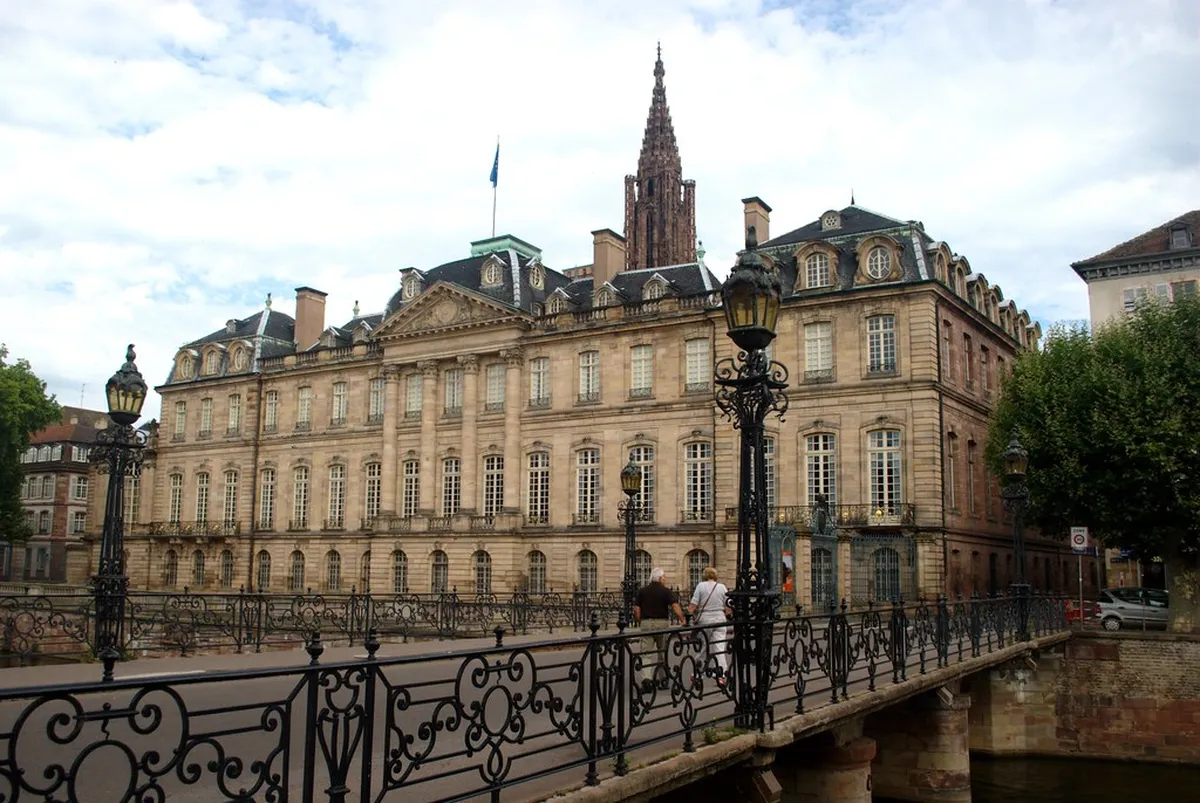
The river-facing facade offers one of the most beautiful views of Palais Rohan Strasbourg architecture in modern France. It features a grand terrace that looks directly over the water of the scenic Ill River nearby. Large windows and tall columns create a sense of symmetry and balance typical of the classic Baroque style. The pink sandstone used for the walls matches the material of the nearby city cathedral and its towers.
Sculptures and decorative carvings adorn the exterior walls to showcase the artistic skill of the expert French builders. You can see detailed coats of arms and mythological figures carved into the hard stone of the facade. These elements tell the story of the Rohan family and their close connection to the French monarchy. The palace is a central part of the Grande Ile UNESCO heritage buildings area in Strasbourg.
The main entrance gate features a massive triumphal arch that stands at the front of the palace grounds. This gatehouse served as a defensive barrier while also making a strong statement about the status of the owner. Above the arch you can see statues representing the cardinal virtues of justice and strength and also temperance. Passing through this gate feels like entering a different world of historical elegance and royal French charm today.
Large Corinthian columns support the central section of the palace and provide a sense of grand vertical scale. The roof design includes classic dormer windows that are common in traditional French civil architecture of that period. Every detail was carefully planned to create a harmonious appearance that would impress visiting royalty and local citizens. The building remains one of the finest examples of eighteenth-century design found anywhere in the country today.
Artisans spent many years perfecting the stone carvings that decorate the front of the grand and beautiful palace. These craftsmen used local techniques to ensure that the French style could survive the damp weather of the region. The result is a facade that looks as impressive today as it did nearly three hundred years ago. It remains a favorite spot for visitors who want to capture the essence of the historic city center.
French Baroque Interiors of Palais Rohan
The French Baroque interiors of Palais Rohan offer a spectacular glimpse into the lives of the French elite. Gold leaf decorates the walls and ceilings of the main state rooms to create a shimmering effect. Hand-painted murals tell stories of history and religion across the surfaces of the grand reception halls and rooms. These spaces were designed to impress visitors during formal banquets and official meetings with the prince-bishops.
The King's Bedchamber features elaborate wood carvings and rich silk fabrics that cover the walls and the furniture. This room was specifically designed to host the French monarch if he ever visited the city of Strasbourg. Intricate patterns in the parquet flooring show the high level of craftsmanship available during the eighteenth century years. Massive chandeliers hang from the ceilings to provide light and add to the overall feeling of royal luxury.
The Library of the palace houses thousands of rare books and historical manuscripts within its wooden shelves today. This room features warm wood paneling and quiet spaces for study that have remained unchanged for many years. It reflects the intellectual interests of the Rohan family and their support for the arts and local science. Visitors can still feel the scholarly atmosphere as they walk through this beautiful and very quiet space.
The Synod Hall served as a grand dining room for the bishops and their most important dinner guests. It features marble floors and tall mirrors that make the space feel even larger and more impressive today. The furniture in this room includes original pieces from the period that demonstrate the evolving tastes of France. Every item in the room was selected to create a perfect environment for the highest levels of society.
Architects from the royal court used expensive materials like imported marble and rare woods to decorate the interior rooms. The transition between the different rooms follows a logical flow that was intended for royal ceremonies and rituals. You will notice that the private rooms are slightly smaller and more comfortable than the grand public reception halls. This separation allowed the prince-bishops to balance their official duties with their personal and private lives.
Exploring the Museums Inside the Palace
Today the palace serves as a cultural hub for the city and houses three very important national museums. The Museum of Decorative Arts allows you to walk through the original apartments of the former prince-bishops. You can see the ceramics and furniture that were once used in the daily lives of the elite. This makes the building a key site for Strasbourg architecture museums and exhibitions in 2025.
The Museum of Fine Arts occupies the upper floors and features a world-class collection of European master paintings. You can find works by famous artists like Botticelli and Rubens and Goya within these historic palace walls. The large rooms provide the perfect setting for viewing these massive oil paintings in their original historical context. Art lovers should plan to spend several hours exploring the diverse collection found throughout these grand galleries.
The Archaeological Museum is located in the basement and explores the ancient history of the Alsace region nearby. It features artifacts from the Roman era and the Middle Ages that were found in and around Strasbourg. Walking through the basement allows you to see the original foundations of the palace and older city walls. This museum provides a fascinating contrast to the gold and luxury found on the floors above the ground.
Visiting all three museums provides a complete overview of the art and history of this unique border region. The palace building itself acts as a massive frame for the treasures stored within its thick stone walls. Each museum offers a different perspective on how people lived and created art over the past many centuries. You can buy a combined ticket that grants access to all areas of the palace for one price.
Educational programs and special exhibitions are frequently held within the museum spaces throughout the busy calendar year 2025. These events help to bring the history of the palace to life for children and adult visitors alike. Experts often provide talks about the specific restoration projects that keep the building in such excellent condition today. Learning about the preservation efforts adds another layer of appreciation for this incredible and historical landmark.
Visiting Palais Rohan: Practical 2025 Tips
You can find the Palais Rohan right next to the Strasbourg Cathedral Gothic architecture site in the city center. It is easily accessible by foot or by using the efficient local tram system that serves the main island. The palace is open every day except for Tuesdays and certain public holidays throughout the calendar year. Most visitors start their tour in the main courtyard before heading into the specific museum entrance areas.
Admission prices for the museums are very reasonable and offer discounts for students and seniors and large groups. You should check the official website for current prices and special events before you begin your planned trip. Guided tours are often available in several languages to help you understand the complex history of the building. Audio guides are another great way to learn about the architecture while you explore at your own pace.
The palace is especially beautiful during the late afternoon when the sun hits the pink sandstone of the walls. Photographers will find many great angles from the river side or from the cathedral square across the street. Consider visiting during the spring or fall to avoid the largest crowds of the busy summer tourist season. The interior rooms can get crowded so arriving early in the morning is usually the best strategy for visitors.
Plan for at least three hours if you want to see all the museums and the royal apartments. You should keep these essential visiting tips in mind for your upcoming trip to this beautiful French landmark.
- Arrive before ten in the morning to avoid the largest groups of tourists visiting the palace.
- Bring a high quality camera to capture the stunning details of the grand French Baroque facade.
- Purchase the special museum pass if you plan to visit more than one museum today.
- Wear comfortable walking shoes because the historic palace floors are made of very hard stone.
There is a small gift shop near the exit where you can buy books about the palace history. The staff members are very helpful and can answer questions about the different museum collections and current exhibits. After your visit you can enjoy a coffee at one of the many cafes located near the palace square. The building stands as a symbol of French influence in a city with a very complex history.
Frequently Asked Questions
What is the primary style of Palais Rohan Strasbourg architecture?
The primary style of the building is French Baroque which focuses on symmetry and very grand scale designs. This style features elaborate decorative interior elements and large formal courtyards that were popular in the eighteenth century. You can see these characteristics in the massive columns and the beautiful carvings on the exterior walls today.
Who was the architect of the Palais Rohan?
Robert de Cotte designed the palace and he was the premier architect for the French King Louis XV. He was famous for bringing the elegant styles of the royal court to different cities across the country. His work on this palace remains one of his most successful and well-preserved projects in his long career.
How much does it cost to visit the palace in 2025?
Tickets for each museum cost around seven euros but you can buy a pass for all three museums. This combined ticket is a much better value if you want to explore the entire palace during your visit. Children and students under the age of twenty-six can often enter the museums for a reduced price.
Is the Palais Rohan part of the UNESCO World Heritage site?
Yes the palace is a major part of the Grande Ile which is a protected UNESCO heritage site. This recognition highlights the importance of the palace in the history and architecture of the city of Strasbourg. It is considered one of the most important civil buildings constructed in the region during the eighteenth century.
Palais Rohan Strasbourg architecture remains a testament to the power and elegance of the French eighteenth century era. It bridges the gap between the medieval city and the modern world with its classic and timeless design. Visitors will leave with a deep appreciation for the art and history of the beautiful Alsace region today. Plan your visit to this royal masterpiece during your next trip to the historic city of Strasbourg.
Key Takeaways
- Explore three distinct museums within one grand Baroque palace.
- See the original royal apartments decorated with gold leaf and fine art.
- Photograph the iconic pink sandstone facade from the scenic Ill River bank.
- Learn about the influential Rohan family and their connection to French kings.
- Visit during early morning hours to enjoy the quiet palace atmosphere.
Related reads: architecturebycity.com, neustadt district architecture guide, half timbered houses in petite france.