
Parc des Ateliers redevelopment project in Arles
Explore the Parc des Ateliers redevelopment project in Arles. See Frank Gehry’s tower and industrial heritage. Plan your 2025 visit with this guide.
On this page
The Parc des Ateliers redevelopment project has changed the skyline of Arles, France, in a massive way. This site once served as a major railway repair yard for the entire southern French region. Today, it stands as a global beacon for contemporary art, diverse culture, and modern design. It represents a bold vision for urban renewal and creative expression in the twenty-first century.
The Evolution of the Railway Workshops
The railway history of Arles actually started during the middle part of the nineteenth century. This massive industrial site served as the main repair hub for the entire local region. Thousands of skilled craftsmen worked inside these large stone and steel halls every single day. The industrial activity provided a strong economic foundation for the local community during that time.
The workshops officially closed in 1984 after many decades of successful and busy operation. This closure left a huge void in the heart of the city for many years. The site sat empty and decaying while the local government searched for a new purpose. Nature slowly began to reclaim the abandoned buildings and the dusty tracks around the old yard.
In 2013, the foundation finally broke ground on a plan to revitalize this historic industrial area. The vision was to create a center for research, art, and environmental production for everyone. Maja Hoffmann played a key role in funding and driving this ambitious cultural project forward. She wanted to bridge the gap between the historic city and the contemporary world of art.
Today, the site stands as a testament to the power of creative urban planning and investment. The old structures have been given a second life through careful restoration and modern architectural additions. It has become a premier destination for those who appreciate history, art, and bold design. You can explore the architecture in Arles by walking through this unique and transformed space.
Frank Gehry and the Luma Arles Architecture
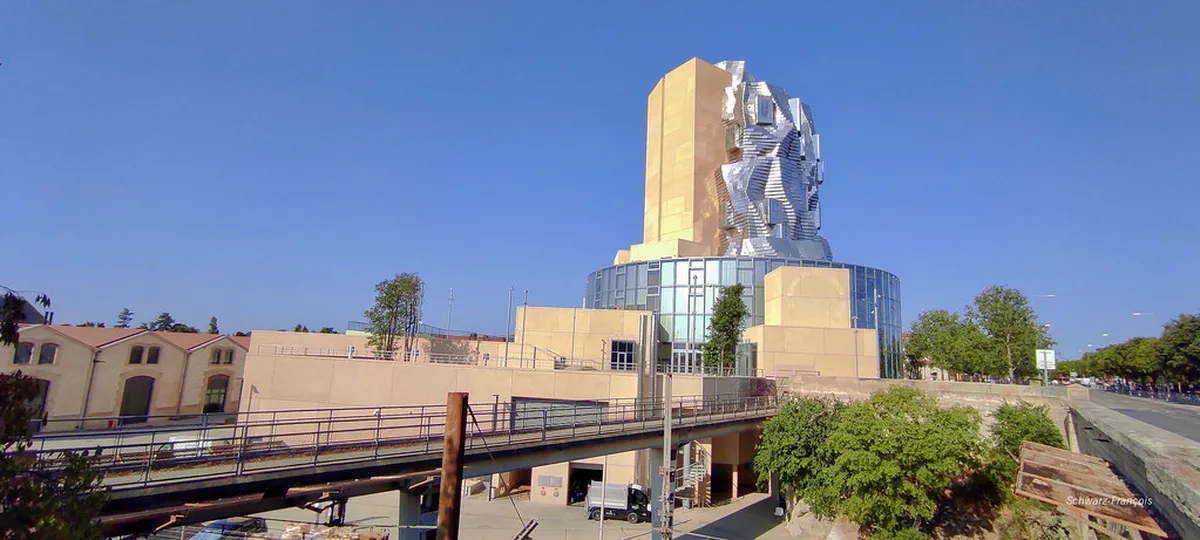
The centerpiece of the entire campus is the stunning tower designed by architect Frank Gehry. Its design takes inspiration from the jagged limestone cliffs found in the nearby Alpilles mountains. The structure stands fifty-six meters tall and features many thousands of unique stainless steel panels. These panels catch the warm Mediterranean light and reflect the colors of the Arles sky.
Gehry used a concrete core to support the weight of the massive and complex metal facade. The tower includes a large glass drum at the base that welcomes visitors into the building. This circular space provides a direct visual link to the ancient Roman amphitheater located nearby. It creates a beautiful dialogue between the ancient stone city and the modern reflective metal tower.
Inside the tower, you will find galleries, library spaces, and offices for the foundation staff members. The interior design features open spaces and wide windows that offer incredible views of the city. You can learn more about the Luma Arles architecture while exploring the different levels of the tower. Each floor provides a new perspective on the surrounding landscape and the historic Arles skyline.
The tower serves as a vertical landmark that can be seen from almost anywhere in Arles. It has quickly become an icon of the city and a symbol of its cultural rebirth. The combination of stainless steel and glass makes the building appear different at every hour. Watching the sunset reflect off the metal panels is a highlight for many visitors in 2025.
Industrial Heritage and the Renovated Workshops
While the Gehry tower is the main attraction, the renovated industrial halls are equally important. Annabelle Selldorf was the lead architect responsible for the restoration of these historic factory buildings. She focused on maintaining the original character of the structures while adding modern functional elements. Her work ensures that the industrial heritage of Arles remains visible for future generations.
The renovated buildings include the Grande Halle, which now hosts massive art installations and cultural events. These spaces feature high ceilings and original steel trusses that remind visitors of their former use. Large windows allow natural light to fill the galleries and highlight the textures of the stone. The contrast between the old brick and the new clean gallery walls is very striking.
Other buildings on the campus serve as artist residences, workshops, and high-tech research laboratories. The goal was to create a flexible environment where artists and scientists could work together easily. Each renovated hall retains its unique industrial footprint while serving a brand new and modern purpose. This approach respects the history of the site while looking forward to a creative future.
The renovation process required careful planning to preserve the structural integrity of the old masonry walls. Workers cleaned the original stones and repaired the metal roofs to protect the art stored inside. Today, these halls are comfortable spaces that meet all modern standards for temperature and humidity control. They represent one of the most successful examples of adaptive reuse in southern France today.
Sustainable Landscapes and Modern Ecology
Landscape architect Bas Smets designed the beautiful park that connects all the buildings on the site. He transformed the dry and paved railway yard into a lush Mediterranean garden for the public. The design features a large circular pond that helps to cool the air during hot summers. Over five hundred trees were planted to provide shade and habitat for local birds and insects.
The park serves as a green lung for the city and a place for local residents. Walking paths wind through the gardens and lead visitors toward the various art installations and workshops. Bas Smets selected native plants that can survive the dry and windy climate of the region. This sustainable approach reduces the need for constant watering and maintains the local ecological balance.
The garden design also includes a large amphitheater built into the natural slope of the ground. This outdoor space is used for concerts, film screenings, and community gatherings throughout the summer months. It provides a relaxed setting where people can enjoy the fresh air and the stunning architecture. The integration of nature and art creates a peaceful atmosphere for all visitors to enjoy.
Sustainable design principles were applied to every aspect of the park and the surrounding campus area. Rainwater is collected from the roofs and used to irrigate the diverse gardens and the trees. Solar panels are also used to generate clean energy for the campus buildings and the tower. This commitment to the environment makes the Parc des Ateliers redevelopment project a model for future urban development.
Visiting the Parc des Ateliers Redevelopment Project
Planning a trip to the Parc des Ateliers redevelopment project is very easy and rewarding in 2025. The campus is located within walking distance of the main train station and the city center. You should allow at least three or four hours to explore the buildings and the gardens. Most visitors start their tour at the Gehry tower before moving to the industrial gallery halls.
General entry to the park and the exterior of the tower is currently free for all visitors. However, you will need to purchase a ticket to see the specific art exhibitions inside. These tickets can be bought online or at the information desk located in the glass drum. Prices for exhibitions typically range from five to fifteen euros depending on the current season.
The campus offers several dining options, including the popular Drum cafe and the Refectoire restaurant. You can enjoy a meal made with local ingredients while looking out over the beautiful gardens. There is also a well-stocked bookshop located inside the main tower for art and architecture fans. It is a great place to find unique gifts and books about the history of Arles.
The site is fully accessible for visitors with limited mobility and those traveling with young children. Elevators and ramps are available throughout the campus to ensure a comfortable experience for every single person. Be sure to check the official website for any special events or holiday hours before you go. Visiting this site is truly a highlight of any trip to the beautiful region of Provence.
Frequently Asked Questions
Is the Parc des Ateliers redevelopment project free to visit?
Yes, the park grounds and the tower exterior are free for all members of the public. You only need to pay for tickets if you want to see the specific art exhibitions.
How long does it take to see the whole Luma Arles campus?
Most visitors spend between three and four hours exploring the tower and the various gallery halls. This gives you enough time to enjoy the gardens and have a coffee at the cafe.
When is the best time of day to photograph the Frank Gehry tower?
Late afternoon offers the best light for photography as the sun reflects off the stainless steel panels. The golden hour creates stunning colors and highlights the unique texture of the metal building facade.
The Parc des Ateliers redevelopment project is a masterpiece of modern urban design and cultural investment. It successfully blends the rich history of Arles with the bold vision of contemporary world-class architects. Visitors in 2025 will find a space that inspires creativity and respects the natural local environment. Plan your visit today to experience this incredible transformation in the heart of the sunny Provence region.
Key Takeaways
- Explore the Gehry tower during the late afternoon for the most beautiful light and photos.
- Take time to walk through the sustainable gardens designed by the landscape architect Bas Smets.
- Review the current exhibition schedule online to make the most of your time on campus.
Related reads: architecturebycity.com, frank gehry arles tower materials, sustainable design in luma arles.