
Meaning of St Trophime Portal Carvings in Arles
Learn about the deep St Trophime portal carvings meaning in Arles. Explore Romanesque art secrets for your 2025 French trip. Discover history now!
On this page
Arles is a beautiful city located in the southern part of France. It hosts some of the most famous examples of medieval art in Europe. The St Trophime portal carvings meaning remains a vital topic for travelers today. This church represents the peak of French stone design from the twelfth century.
Visitors from all over the world come to see these ancient limestone figures. Each carving tells a specific story from the Bible or local history. These stone images served as a visual Bible for people who could not read. Let us explore the deep spiritual secrets of this Romanesque masterpiece.
The Central Tympanum and Christ in Majesty
The central part of the portal shows a large figure of Christ sitting on a throne. He holds the Book of Life in his left hand while blessing the world. This specific pose represents his role as the ultimate judge of humanity. The carvings illustrate his power and his divine grace for all believers.
Four winged creatures surround the figure of Christ in the center of the arch. These symbols represent the four evangelists who wrote the gospels of the Bible. The eagle represents John, while the winged lion stands for the apostle Mark. You can see the winged man for Matthew and the ox for Luke.
The almond-shaped frame around Christ is called a mandorla in the world of art. It represents a sacred space where the earthly and divine worlds meet together. This visual tool helps viewers focus on the holiness of the central figure. The artisans used very fine tools to create these detailed stone patterns.
This central scene sets the tone for the entire facade of the church. It reminds every person entering the building of the majesty of the heavens. You can find more details about Romanesque architecture in Arles at this historic site. The stone still looks sharp and clear after many centuries of exposure.
The Twelve Apostles and Biblical Figures
Below the central figure of Christ, you will find a row of twelve men. These are the apostles who followed Jesus and spread his message across the world. They stand under a series of small arches that create a sense of order. Each figure has a unique facial expression and a different physical pose.
The figure of St Trophime holds a special place among these carved stone saints. He was the first bishop of Arles and is the patron of the church. Including him links the history of the local city to the wider biblical story. This connection gave the local community a sense of pride and spiritual depth.
The clothing on these figures shows incredible detail and a sense of movement. You can see the heavy folds of their robes carved deeply into the hard stone. This style mimics the look of ancient Roman statues found in the nearby arena. It shows the high skill level of the medieval masons in Arles.
Each apostle often holds a book or a scroll to show their holy status. These items represent the teachings that they shared with the early Christian church. The vertical lines of the figures guide your eyes up toward the central image. This arrangement creates a powerful visual hierarchy for the viewer to follow.
The Last Judgment and Symbolic Friezes
The long horizontal stone above the door is known as the lintel of the portal. It depicts the dramatic scenes of the Last Judgment in great detail. On the left side, the blessed souls move toward the gates of paradise. They wear long robes and look very peaceful as they walk along.
On the right side, the carvings show a much darker scene for the viewers. Sinners are shown in chains as they are led away into the fires. This imagery was meant to encourage people to live a moral and holy life. The contrast between the two sides is very clear and quite striking.
Small angels are carved above the groups of people to oversee the entire process. They blow long trumpets to announce the arrival of the day of judgment. These details add a sense of sound and action to the still stone. It makes the spiritual lessons feel more urgent to the modern visitor.
The St Trophime portal carvings meaning focuses heavily on these choices between good and evil. Every small figure contributes to the larger story of salvation and human fate. You should take your time to look at each individual face in the crowd. The variety of human emotions captured in the stone is truly amazing.
Roman Influence on Provençal Romanesque Style
The city of Arles was once a major capital in the ancient Roman Empire. This classical heritage had a massive impact on the medieval builders of the church. The portal is shaped like a Roman triumphal arch used for celebrating military victories. It turns a secular design into a grand entrance for a holy place.
The columns flanking the door feature beautiful capitals with intricate leaf patterns. These designs are based on the Corinthian style used by ancient Greek and Roman architects. You can see many Provencal Romanesque style characteristics in these specific carvings. The blend of styles is unique to this region.
Builders used high-quality stone that looks like the marble from ancient Roman temples. This choice of material gave the church a sense of permanence and great wealth. The light in Provence makes the stone glow during the warm summer months. It creates deep shadows that make the carvings look almost three-dimensional.
This mix of ancient and medieval ideas is what makes St Trophime special. It honors the Roman past while looking forward to a Christian future. The scale of the portal is much larger than many other churches in France. It remains a masterpiece of design that bridges two different eras of history.
Exploring the St Trophime Cloister Details
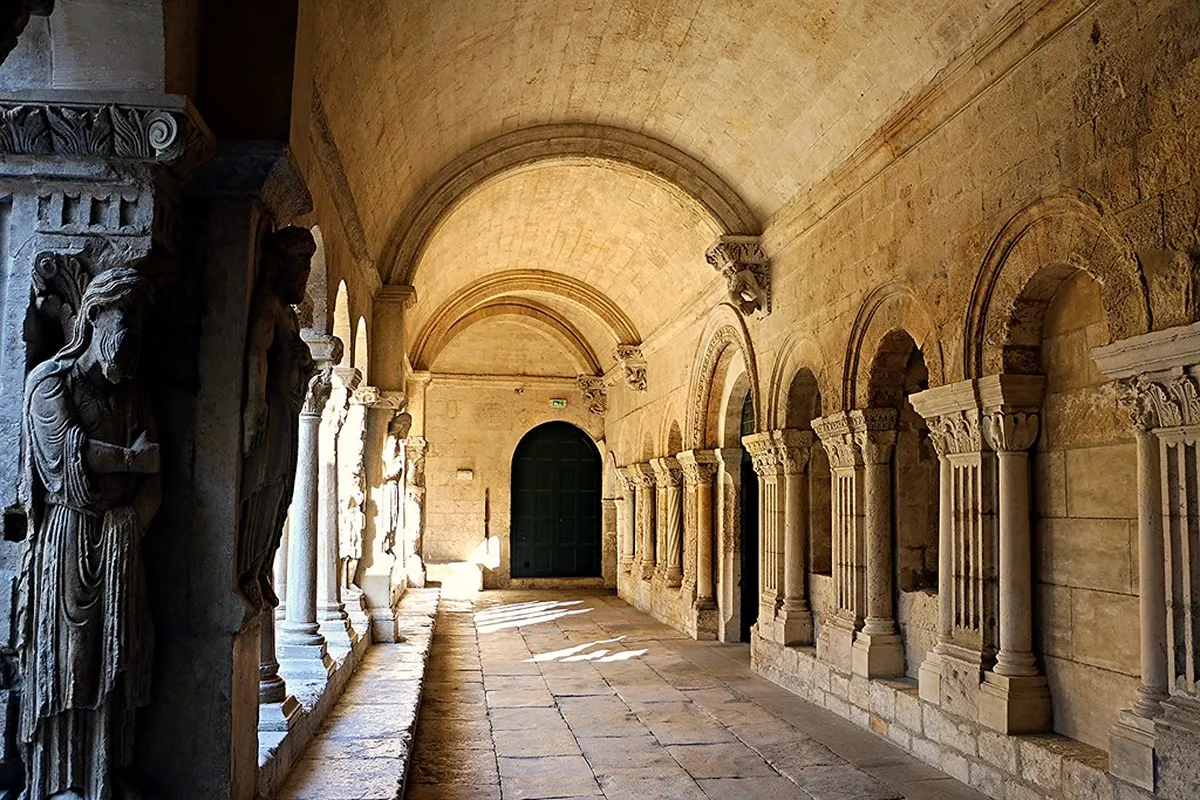
After viewing the main portal, you must visit the inner courtyard of the church. This space features a series of covered walkways filled with more stone carvings. Each pillar tells a different story from the Old and New Testaments. The atmosphere here is very quiet and perfect for deep personal reflection.
You will find the St Trophime cloister architectural details to be just as impressive as the portal. Some pillars show scenes from the life of Christ or local saints. The quality of the carving varies because different artists worked on it over time. This variety adds a lot of character to the historic structure.
The cloister was built during two different periods of the Middle Ages in France. The north and east sides show the Romanesque style with rounded arches. The south and west sides feature the later Gothic style with pointed arches. This transition shows how architectural tastes changed over a few hundred years.
Visiting the cloister costs a small fee but it is worth every penny. You can see the carvings up close and touch the ancient stone surfaces. It is one of the best-preserved cloisters in all of southern Europe. Make sure to bring your camera to capture the beautiful play of light.
Frequently Asked Questions
What is the main St Trophime portal carvings meaning?
The main meaning centers on the theme of the Last Judgment. It shows Christ as a judge who decides the fate of all human souls. This was a common theme used to teach moral lessons in the Middle Ages.
When were the carvings at St Trophime created?
The carvings were created during the 12th century in the Romanesque period. Most historians believe the work was finished between the years 1180 and 1190. They have survived for over eight hundred years in excellent condition.
Who is the central figure in the portal?
The central figure is Jesus Christ shown in a state of heavenly majesty. He is surrounded by symbols of the four evangelists who wrote the gospels. This display emphasizes his divine authority over the entire created world.
The St Trophime portal is a true treasure of medieval art and history. Understanding the St Trophime portal carvings meaning will make your 2025 visit much more rewarding. These stones offer a unique window into the minds of people from long ago. Plan your trip to Arles today to see these amazing carvings in person.
Key Takeaways
- The central tympanum depicts Christ in Majesty and the four evangelists.
- The portal design is heavily influenced by ancient Roman triumphal arches.
- The lintel carvings illustrate the Last Judgment with the blessed and damned.
- St Trophime, the first bishop of Arles, is a key figure on the facade.
- The cloister offers additional carvings that show the transition to Gothic style.
Related reads: architecturebycity.com, architecture in arles.