
Romanesque Architecture in Arles: A 2025 Guide
Discover the beauty of Romanesque architecture in Arles with our 2025 guide. Learn about Saint-Trophime and medieval heritage sites in Provence today.
On this page
Arles is a city filled with stunning Romanesque architecture in Arles and ancient history. Visitors in 2025 can explore beautiful medieval churches throughout the historic city center. This guide highlights the most significant structures from this fascinating period in French history. Start your journey at the famous Church of Saint-Trophime to see expert stone carvings.
The Church of Saint-Trophime Masterpiece
The Church of Saint-Trophime stands as a masterpiece of Romanesque architecture in Arles. Its west portal features intricate sculptures depicting the Last Judgment and biblical scenes. These carvings represent the peak of medieval stone masonry in the Provence region. Historians consider this site essential for understanding the transition from Roman building styles.
The portal design showcases a deep sense of realism and movement in the stone. You can learn more about the Saint-Trophime portal carvings meaning through guided tours. Expert local guides explain how these figures helped educate medieval pilgrims who visited. The craftsmanship remains remarkably preserved despite centuries of exposure to the elements.
Inside the church, the high vaulted ceilings create a feeling of immense space. The narrow side aisles lead visitors toward the beautiful choir and high altar. Builders utilized light in a strategic way to highlight the sacred nature of the space. Every stone block reflects the dedication and skill of the medieval workers who labored here.
Practical visitors should arrive early in the morning to avoid the largest 2025 crowds. The church is generally open daily from 9:00 AM until 6:00 PM for all visitors. Admission to the main church building is free for everyone to enjoy and explore. However, small donations are always welcomed to support the ongoing preservation of this historical site.
Features of the Provencal Romanesque Style
The Provencal Romanesque style is unique among various European architectural traditions. It draws heavy inspiration from the Roman ruins found throughout the city of Arles. Architects utilized massive stone blocks and rounded arches to create lasting stability for these churches. You can see these distinct Provencal Romanesque style characteristics in many local buildings.
Builders in the 12th century focused on creating impressive vertical spaces with limited tools. They used barrel vaults to support the heavy stone roofs of their medieval churches. Thick walls with small windows kept the interiors cool during the hot southern summers. This functional design also provided a sense of spiritual peace and quiet for worshippers.
The use of corbels and decorative cornices adds a layer of detail to the exteriors. Many of these elements feature natural motifs like leaves, vines, and local animal figures. These details demonstrate how the builders integrated their natural surroundings into their religious architecture. It creates a harmonious link between the urban environment and the natural Provencal landscape.
One defining trait is the preference for high-quality limestone sourced from nearby quarries. This stone allowed for the fine detailing seen on portals and capitals across the city. The warm color of the limestone changes beautifully as the sun sets over the rooftops. This visual effect is a favorite for photographers visiting the region during the year 2025.
The Spectacular Cloister of Saint-Trophime
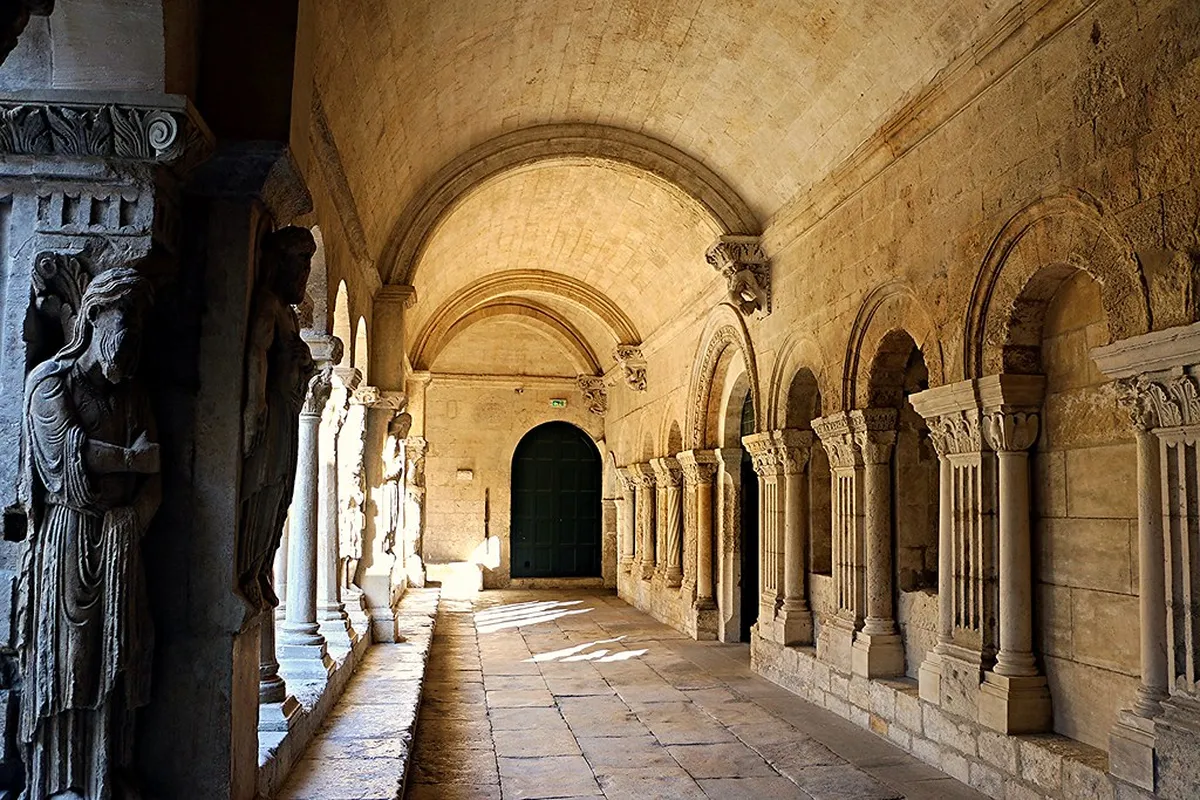
The cloister of Saint-Trophime provides a peaceful retreat from the busy streets of Arles. It contains two Romanesque galleries and two Gothic galleries built during different time periods. This mix of styles offers a unique opportunity to compare different medieval building techniques. Visitors can admire the Saint-Trophime cloister architectural details up close during their visit.
The Romanesque galleries feature beautiful columns decorated with scenes from the life of Christ. Each capital tells a story through deeply carved figures and intricate floral patterns. The craftsmanship in the northern gallery is particularly famous for its high artistic quality. You will find that these carvings are some of the best examples in France.
Walking through the cloister allows you to appreciate the quiet rhythm of monastic life. The central garden once provided a space for reflection and prayer for the canons. Today, it serves as a wonderful place for visitors to rest and take photos. The interplay of light and shadow on the stone arches is truly breathtaking at noon.
Entry to the cloister requires a paid ticket, which costs approximately 6 Euros in 2025. You can also purchase a combined city pass to save money on multiple attractions. The site is accessible via the main church entrance located in the Place de la Republique. Allow at least one hour to fully appreciate the details of this stunning space.
The Alyscamps and Romanesque Influences
The Alyscamps is an ancient Roman necropolis that contains several important Romanesque structures. One of the most notable is the Church of Saint-Honorat located at the end of the site. This church features an unfinished octagonal tower that dominates the surrounding landscape and trees. Exploring the Alyscamps architecture reveals layers of history from Roman to medieval times.
The path leading to the church is lined with stone sarcophagi from various centuries. Many of these tombs were reused or moved during the construction of medieval buildings. This site served as a major stop for pilgrims traveling on the way to Santiago de Compostela. The presence of Romanesque architecture here highlights the enduring religious importance of the location.
Inside Saint-Honorat, the atmosphere is austere and powerful due to the simple stone walls. The lack of elaborate decoration focuses the visitor’s attention on the purity of the form. It provides a stark contrast to the highly decorated portal of Saint-Trophime in the center. Both styles reflect different aspects of the medieval spiritual experience in the city of Arles.
Visiting Alyscamps costs about 5 Euros for adults during the current 2025 travel season. The site is located just a short walk from the main historic city center. Wear comfortable shoes as the ground is uneven and covered with gravel and old stones. The shady path offers a cool walk even during the warmest afternoons in Provence.
Preserving Romanesque Architecture in Arles Today
Maintaining Romanesque architecture in Arles requires constant effort from skilled conservationists and local historians. Pollution and weather can damage the delicate limestone carvings over many decades of exposure. Recent restoration projects have cleaned the facade of Saint-Trophime to reveal its original beauty. These efforts ensure that future generations can enjoy the Arles architecture for years.
The city uses modern technology to monitor the stability of these ancient stone structures. Laser scanning and digital mapping help architects identify areas that need urgent structural repair. These techniques allow for precise interventions that do not harm the original historical fabric. It is a delicate balance between modern science and ancient building methods.
Local schools often bring students to these sites to learn about their cultural heritage. Understanding the history of these buildings helps the community value and protect them. Volunteers also participate in clean-up events to keep the historic sites looking their very best. This community involvement is vital for the long-term survival of the city’s medieval past.
Tourists also play a significant role in the preservation of these famous Romanesque sites. Your entrance fees directly fund the work of the architects and stone carvers. By visiting these locations, you are supporting the economy of the entire historic district. It is a wonderful way to contribute to the history of Arles in 2025.
Frequently Asked Questions
What is the best Romanesque site to visit in Arles?
The Church of Saint-Trophime is widely considered the best Romanesque site in the city. Its portal and cloister offer world-class examples of medieval stone carving and architecture. You should spend at least two hours exploring the various details of this location.
When was Saint-Trophime built in Arles?
The current structure of Saint-Trophime was mostly built during the 12th century. It replaced an earlier church from the 5th century that was located on the same spot. The cloister was added in stages throughout the 12th and 14th centuries.
Is Romanesque architecture in Arles a UNESCO World Heritage site?
Yes, the Romanesque and Roman monuments of Arles have been UNESCO sites since 1981. This designation protects the unique cultural and historical value of the buildings for the world. It includes the church of Saint-Trophime and the Alyscamps necropolis.
How much time do I need to see the Romanesque sites?
Plan to spend a full day if you want to see all the major sites. Start with Saint-Trophime in the morning before the crowds arrive at the main square. Then walk to the Alyscamps in the afternoon to enjoy the peaceful atmosphere.
Arles offers an incredible journey into the heart of the medieval world and its art. The Romanesque architecture in Arles remains a testament to the skill of ancient craftsmen. Plan your visit for 2025 to experience these historic treasures in person and learn more. You can book a professional tour to discover even more hidden details throughout the city.
Key Takeaways
- Saint-Trophime is the most important Romanesque church in the Arles region.
- The 12th-century stone carvings at the west portal are world-famous masterpieces.
- Combined city passes offer the best value for visiting multiple historical sites.
Related reads: architecturebycity.com.