
Saint-Didier Church Medieval Design: An Avignon Guide
Explore Saint-Didier church medieval design in Avignon for 2025. Discover the best of Avignon Gothic architecture and plan your trip now!
On this page
Saint-Didier church medieval design represents one of the most complete Gothic monuments in southern France. This historic site sits in the heart of Avignon near the famous Place de l'Horloge. It was built during the 14th century when the Popes resided in the city. The building serves as a perfect example of the local architectural style from that era. You will find that the structure remains remarkably preserved today for modern visitors.
Visiting this church allows you to step back into the medieval history of Provence. The stone walls reflect the sunlight of southern France in a beautiful way. Its simple exterior hides a wealth of artistic and structural treasures inside the nave. Architects and history buffs often praise the building for its clean and powerful lines. This guide explores the unique features that make the church a must-see landmark in 2025.
The Origins of Saint-Didier Church Medieval Design
The construction of this church began in the middle of the 14th century. Cardinal Bertrand de Deaux provided the funding for the entire ambitious project. Work started in 1355 and finished surprisingly fast by 1359. Most churches of this size took decades to complete during the Middle Ages. This rapid pace was possible due to the immense wealth of the Avignon Papacy.
The church stands on the site of a much older religious building. Excavations have shown that early Christian structures once occupied this specific ground. The 14th-century builders used local limestone to create the massive and durable walls. This material gives the church its characteristic pale yellow and warm gray appearance. It has survived centuries of conflict and weather with very little structural damage.
Pope Innocent VI consecrated the church upon its completion in the year 1359. It served as a collegiate church for a group of specialized canons. These religious leaders were responsible for daily prayers and maintaining the sacred site. The church quickly became a center for religious life within the busy city walls. Its location made it accessible to both the clergy and the common citizens.
The medieval design reflects the specific needs of the 14th-century Catholic Church. It focuses on creating a large open space for preaching to the masses. This style differs from the complex floor plans of many northern French cathedrals. You can see how the layout prioritizes acoustics and visibility for all who enter. The simplicity of the form highlights the spiritual focus of the medieval period.
Understanding architecture in Avignon requires a close look at this specific building. It serves as a benchmark for the Provencal Gothic style that defined the region. The church remains an active place of worship for the local community today. Visitors are welcome to explore the history while respecting the ongoing religious services. It is a living piece of history that continues to inspire tourists from everywhere.
Characteristics of Avignon Gothic Architecture
The church is a prime example of the southern variation of the Gothic style. This style is often called Southern Gothic or Meridional Gothic by local art historians. It features a wide single nave without the typical side aisles of other cathedrals. This creates a vast and unified internal space for the congregation. The absence of a transept makes the floor plan look like a long rectangle.
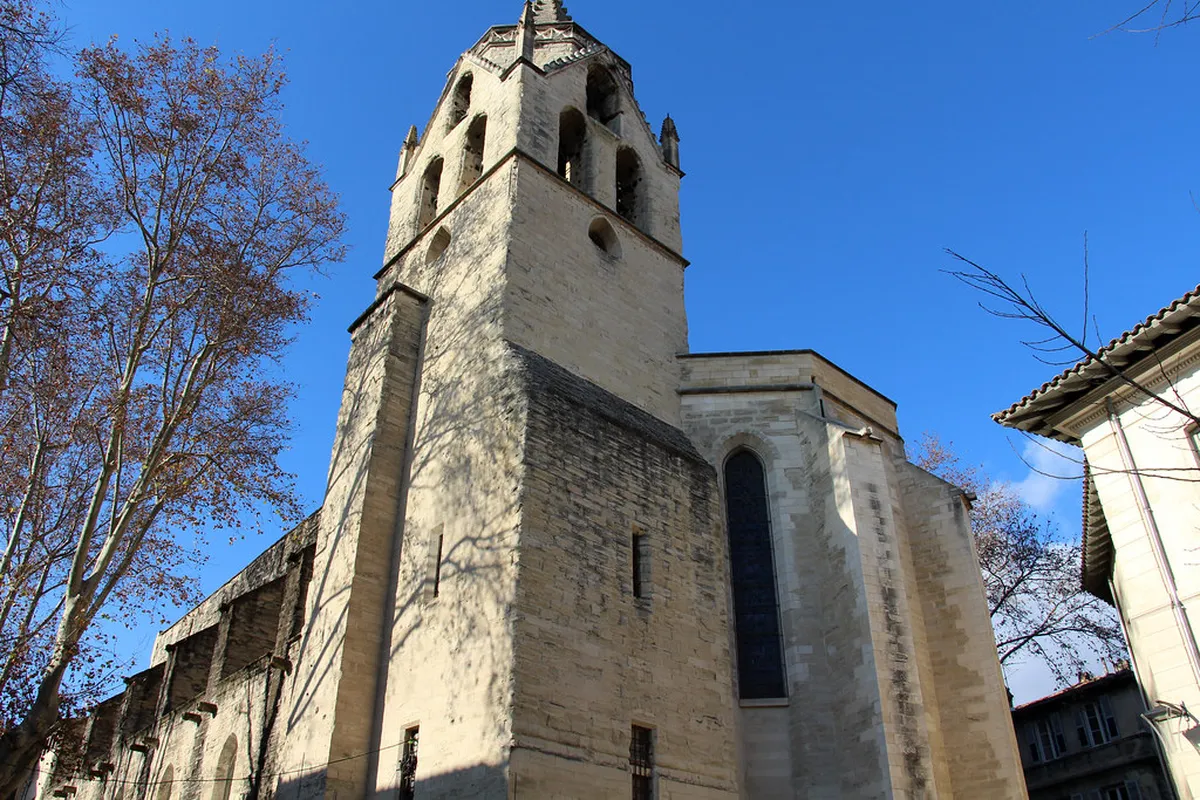
Thick buttresses are built directly into the exterior walls to support the heavy stone roof. These buttresses create small side chapels between them inside the church structure. This clever design allows for extra space without needing external flying buttresses. It gives the building a very solid and fortress-like appearance from the street. Many visitors find this rugged aesthetic to be quite impressive and unique.
The windows are generally smaller than those found in the Gothic churches of northern France. This was a practical choice to keep the interior cool during hot Provencal summers. The smaller openings also protect the interior from the strong Mistral winds of the region. Despite their size, these windows provide a soft and meditative light for the interior. The contrast between light and shadow is a key part of the experience.
Compared to the Palais des Papes architecture, Saint-Didier is much more modest in its decoration. The exterior lacks the ornate carvings and statues seen on larger papal buildings. However, this restraint is intentional and follows the local aesthetic of the 1300s. It emphasizes the strength of the stone and the purity of the geometric shapes. The result is a building that feels both grounded and spiritually uplifting.
Learning about Avignon Gothic architecture helps you appreciate the city's unique skyline. Saint-Didier fits perfectly into this historical context with its elegant bell tower. The tower features a square base that transitions into an octagonal upper section. This design was common in Avignon during the height of the Middle Ages. It serves as a permanent landmark for travelers exploring the winding city streets.
Internal Layout and Artistic Treasures
The interior of the church contains one of the oldest Renaissance artworks in France. You must look for the "Bearing of the Cross" altarpiece by Francesco Laurana. It was commissioned in 1478 by King Rene of Anjou for this specific church. This masterpiece features a high-relief style that was very advanced for its time period. The emotional depth of the carved figures is truly remarkable to behold.
The high altar is another significant feature that draws the attention of every visitor. It dates back to the 18th century but fits beautifully within the medieval walls. This altar replaced the original 14th-century version while maintaining a sense of grandeur. Above the altar, you can see large paintings that depict scenes from the life of Saint Didier. These works of art help tell the story of the church's patron saint.
The church also houses the precious relics of Saint Peter of Luxembourg. He was a young cardinal who died in Avignon at the age of eighteen. His tomb became a popular site for pilgrims during the late Middle Ages. Many people believed that miracles occurred near his final resting place within the church. This added to the religious importance of Saint-Didier for many centuries across Europe.
Walking through the side chapels reveals a variety of smaller decorative elements and tombs. Each chapel was often funded by a wealthy local family or a specific guild. You can see different styles of stonework and religious symbols in these private spaces. The iron gates protecting these chapels are also worth a close inspection. They represent the high quality of metalworking in Avignon during the medieval era.
The acoustics inside the church are still excellent for vocal music and organ performances. Thick stone walls help carry the sound throughout the entire wide nave. Many local choirs choose this venue for concerts because of the beautiful natural resonance. If you visit during a rehearsal, you will experience the building's auditory power. It is a sensory experience that combines sight and sound in a unique way.
Structural Materials and Masonry Techniques
The masons of the 14th century used advanced techniques to build the large vaults. These ribbed vaults allow the ceiling to span a wide area without central pillars. The precision of the stone cutting is evident in every corner of the ceiling. You can see the marks of the individual craftsmen on many of the blocks. These marks served as a signature for the workers who shaped the stone.
The mortar used in the construction has proven to be incredibly strong over time. It has held the heavy limestone blocks together through earthquakes and seasonal temperature changes. The thickness of the walls varies between one and two meters in some sections. This massive construction provides excellent natural insulation for the people inside the building. It remains cool even when the outdoor temperature exceeds thirty degrees Celsius.
The floor of the church is made of large stone slabs worn smooth by centuries. Generations of worshippers and travelers have walked across these historic and heavy stones. Some slabs mark the locations of ancient crypts buried deep beneath the church floor. These hidden chambers once held the remains of notable citizens and church leaders. The entire structure is a layered history of the people of Avignon.
Iron tie-rods were occasionally added in later centuries to provide extra stability to the walls. You can spot these metal reinforcements if you look closely at the upper sections. They help counteract the outward pressure exerted by the heavy stone roof structure. These additions show how the building has been carefully maintained over hundreds of years. This dedication to preservation ensures that the church will stand for future generations.
Visiting Saint-Didier Church in 2025
Planning a visit to this church is very easy for most travelers in 2025. The church is typically open to the public every day from morning until evening. Admission is free, but donations for the upkeep of the building are always welcome. Please remember to dress respectfully as this is a very active religious site. Avoid visiting during mass times if you wish to take photographs of the interior.
The church is located just a short walk from the main shopping streets of Avignon. You can easily combine a visit here with a trip to the nearby museums. There are several small cafes in the surrounding square where you can rest. These spots offer a great view of the bell tower and the stone facade. It is a perfect place to sketch or write in your travel journal.
Guided tours of the city often include a stop at Saint-Didier to discuss its architecture. You can hire a local guide to learn more about the specific historical details. Many tours focus on the transition from the Gothic era to the Renaissance period. The church provides the perfect visual aid for these educational and engaging history lessons. Check with the local tourism office for the latest tour schedules for 2025.
Photography is allowed inside the church as long as you do not use a flash. The soft natural light provides a great opportunity for high-quality architectural photos. Focus on the details of the Laurana altarpiece and the geometry of the vaults. The textures of the old stone walls create a beautiful background for your travel images. Be sure to capture the contrast between the dark interior and the bright doorway.
Frequently Asked Questions
What is the best time of day to visit Saint-Didier?
Morning visits offer the best natural light for seeing the interior art clearly. The church is also quieter during the early hours before the main tourist crowds arrive. You can enjoy a peaceful atmosphere and better photo opportunities at this time. Most people find the early morning light highlights the textures of the stone walls perfectly.
Are there any entrance fees for Saint-Didier church?
Entry to the church is completely free for all visitors throughout the year. The community relies on small donations to help with the ongoing restoration of the building. You will find small boxes near the entrance for any contributions you wish to make. This makes it one of the most accessible historical sites in the city of Avignon.
How do I find the famous Laurana altarpiece inside?
The altarpiece is located in one of the chapels on the right side of the nave. Look for the large stone carving that depicts Christ carrying the cross toward Calvary. There is usually a small sign nearby explaining the history of this Renaissance masterpiece. It is one of the most important pieces of art in the entire city of Avignon.
Is the church accessible for visitors with limited mobility?
The main entrance of the church is generally accessible with a very small step at the threshold. The interior floor is mostly flat, though some stone slabs may be slightly uneven. Most of the main nave and the significant art pieces are easy to reach for everyone. It is much more accessible than many other medieval buildings with narrow spiral staircases.
Saint-Didier church medieval design offers a unique window into the 14th-century history of Avignon. Its simple yet powerful architecture stands as a testament to the skill of medieval masons. From the stunning Laurana altarpiece to the massive limestone walls, every detail tells a story. Make sure to include this historic site in your 2025 travel plans to southern France. You will leave with a deeper appreciation for the beauty of the Provencal Gothic style.
Key Takeaways
- Construction was completed in just four years during the 14th century.
- The church features a unique single-nave design typical of Southern Gothic style.
- It houses the 'Bearing of the Cross', one of the first Renaissance works in France.
Related reads: architecturebycity.com, church of saint pierre flamboyant facade, southern gothic vs northern gothic in provence.