
Guide to Colmar Half-Timbered House Styles
Learn about Colmar half-timbered house styles and history. Explore Alsatian architecture in 2025. Start your French design journey now!
On this page
Colmar is a gem in the Alsace region of France. The city features stunning Colmar half-timbered house styles from many eras. Visitors love the bright colors and intricate wooden beams. Let us explore the secrets of this unique architecture. You will find history around every corner.
Evolution of Medieval Timber Framing
Colmar showcases a timeline of European building history. Most homes date back to the Middle Ages. You can see primitive framing styles in the Old Town. These early structures used simple vertical beams for support.
The Maison Adolphe architectural history provides a perfect example. It shows the shift from stone to timber. These homes often had narrow fronts to save tax money. Taxes were based on the ground floor width.
Early builders used local oak for the main skeleton. Oak was strong and lasted for many centuries. They filled gaps with wattle and daub. This mixture of straw and clay provided insulation.
Upper floors often overhang the street below. This design increased living space on higher levels. It also protected the lower beams from rain damage. You can see this design throughout the historic center.
- Oak Beams: Strong structural supports.
- Wattle and Daub: Natural insulation material.
- Jettying: The overhang of upper floors.
Renaissance Influence on House Designs
The 16th century brought new wealth to the region. Merchants wanted to display their status through grand homes. This era introduced many Renaissance landmarks in Colmar seen today. Carved wooden figures became very popular ornaments.
Windows grew larger and more decorative during this time. Frames featured elaborate carvings of faces and vines. This style merged German utility with French elegance. You can find these details on many street corners.
Stone bases became more common for larger mansions. The ground floor often served as a warehouse or shop. Ornate staircases were sometimes built into corner turrets. These additions highlighted the owner's vast wealth.
The Maison des Têtes is a famous Renaissance example. It features 106 small heads carved into the facade. These details show the craftsmanship of local woodworkers. It remains a highlight for visitors in 2025.
Meaning of Decorative Symbols and Beams
Many timber beams feature specific geometric shapes. These are not just for structural support. They often represent religious or social symbols. The St. Andrew’s cross is a common sight.
This X-shape symbol often represents fertility or protection. Builders used it to ward off evil spirits. It also provided essential bracing for the house frame. You will see these crosses on many facades.
Diamonds or squares often indicate a family's prosperity. These shapes were harder to construct with wood. Using more timber showed that the owner was rich. It was a subtle form of social signaling.
The meaning of house colors in Colmar adds more layers. Historically, colors identified different professions or trades. A blue house might belong to a timber worker. Green often signaled a gardener or farmer.
Construction Techniques Used in Alsace
Traditional building methods involve complex joinery without nails. Carpenters used mortise and tenon joints to connect beams. They secured these joints with wooden pegs. This allowed the house to flex during tremors.
The Alsatian timber framing techniques are world-famous today. Each beam was numbered before final assembly. This system allowed for fast construction on site. It was like a giant wooden puzzle.
Foundations usually consisted of sandstone from nearby mountains. This stone base kept the wood away from moisture. Rot was the biggest enemy of these historic structures. High stone bases protected the valuable oak frames.
The roofs are another iconic feature of the region. They are usually very steep and covered in tiles. This design prevents snow buildup during cold winters. The steep angles also provide space for attic storage.
Exploring the Little Venice Layout
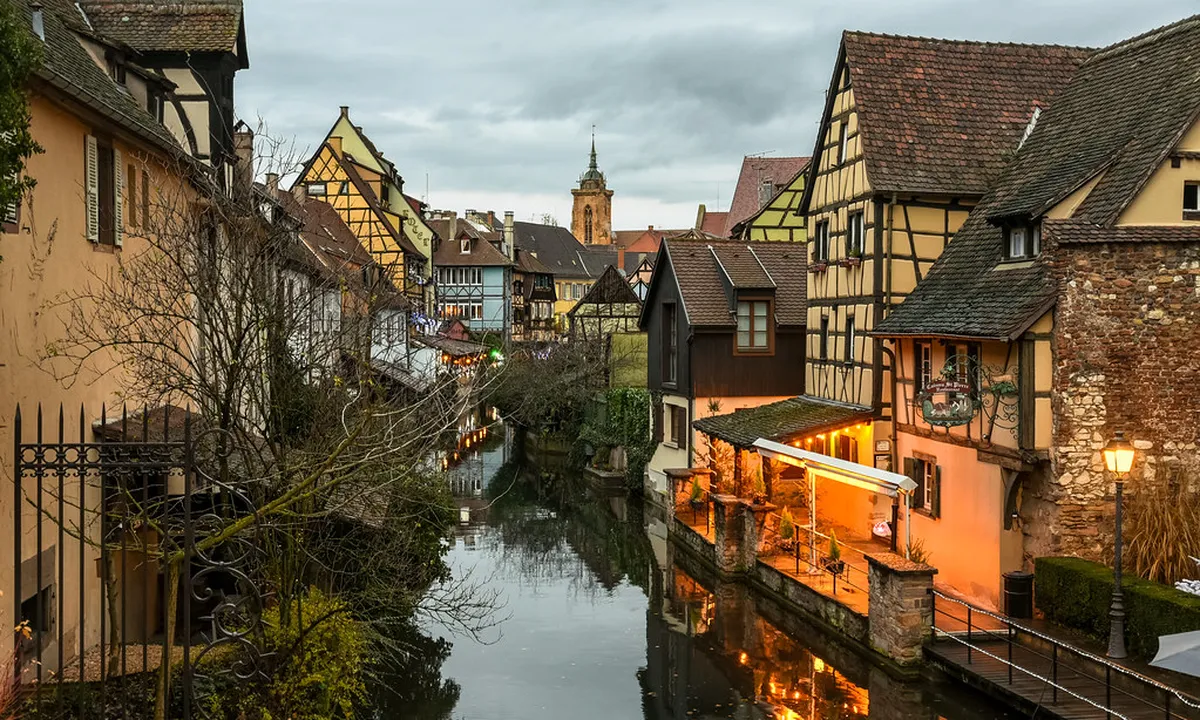
The Little Venice Colmar urban layout follows the river. This area was once home to tanners and fishmongers. The houses here are built right next to the water. This layout allowed workers to transport goods easily.
Most homes in this district have large attic balconies. These open spaces were used for drying animal skins. Tanners needed the river water for their daily work. Today, these homes are highly prized for their charm.
Tourists can view these styles from traditional boats. Seeing the timber from the water offers a unique perspective. The reflections of the colored beams create beautiful views. It is a must-see spot for any traveler.
The district remains a perfectly preserved piece of history. In 2025, it continues to draw millions of visitors. You should visit early in the morning for photos. The light hits the timber frames beautifully at dawn.
Preservation of Colmar Half-Timbered House Styles
Preserving these historic styles requires constant effort and care. Owners must follow strict rules when painting or repairing. They must use traditional materials to maintain authenticity. Lime-based paints allow the wood to breathe properly.
Many old buildings now house modern shops and hotels. This adaptive reuse keeps the city center alive. You can enjoy modern comforts inside a medieval shell. It is a perfect blend of old and new.
Look for the different styles while walking the streets. The city invests heavily in maintaining its cultural heritage. This ensures future generations can see these amazing styles. Every house tells a story of the past.
Specialized craftsmen still practice ancient woodcarving techniques today. They repair damaged beams with the same local oak. This dedication keeps the historic character of Colmar intact. The city remains an open-air museum of design.
Frequently Asked Questions
Why are the houses in Colmar so colorful?
The colors historically identified the trade of the owner. Blue was for carpenters and yellow for bakers. Today, these colors are preserved for tourism and tradition. They make the city feel like a fairy tale.
How old are the half-timbered houses in Colmar?
Some houses date back to the 14th century. The Maison Adolphe is one of the oldest examples. Most structures were built between the 15th and 17th centuries. They have survived many wars and changes.
What is the best way to see the architecture?
A walking tour of the Old Town is best. You can see the details of the carvings up close. Boat tours in Little Venice also offer great views. Both options provide unique perspectives on the timber frames.
Exploring Colmar half-timbered house styles is a journey through time. The city offers a unique look at European architectural history. Visit Colmar in 2025 to experience this magic yourself. You will leave with a new appreciation for craftsmanship.
Key Takeaways
- Identify house styles by their unique decorative beam symbols.
- Visit Little Venice to see how trade influenced urban layout.
- Look for the Maison Adolphe to see medieval construction.
- Observe the vibrant colors that once signaled local professions.
- Appreciate the nail-free joinery used in traditional Alsatian frames.