
7 Stunning Renaissance Landmarks in Colmar for 2025
Discover the best Renaissance landmarks in Colmar with our 2025 guide. See the Maison Pfister and House of Heads on your next trip. Plan your visit today!
On this page
Colmar is widely known as one of the most beautiful historic towns in modern France today. Travelers visit to see the preserved Renaissance landmarks in Colmar throughout the historic district. This guide explores the best architectural sites you should see during your 2025 vacation. You will find that these buildings offer a unique glimpse into the rich history of Alsace.
The city landscape features a stunning mix of medieval timber frames and elegant stone facades. Many of these structures date back to the height of the regional merchant trade era. You can enjoy walking through the cobblestone streets to discover these hidden artistic treasures today. Each street corner reveals a new piece of history that survived through many different centuries.
Maison Pfister: A Renaissance Masterpiece
The Maison Pfister is one of the most significant buildings constructed during the local Renaissance period. It was built in 1537 for a wealthy hatter who wanted to show his social status. The house features a unique corner oriel window and a long wooden gallery on the exterior. You can see this stunning structure located at the intersection of two busy historic shopping streets.
This landmark is famous for its colorful murals that depict various biblical and historical scenes. The architectural details of the Maison Pfister highlight the transition from the Gothic to the Renaissance style. You will notice the delicate wooden carvings that decorate the balconies and the corner turret. The building was named after the Pfister family who restored and lived in it during the 1800s.
Visitors often gather in front of the house to photograph its ornate and very complex facade. The exterior paintings represent the four evangelists as well as several prominent figures from the Bible. You can also see portraits of Germanic emperors from the sixteenth century painted on the walls. This visual storytelling was a common way for wealthy families to display their education and faith.
The house remains remarkably well-preserved thanks to continuous restoration efforts by the local heritage services. It currently serves as a wine shop where you can purchase local Alsatian products and souvenirs. Viewing the exterior is completely free and you can find it easily on the Rue des Marchands. This street is one of the most popular walking routes for tourists visiting the city center.
We recommend visiting the Maison Pfister during the early morning to avoid the largest tourist groups. The morning light provides the best conditions for capturing the vibrant colors of the ancient wall paintings. You should take a moment to look at the fine details on the wooden corner gallery. This structure is a true masterpiece of Renaissance craftsmanship that has survived for nearly five centuries.
The House of Heads: A Sculptural Marvel
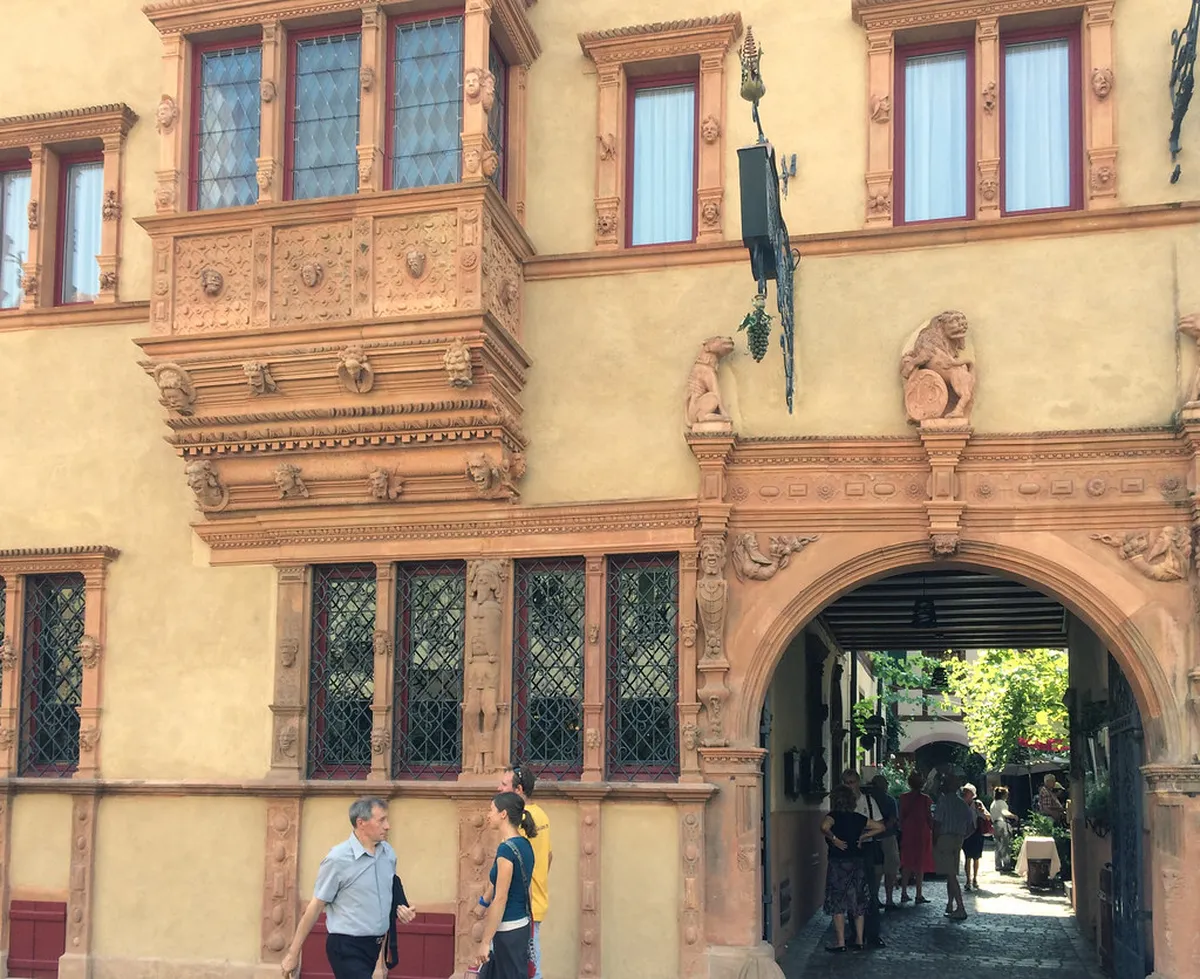
The House of Heads stands out as a unique example of German Renaissance design in the city center. It was built in 1609 and gets its name from the many faces carved onto the facade. There are precisely one hundred and six small stone heads decorating the front of this famous building. This landmark reflects the playful and creative spirit of the late Renaissance era in the Alsace region.
You can see the sculptures on the House of Heads while walking along the historic Rue des Têtes. The building currently houses a high-end hotel and a famous Michelin-starred restaurant for modern visitors. The facade also features a statue of a wine cooper created by the famous artist Auguste Bartholdi. This structure represents the wealth and power of the merchant class during the early seventeenth century.
The stone window frames are decorated with intricate scrolls and various symbolic figures from local folklore. Each of the carved heads features a different facial expression or a unique character from the time. This artistic choice makes the building one of the most expressive and interesting sites in the town. You will find that the architectural design perfectly combines functional windows with highly creative stone carvings.
The building was commissioned by Anton Burger who was a prominent merchant and the mayor of the city. He wanted a residence that would stand out among the traditional timber-framed houses of his wealthy neighbors. The use of grey sandstone provides a stark contrast to the colorful plaster found on nearby buildings. This choice of material highlights the prestige and permanence of the Renaissance stone construction style.
Travelers can enjoy a meal at the restaurant to see some of the interior architectural details. The dining room features traditional wood paneling and historic furniture that reflects the heritage of the house. You can also stay overnight in the luxury hotel to experience the historic atmosphere in 2025. It is a perfect place for those who love history and fine dining in Alsace.
The Koïfhus: Renaissance Commercial Power
The Koïfhus served as the economic heart of the city during the Renaissance and early modern periods. It was used as a customs house where merchants would store their goods and pay local taxes. The building features a large stone staircase and a beautiful roof covered in colorful glazed tiles today. You can still see the official coat of arms carved into the stone above the main entrance.
The architectural history of the Koifhus demonstrates how the building evolved over several different centuries. The ground floor was used as a large warehouse while the upper floors hosted important political meetings. You will find that the Renaissance additions improved the functionality and the grand appearance of the site. It remains one of the largest and most impressive stone buildings in the entire old town.
The square surrounding the Koïfhus is often filled with local markets and festive events throughout the year. You can find many outdoor cafes that offer a great view of the historic Renaissance staircase. The building connects the merchant district with the older medieval parts of the city through its large portals. It is a central landmark that every visitor will encounter while exploring the pedestrian city center.
Inside the building you can often find craft fairs and seasonal exhibitions that showcase regional Alsatian art. The high ceilings and thick stone walls create a grand atmosphere that reminds visitors of the past. You should look for the decorative details on the wooden beams and the large interior fireplaces. These features reflect the importance of the building as a place for both commerce and governance.
The Koïfhus is located at the Place de l'Ancienne Douane which is a central hub for tourists. Viewing the exterior and the public courtyard is free for everyone who visits the city in 2025. We suggest taking the time to walk through the central passage to see the beautiful inner courtyard. This area offers a unique perspective on the scale and complexity of Renaissance public architecture.
German Renaissance Influence in Alsace
The architecture in the region shows a strong link to the artistic movements of neighboring German states. You can easily identify the German Renaissance influence in Alsace by looking at the decorative gables. Many local master builders traveled across Europe to learn the newest design trends during the 16th century. This cultural exchange created a unique aesthetic that you can still see in Colmar today in 2025.
Local craftsmen combined traditional timber techniques with new stone carving methods during this productive era. You can see this blend in many of the residential buildings near the city center. These homes often feature the following Renaissance characteristics that you can identify during your visit:
- Large stone oriel windows that project from the corners of the grand merchant houses.
- Steeply pitched roofs with multiple levels of dormer windows used for historical storage space.
- Intricate stone carvings showing various biblical scenes or mythological figures on the building facades.
- Colorful painted wall murals that decorate the exterior plaster located between the heavy timber frames.
These elements define the visual identity of the city and separate it from other regions in France. The use of red and yellow sandstone from the Vosges mountains is another key regional feature. This stone allowed carvers to create very fine details that have survived the weather for many centuries. You will find that the local Renaissance style is both very sturdy and highly decorative.
Many of these architectural features were designed to show the wealth of the Protestant merchant families. The Reformation brought new ideas to the region which were reflected in the simple yet grand designs. You can see a focus on geometric patterns and classical proportions in the newer stone buildings. This transition marked the end of the medieval period and the start of the modern era.
We recommend looking at the smaller houses on the side streets to find hidden Renaissance decorative details. Many doorway frames and window sills feature dates and initials of the original owners from the 1500s. These small clues help to build a complete picture of the city's rich architectural history. Exploring these quiet areas provides a deeper understanding of the local culture and building traditions.
Renaissance Details in Little Venice
The Little Venice area is famous for its picturesque canals and rows of colorful half-timbered merchant houses. Many of these structures were updated with Renaissance features during the wealth of the late sixteenth century. You can spot elegant stone carvings on the facades of the buildings located along the quiet waterways. This district offers a peaceful atmosphere for travelers who want to enjoy the historic architecture in 2025.
Look closely at the window frames and doorways as you walk through this beautiful riverside neighborhood. You will find several houses that display the transition from simple medieval styles to more ornate designs. The use of red sandstone from the Vosges mountains adds a warm color to the Renaissance details. These architectural elements demonstrate the high level of craftsmanship available in the region during that time period.
Many of the buildings in Little Venice were originally used by local producers of wine and textiles. These wealthy merchants decorated their homes with Renaissance motifs to reflect their success in the international market. You can still see the original house signs carved into the stone above several of the entrances. These symbols often tell the story of the profession of the family who first owned the property.
The district remains one of the most photographed areas in the city due to its unique appearance. Visitors often take small boat tours on the Lauch river to see the architecture from the water. This perspective allows you to see the foundations and lower levels of the historic Renaissance structures. It is a wonderful way to appreciate how the city was built to serve the local river trade.
We recommend visiting this area in the late afternoon when the sun hits the colorful stone facades. The light creates a beautiful reflection on the water and highlights the intricate details of the buildings. You will find many small cafes and restaurants where you can sit and enjoy the historic view. This experience is a highlight for many travelers who visit the city for its unique cultural heritage.
Preserving Renaissance Landmarks in Colmar
The local government works hard to protect the historic integrity of the Renaissance landmarks in Colmar today. Strict building codes ensure that any renovations use traditional materials like sandstone and oak wood from the region. You will notice that modern signs and advertisements are kept to a minimum in the protected old town. This commitment to preservation makes the city feel like a living museum for every traveler visiting in 2025.
Joining a colmar architecture walking tour provides deeper insight into the conservation efforts of the local heritage office. Experts explain how specialists clean the delicate stone carvings and restore the original pigments of the ancient wall murals. These tours often visit restricted areas of the landmarks that are not usually open to the general public. Learning about these technical details adds another layer of appreciation for the beautiful buildings you see every day.
Preservation is a continuous process that requires skilled artisans who understand ancient building techniques and materials. These craftsmen use specialized tools to repair the timber frames and the delicate stone sculptures found on facades. Their work ensures that the structural stability of the five-hundred-year-old buildings remains strong for the future. You can often see these experts working on scaffolding around the city during the quiet winter months.
The city has also implemented smart tourism policies to manage the large number of visitors each year. These policies help to reduce the physical wear on the historic streets and the ancient stone steps. By encouraging visitors to explore different districts, the city protects the most famous landmarks from being overcrowded. This balanced approach helps to maintain the authentic character of the old town for everyone to enjoy.
You can support these preservation efforts by visiting the local museums that document the history of the city. The Unterlinden Museum features many original architectural elements and historical artifacts from the Renaissance period in Colmar. Your entrance fees help to fund the research and conservation of the landmarks you see in the streets. It is a meaningful way to contribute to the future of this beautiful and historic French city.
Frequently Asked Questions
What is the most famous Renaissance house in Colmar?
The Maison Pfister is widely considered the most famous Renaissance house located in the city of Colmar. It was built in 1537 and features stunning wooden galleries and colorful mural paintings on the facade. Visitors can admire this landmark for free while walking through the historic Rue des Marchands street.
When were most Renaissance landmarks in Colmar built?
Most of the prominent Renaissance buildings in the city were constructed between the years 1530 and 1610. This period was a time of great economic growth and merchant prosperity for the entire Alsace region. Many wealthy families commissioned grand stone houses to display their new social status and their unique artistic tastes.
Is there a fee to see the Renaissance landmarks in Colmar?
Most of the famous Renaissance landmarks in Colmar are best viewed from the public city streets for free. You only need to pay a fee if you choose to enter specific museums or private hotels. We suggest budget-conscious travelers enjoy a self-guided walking tour to see all the major architectural highlights.
Which part of the city has the most Renaissance landmarks in Colmar?
The majority of these historic buildings are located within the pedestrian zone of the old town district. You should focus your walk around the Rue des Marchands and the Rue des Têtes streets. Most of the famous structures are within a five-minute walk from the central Saint Martin Church.
Colmar offers a spectacular collection of Renaissance buildings that showcase the artistic history of the Alsace region. You can easily spend several days exploring all the different landmarks found within the compact city center. We recommend planning your visit during the spring months to enjoy the best weather and fewer crowds. Please consider joining a local guided tour to learn more about the fascinating stories behind these structures.
Visiting these sites in 2025 will give you a new appreciation for the skill of ancient master builders. These stone and timber structures have survived for centuries to tell the story of a thriving merchant city. Whether you are an architecture fan or a casual traveler, these landmarks will surely impress you. Start planning your journey to the heart of Alsace to see these magnificent Renaissance landmarks in Colmar for yourself.
Key Takeaways
- Visit the Maison Pfister early in the morning to avoid the largest tourist crowds.
- Look closely at the House of Heads facade to find the unique stone carvings.
- Wear comfortable walking shoes to explore all the historic sites within the old town.
Related reads: architecturebycity.com, architecture in colmar, colmar half timbered house styles.