
Best Promenade du Peyrou Landmarks in Montpellier
Explore the best Promenade du Peyrou landmarks in Montpellier. This 2025 guide covers the Arc de Triomphe, aqueduct, and historic water tower. Plan your trip now!
On this page
Montpellier is a city full of historic beauty and grand design. One of the most famous sites is the Place Royale du Peyrou. This park contains several iconic Promenade du Peyrou landmarks that define the city skyline. It sits at the highest point of the old town center.
Construction began in the late 17th century to honor King Louis XIV. Architects wanted to create a space that showcased royal power and elegance. Today, it serves as a favorite spot for locals and tourists alike. You can enjoy stunning views of the Pyrenees mountains from the terrace.
The Royal History of Place du Peyrou
The history of this site dates back to the reign of Louis XIV. The King wanted a grand square to celebrate his various military victories. Designers chose this high location to emphasize the importance of the crown. It remains one of the finest examples of French classical urban planning.
Work on the park continued through several decades of the 18th century. Many skilled stone masons traveled to Montpellier to work on the site. They used local limestone to create the enduring Promenade du Peyrou landmarks seen today. This material gives the structures a warm and golden glow at sunset.
The square originally served as a place for royal ceremonies and parades. Public gatherings often filled the wide esplanade during the 1700s and 1800s. It became a public park following the changes of the French Revolution. Today, it represents the pride and history of the Occitanie region.
The Majestic Porte du Peyrou Arc de Triomphe
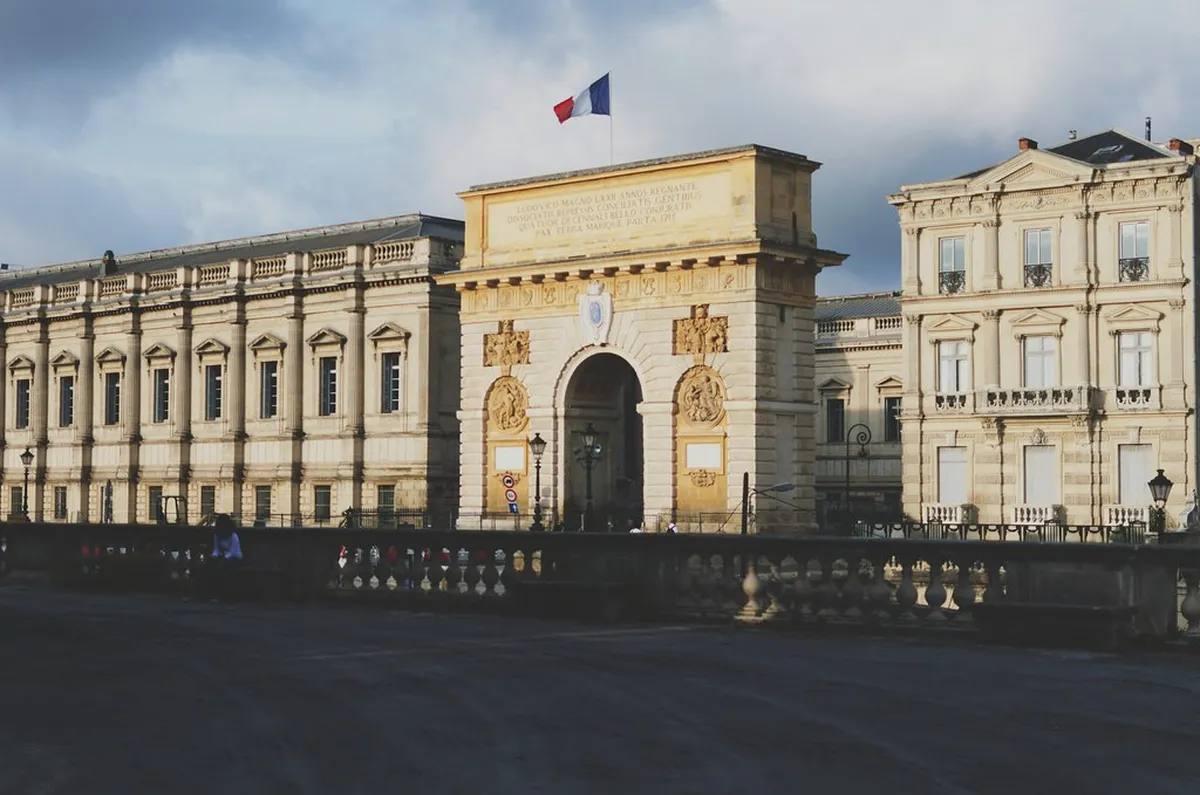
The journey into the park usually begins at the Porte du Peyrou. This arch serves as the grand entrance to the entire complex. It was completed in 1691 by the famous architect François d’Orbay. The design mimics the classic triumphal arches found in ancient Rome.
Detailed bas-reliefs decorate the stone surfaces of the arch. These carvings depict important historical events and royal achievements. You can see symbols of the King’s power etched into the stone. The arch stands 15 meters high and dominates the eastern entrance.
Guided tours often allow visitors to climb to the top of the arch. From there, you get a perfect view of the entire esplanade. The walk up the narrow stairs is worth the effort for photographers. It is one of the most photographed Promenade du Peyrou landmarks in the city.
The arch was originally part of the city’s defensive walls. Later, it became a purely decorative monument for the royal square. It underwent a major restoration project to preserve its fine details. Today, it stands as a symbol of Montpellier’s architectural heritage.
The Equestrian Statue of Louis XIV
At the center of the park stands the statue of Louis XIV. This bronze monument shows the King riding a powerful horse. It replaces an earlier version that was destroyed during the French Revolution. The current statue was installed in 1838 to restore the royal theme.
The statue rests on a large pedestal made of solid white marble. It serves as the focal point for the entire symmetry of the park. From this spot, you can see all the Promenade du Peyrou landmarks clearly. The king is depicted as a Roman emperor with a laurel wreath.
Locals often meet near the base of the statue for afternoon walks. It provides a sense of scale to the massive open space around it. The bronze has developed a unique patina over many years of exposure. It remains a central piece of the city’s historical identity.
The Saint-Clément Aqueduct and Water Tower
Engineering fans will love the Saint-Clément Aqueduct at the west end. This structure brought fresh water to the city for over two centuries. It stretches across the landscape with two levels of classic arches. The design was inspired by the ancient Roman Pont du Gard.
At the end of the aqueduct sits the Château d’eau water tower. This hexagonal pavilion is a masterpiece of 18th-century functional architecture. It features elegant Corinthian columns and a beautiful stone dome. Water once flowed from here into the city’s many public fountains.
The surrounding pools reflect the sky and the stone structures beautifully. Walking along the base of the aqueduct is a very peaceful experience. You can see how the arches march across the valley toward the mountains. This area highlights the blend of utility and high art in French design.
The aqueduct remains one of the most impressive Promenade du Peyrou landmarks today. It demonstrates the technical skills of engineers in the 1750s. Visitors can explore the grounds around the water tower for free. The views toward the Pic Saint-Loup mountain are truly spectacular from here.
Scenic Views and Local Life in 2025
The park is a vibrant hub of local life in 2025. Every Sunday, a popular flea market takes place under the trees. You can find antique furniture, old books, and vintage French jewelry. It is the perfect place to experience the authentic culture of Montpellier.
During the summer, the wide paths offer plenty of shade. Many students from the nearby university come here to study or relax. You will often see people playing pétanque on the gravel courts. This traditional game is a staple of life in Southern France.
You should consider booking an architecture walking tour to learn more. Expert guides can explain the hidden symbols within the Promenade du Peyrou landmarks. They share stories about the kings and architects who built this place. These tours usually last about two hours and are very informative.
Sunset is the best time to visit for amazing light. The sky turns shades of pink and orange over the stone monuments. You can watch the city lights flicker on from the high terrace. It is a romantic and calm way to end your day.
Practical Tips for Your 2025 Visit
Entry to the Promenade du Peyrou is completely free for all. The park remains open from early morning until late in the evening. There are public restrooms located near the main entrance for convenience. You should wear comfortable walking shoes to explore the entire area.
The park is easily accessible by the city’s modern tram system. Take Line 4 to the Peyrou-Arc de Triomphe stop for quick access. This makes it easy to visit other sites like the Place de la Comédie afterward. Montpellier is a very walkable city for most tourists.
Bring a bottle of water during the hot summer months. There are several benches where you can sit and enjoy the scenery. Many visitors spend about 60 to 90 minutes exploring the various landmarks. It is a great spot for a picnic with local cheese and bread.
Frequently Asked Questions
What are the top Promenade du Peyrou landmarks to see?
The main landmarks include the Arc de Triomphe and the water tower. You should also see the Saint-Clément Aqueduct and the Louis XIV statue. These structures are all located within the same park area. They are easy to visit in one single trip.
Is the Promenade du Peyrou free to enter?
Yes, the park is a public space and free to enter. You can walk around the monuments without paying any fees. Some special guided tours of the arch might have a cost. Most visitors enjoy the grounds for free throughout the year.
What is the best time to visit the park?
Sunset is the most beautiful time for photography and views. Sunday mornings are great for visiting the local flea market. Spring and fall offer the most comfortable temperatures for walking. Midday in summer can be quite hot on the open esplanade.
The Promenade du Peyrou landmarks offer a deep look into French history. From royal statues to massive aqueducts, there is much to explore. This park is a must-visit destination for anyone traveling to Montpellier in 2025. Plan your walk today to experience the majesty of this historic city.
Key Takeaways
- Visit at sunset for the best photos of the monuments.
- Check out the Sunday flea market for unique local souvenirs.
- Use the tram Line 4 for the most convenient access to the park.