
Ponts Couverts and Vauban Dam Engineering Guide
Explore the Ponts Couverts and Vauban Dam engineering in Strasbourg. Learn about defense systems and water management in 2025. Plan your visit today!
On this page
The city of Strasbourg offers a rich history of military defense and hydraulic design throughout its center. Exploring the Ponts Couverts and Vauban Dam engineering reveals how this city survived many different historic sieges. You will find these structures at the edge of the historic and famous Petite France district today. This area showcases a perfect blend of medieval fortifications and advanced seventeenth-century water management systems for visitors.
Understanding the architecture in Strasbourg requires a close look at these two distinct and powerful engineering landmarks. The bridges and the dam work together to protect the city from both invaders and seasonal floods. Modern travelers in 2025 can still walk across these masterpieces to appreciate their scale and function. This guide provides a detailed look at the technical skill required to build these enduring stone monuments.
Evolution of Ponts Couverts and Vauban Dam Engineering
The Ponts Couverts represent the earliest stage of defensive engineering found within the historic city of Strasbourg. These bridges were built during the thirteenth century to protect the independence of the local free imperial city. Originally, the structures featured massive wooden roofs that provided cover for soldiers during active military conflicts. These wooden covers gave the bridges their famous name, which translates directly to the Covered Bridges today.
In the seventeenth century, military needs changed as artillery became more powerful and effective against old stone walls. The famous engineer Vauban recognized that the existing bridges were no longer sufficient for modern city defense. He proposed a new structure that would complement the existing Ponts Couverts and Vauban Dam engineering designs. This led to the construction of the Great Lock, which stands just a short distance from the towers.
The engineering transition from medieval bridges to a massive hydraulic dam shows the progress of French military science. Builders replaced the original wooden bridge sections with stone arches during the nineteenth century to improve their durability. This change ensured the bridges could support heavier traffic and survive the harsh weather of the Alsace region. Today, the bridges serve as a reminder of the city's transition from a fortress to a modern capital.
Visitors can see the clear difference in masonry techniques between the two eras of French construction and design. The medieval towers use rougher stone blocks while the dam features the precise geometry of the late seventeenth century. These layers of engineering history make the site one of the most important architectural locations in all of France. Observing these details helps you appreciate the long-term planning involved in protecting a major European river city.
The Strategic Design of the Great Lock
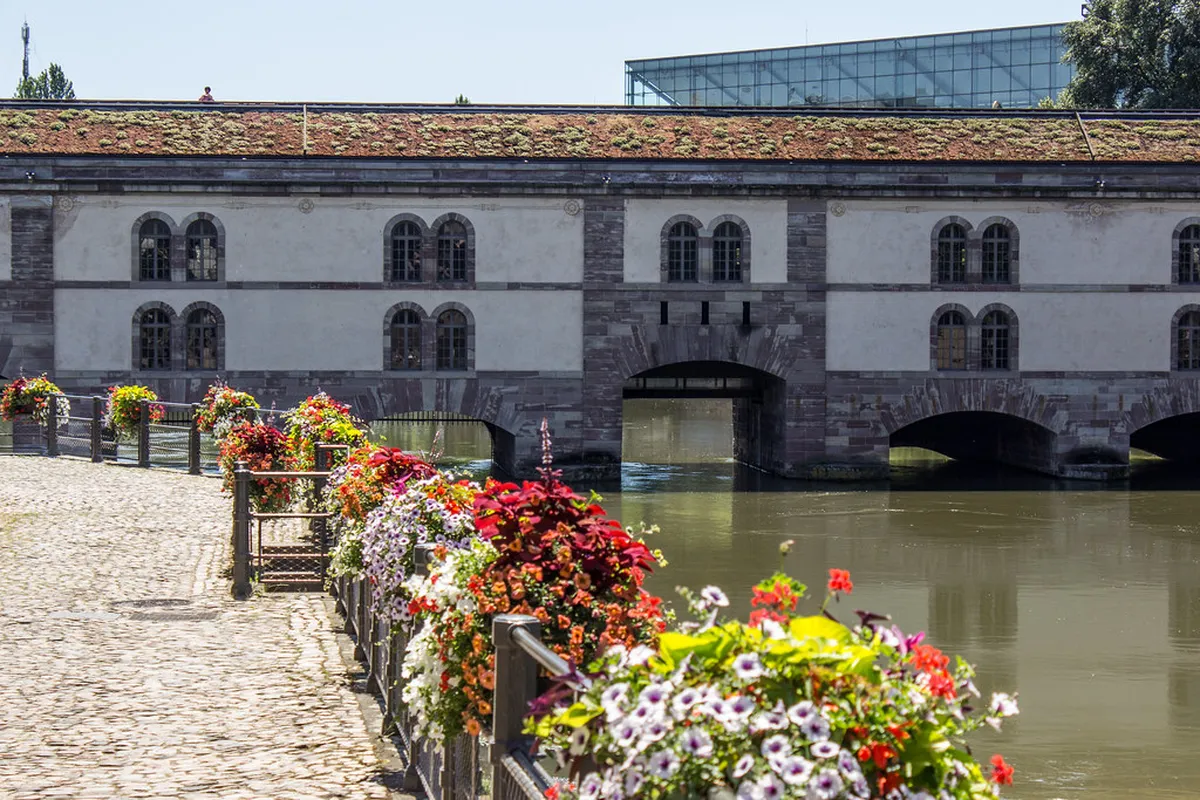
The Vauban Dam is often called the Great Lock because of its primary role in controlling river levels. It was designed by Sébastien Le Prestre de Vauban, who was a legendary military engineer for King Louis XIV. The dam spans the entire width of the River Ill with thirteen impressive arches of solid pink sandstone. Its primary purpose was to flood the lands south of the city during a potential military siege.
Engineering this dam required precise calculations of water pressure and the surrounding topography of the Alsatian river plain. The sluice gates could be closed quickly to raise the water level behind the massive stone dam wall. This intentional flooding would turn the surrounding fields into impassable marshes to stop any advancing enemy infantry troops. Such a defensive strategy was revolutionary for the time and saved the city from many potential foreign threats.
The dam also features a protected corridor on the upper level for moving troops safely across the river. This internal gallery allowed soldiers to cross from one bank to the other without being seen by enemies. Small openings in the walls provided positions for defensive fire while keeping the defenders protected from incoming shots. This dual-purpose design of a bridge and a fortress is a hallmark of the Vauban engineering style.
- Construction began in 1681 following the French annexation of the city.
- The dam uses durable pink sandstone from the nearby Vosges mountain range.
- Thirteen arches allow for controlled water flow during normal river conditions.
- A panoramic terrace was added in the twentieth century for tourists.
The engineering of the dam also considered the flow of the River Ill into the half-timbered houses in Petite France. By managing the water volume, the dam helped prevent the frequent flooding of the lower tanning and fishing districts. This protective function remains relevant in 2025 as the city manages its historic water levels during the spring. The dam remains a vital piece of the city's modern infrastructure and historic landscape.
Defensive Towers of the Ponts Couverts
The four towers of the Ponts Couverts are the most visible parts of the medieval engineering in Strasbourg. These towers were once connected by a series of ramparts that formed the city's primary southern defensive line. Each tower had a specific role, ranging from housing prisoners to storing expensive gunpowder for the local garrison. Their height allowed guards to spot approaching threats from a great distance across the flat Alsatian river plains.
The construction of these towers used local sandstone to create thick walls that could withstand early mechanical siege engines. Engineering these massive vertical structures on the soft riverbanks required deep foundations and careful planning by medieval master builders. You can still see the original stone markings left by the masons who carved each individual block by hand. These details offer a glimpse into the labor-intensive process of building such large-scale military fortifications in the past.
During the nineteenth century, the city demolished the original wooden galleries that once connected these towers to the bridges. This was done to modernize the area, but the towers themselves were preserved as important local historical landmarks. They now provide a dramatic backdrop for photography and help tourists understand the original scale of the city walls. The engineering of the towers has proven so solid that they require very little maintenance in modern times.
Each tower features different architectural details that reflect their various uses over the centuries of their long existence. Some towers have narrow slits for archers, while others have larger openings that were modified for later artillery use. Walking between these towers allows you to experience the medieval defensive layout of the city as it once stood. They remain a symbol of the strength and resilience of the people of Strasbourg throughout many different wars.
Hydraulic Systems and Water Management
Water management is the core principle behind the Ponts Couverts and Vauban Dam engineering designs found in Strasbourg. The River Ill splits into several channels as it enters the city, creating a complex hydraulic environment for builders. Engineers had to ensure that the water flow remained consistent to power the many local mills in the district. They achieved this by using a system of locks and weirs integrated into the bridge and dam structures.
The Vauban Dam functions as a massive regulator for the entire river system within the historic center of the city. During periods of heavy rain, the sluices are managed to prevent the water from rising too high in Petite France. This engineering prevents damage to the delicate foundations of the many historic timber buildings that line the riverbanks. Modern hydraulic sensors now help city officials manage the gates more effectively than in the seventeenth century.
The engineering also accounts for the needs of local river navigation for transport and modern tourist boat tours today. Small locks allow boats to move between the different levels of the river created by the historic dam system. You can watch the water levels change as boats pass through these narrow stone channels near the Ponts Couverts. This mechanical process shows how seventeenth-century engineering still serves the daily needs of a busy modern European city.
The speed of the water current is also carefully controlled to prevent erosion of the stone bridge piers nearby. Specialized masonry techniques were used to shape the piers so they would cut through the water with minimal resistance. This reduces the pressure on the structures and extends their lifespan for many more centuries of use and enjoyment. Engineers in 2025 continue to study these historic designs to improve modern flood defense systems in other cities.
Architectural Materials and Sustainable Restoration
The primary material used in these engineering projects is the famous pink sandstone found throughout the entire Alsace region. This stone is known for its unique color and its ability to be carved into very precise architectural shapes. It provides the structures with a warm appearance that changes depending on the light during different times of day. Using local materials reduced transport costs and ensured the buildings matched the existing style of the nearby cathedral.
Recent restoration efforts focus on preserving the original stone while replacing parts damaged by pollution and modern environmental factors. Engineers use traditional lime mortars to ensure the new repairs are compatible with the original medieval and seventeenth-century masonry. This approach respects the historical integrity of the Ponts Couverts and Vauban Dam engineering for future generations of visitors. You can see the lighter color of the new stones used in the most recent structural repair work.
Sustainability is now a key part of how the city maintains these large stone structures for the public today. Local craftsmen use hand tools whenever possible to match the texture of the original historic stone surfaces and joints. This dedication to quality ensures that the bridges and dam remain safe for the thousands of people who walk across them. The city also limits the use of heavy vehicles on the Ponts Couverts to protect their aging foundations.
The preservation of the panoramic terrace on the Vauban Dam is another example of successful modern urban engineering and design. It was carefully waterproofed to protect the historic stone arches below from water damage and gradual winter freeze-thaw cycles. This intervention allows tourists to enjoy the best views of the city without compromising the structural health of the dam. The balance between tourism and preservation is a major focus for Strasbourg city planners in the current year.
Engineering Impact on Petite France District
The engineering of the dam and bridges directly enabled the growth of the Petite France district during the Middle Ages. Constant water flow from the river provided the energy needed to run the tanneries and mills located in this area. Without the control systems of the Ponts Couverts, the river would have been too unpredictable for industrial use. This led to the creation of the beautiful half-timbered houses that tourists love to visit and photograph today.
Living near the river required the residents to trust the engineering of the defenses and the water management systems provided. The Vauban Dam gave the citizens peace of mind by significantly reducing the risk of catastrophic river flooding events. This safety allowed the district to flourish as a hub for artisans, leather workers, and local fishermen for centuries. The synergy between civil engineering and urban development is clearly visible when you walk through these narrow streets.
Today, the connection between the dam and the district is a major part of the city's appeal to visitors. You can follow a self-guided architecture walking tour Strasbourg to see how these sites are linked together. The walk from the towers of the Ponts Couverts into the heart of Petite France is very short. This proximity makes it easy to see how the military and civilian parts of the city once functioned.
The engineering also created the scenic canals that make the area feel so romantic and peaceful for modern travelers today. These canals are the result of centuries of human intervention in the natural flow of the local River Ill. The stones of the Vauban Dam still stand as a shield for the fragile wooden homes located just downstream. This enduring relationship between stone and wood defines the unique architectural character of this famous French city in 2025.
Frequently Asked Questions
Can you visit the top of the Vauban Dam?
Yes, you can walk across the panoramic terrace on top of the dam for free. It offers the best views of the Ponts Couverts and the distant cathedral spire. The terrace is open daily during daylight hours for all visitors to enjoy.
Why are they called the Ponts Couverts if they are not covered?
The name is a historical reference to the wooden roofs that once protected the bridges during the Middle Ages. These covers were removed in the 1700s, but the traditional name remained in use by the locals. They are now open stone bridges but keep their famous historic title.
How long does it take to see both sites?
You can easily explore both the bridges and the dam within one hour of walking. They are located right next to each other at the edge of the Petite France district. This makes them a perfect stop during any tour of the historic city center.
What is the best time for photography at the Vauban Dam?
The best time for photos is during the late afternoon or the golden hour before sunset. The pink sandstone glows beautifully in the soft light of the setting sun over the river. You can capture the reflection of the towers in the calm water of the dam.
The Ponts Couverts and Vauban Dam engineering projects are essential to the identity and history of Strasbourg. These structures demonstrate the evolution of military defense and hydraulic management over many centuries of urban growth. Visitors in 2025 can appreciate the technical skill and artistic beauty of these massive pink sandstone monuments. Make sure to include a walk across the dam on your next visit to this beautiful French city. You will gain a deeper understanding of how engineering protects the historic treasures we love to explore.
Key Takeaways
- The Vauban Dam was designed to flood the city defenses during a military siege.
- Ponts Couverts originally featured wooden roofs to protect soldiers during medieval battles.
- Local pink sandstone is the primary material used for both of these historic structures.
- The engineering of the dam protects the timber houses of Petite France from flooding.
Related reads: architecturebycity.com, maison des tanneurs architecture history, alsatian timber frame construction techniques.