
Exploring Court of Appeal Building Colmar Architecture
Discover the Court of Appeal building Colmar architecture. Learn about German Imperial styles and plan your 2025 visit to this historic French landmark today!
On this page
The Court of Appeal building Colmar architecture is a stunning example of late nineteenth-century design. This majestic structure stands as a testament to the city's complex history. It represents a time when German influences shaped the local urban landscape significantly. Visitors can admire the grand facade while exploring the beautiful streets of Alsace. This site offers a unique glimpse into the region's diverse heritage. You should include this landmark in your next travel itinerary. It is one of the most important examples of architecture in Colmar today.
Colmar is famous for its colorful timber-framed houses and medieval charm. However, the Court of Appeal offers a different architectural perspective to explore. It dominates the administrative district with its massive stone walls and tall windows. The building remains a functioning legal center for the region in 2025. You will appreciate the contrast between this scale and the narrow old streets. It serves as a bridge between various historical eras and design styles. Photographers will love the play of light on the colorful sandstone surfaces.
Historical Context of the Court of Appeal
The construction of this legal landmark began in the year 1902. It was completed in 1906 during the German annexation of Alsace. Architects Kuno Helbling and Paul Ledoux designed the impressive structure. They wanted to project strength through massive stone walls and bold shapes. This era saw a significant shift in the local building styles. The authorities aimed to modernize the city with grand public buildings. These projects often used styles popular in the German Empire at that time.
This period of construction defined the German Imperial architecture in Colmar specifically. The Court of Appeal was a central part of this urban expansion. It replaced older, smaller facilities that no longer met the city's needs. The new site allowed for a more organized administrative district to grow. It sits on the Avenue de la République, a major local thoroughfare. You can easily walk here from the main train station. The walk takes about ten minutes through pleasant green areas.
The history of the building is tied to the changing borders of Europe. It has served under both German and French administrations over the decades. Each era left its mark on the preservation of the site. Today, it stands as a protected historical monument in France. The interior still houses active courtrooms and legal offices for the public. You can feel the weight of history when standing before its doors. It remains an essential part of the legal life in Alsace.
Exploring the history helps you understand the Court of Appeal building Colmar architecture better. The designers chose materials that would last for many centuries. They used red and yellow sandstone sourced from the nearby Vosges mountains. This choice connects the building to the natural landscape of the region. The colors change beautifully depending on the time of day you visit. Early morning light creates a soft glow on the stone facade. Sunset makes the red sandstone look deep and rich for photos.
Unique Court of Appeal Building Colmar Architecture
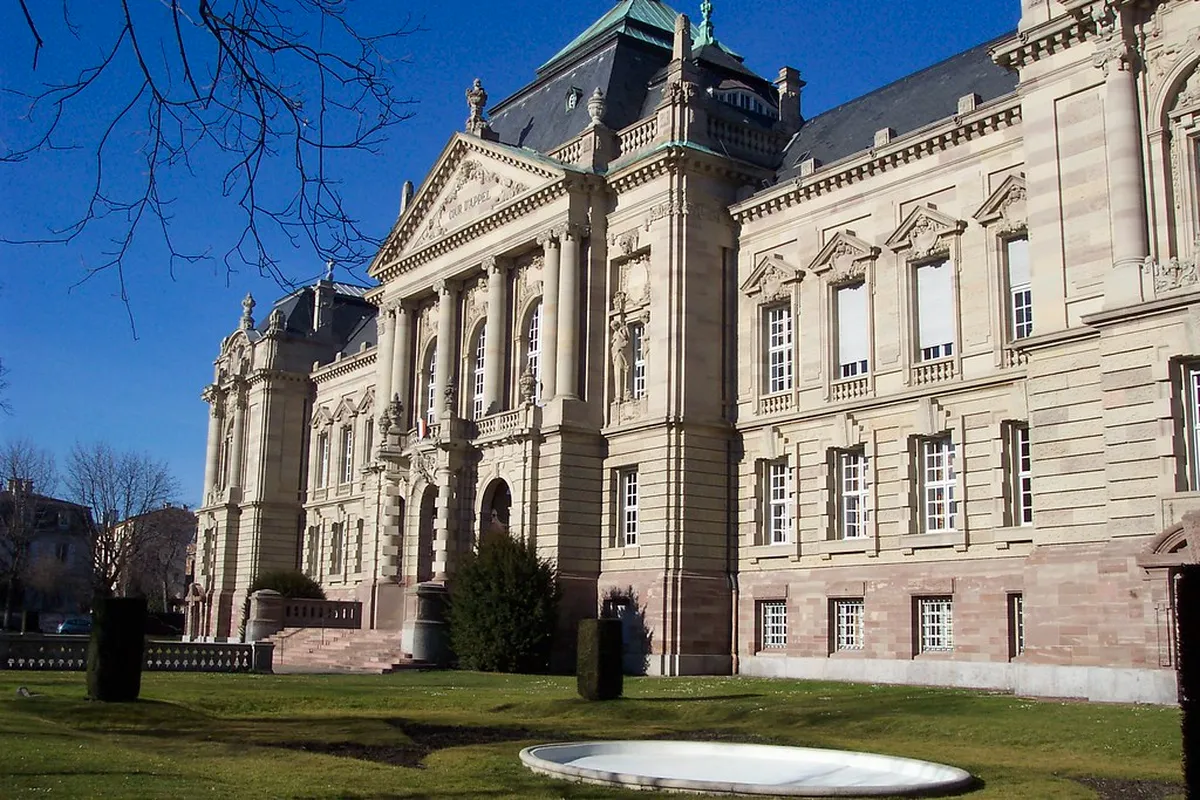
The style of this building is often described as Neo-Baroque or Wilhelmine. It features a heavy, monumental design that commands immediate attention from passersby. You will notice the large central pavilion with its high, sloping roof. The symmetrical layout provides a sense of order and institutional stability. Ornate stone carvings decorate the window frames and the main entrance areas. These details showcase the high level of craftsmanship available in 1905. The building stands at 9 Avenue de la République for easy navigation.
Architectural enthusiasts will appreciate the mix of decorative and functional elements. The roofline features several dormer windows and decorative stone chimneys. Large arched windows allow natural light to flood the internal courtrooms. This design was advanced for the early twentieth century legal facilities. The grand staircase inside is another highlight of the original design plans. It features wide steps and elegant railings made of heavy local stone. You can see these details if you attend a public hearing.
The exterior walls show a variety of textures and carved patterns. You can find statues representing justice and law on the main facade. These figures add a layer of symbolic meaning to the structural design. The architects used different colors of sandstone to create visual interest throughout. Red stone highlights the corners and the frames of the windows beautifully. Yellow stone fills the larger wall sections for a bright appearance. This color palette is typical for grand buildings across the Alsace region.
The Court of Appeal building Colmar architecture stands out for its scale. Most buildings in the old town are much smaller and made of wood. This structure uses heavy masonry to create a permanent and imposing presence. It reflects the importance of the judiciary in the modern provincial capital. The surrounding gardens provide a soft contrast to the hard stone surfaces. You can sit on the benches nearby to admire the view. This is a great spot for a quiet break during your tour.
The Role of German Imperial Style in Alsace
The German Imperial style arrived in Colmar during the late nineteenth century. It brought a sense of grand scale and classical influence to the city. Many public buildings from this period share similar design characteristics and materials. They often feature Neo-Renaissance or Neo-Baroque elements to show imperial power. The Court of Appeal is perhaps the best example of this trend. It was meant to impress everyone who entered its grand halls. The design followed strict rules regarding symmetry and decorative placement.
You can see other examples of this style near the railway station. The entire district was planned to look modern and very well organized. This planning included wide boulevards and plenty of open public spaces. The Court of Appeal serves as the anchor for this specific neighborhood. It connects the older parts of Colmar with the newer expansions. Many local residents call this the German Quarter because of its history. It offers a fascinating contrast to the medieval Little Venice area.
The architects used local materials to ground these foreign styles in Alsace. By using Vosges sandstone, they made the buildings feel more native and familiar. This blend of German design and local stone is quite unique to the area. It created a specific regional identity that survives to this very day. In 2025, these buildings are celebrated as part of the local heritage. They provide diversity to the city's famous architectural landscape for tourists. You will find many information plaques explaining this history nearby.
The impact of this style extends to the nearby Quartier des Ambassades villas. These homes were built for high-ranking officials and wealthy local citizens. They share the same monumental feel as the Court of Appeal building. Large gardens and ornate gates characterize these impressive private residences. Walking through this neighborhood feels like stepping back into the year 1910. The streets are quiet and lined with tall, mature trees. It is a perfect area for a relaxing afternoon walk.
Structural Details of the Facade and Roof
The facade of the Court of Appeal is divided into three main sections. The central part houses the main entrance and the most ornate carvings. You will see a large balcony supported by heavy stone columns. This area was designed for official ceremonies and public announcements years ago. The two side wings extend symmetrically from the central entrance point. Each wing features rows of large, identical windows for a balanced look. The ground floor is slightly raised to give the building height.
The roof is another masterpiece of the Court of Appeal building Colmar architecture. It uses dark slate tiles that contrast with the warm sandstone walls. The steep pitch of the roof is typical for the climate of Alsace. It helps shed snow and rain during the cold winter months. Several small towers and turrets add interest to the building's high silhouette. These features give the landmark a somewhat castle-like appearance from a distance. You can see the roof from many high points in the city.
If you look closely, you will see intricate ironwork on the gates. The railings around the property feature classical motifs and floral patterns. These metal elements have been carefully restored to their original 1906 condition. They provide a delicate touch to the otherwise massive stone structure. The main doors are made of heavy oak and feature bronze handles. These doors are often open during business hours for court visitors. You should respect the silence when walking near the entrance areas.
The building's corners are reinforced with large stone blocks called quoins. These add to the visual strength and stability of the entire structure. They also provide a decorative frame for the flatter wall surfaces. The use of different stone textures creates a play of shadows. On a sunny day, the facade looks dynamic and full of life. It is one of the most photographed buildings in this part of Colmar. Make sure to bring a wide-angle lens for the best shots.
Visiting the Landmark in Colmar for 2025
Visiting the Court of Appeal is easy if you are in Colmar. The building is located just a short walk from the Champ de Mars park. This park is a lovely place to start your architecture tour. You can see the building's massive profile through the trees in summer. There is no cost to view the exterior of the landmark. It is visible from the public sidewalk at all times of day. Most visitors spend about thirty minutes admiring the various facade details.
If you want to see the interior, check the local court schedule. The building is generally open to the public during normal business hours. You will need to go through a security check at the entrance. Photography may be restricted inside the active courtrooms and administrative offices. Always ask for permission before taking pictures of the interior staff. The grand lobby is usually accessible and worth a quick look. It features high ceilings and beautiful stone flooring from 1906.
The area around the building has several excellent cafes and local restaurants. You can find a spot to eat on the Avenue de la République. Many of these places offer views of the historic administrative buildings nearby. It is a great way to soak in the local atmosphere. The 2025 tourist season will likely be busy in central Colmar. Try to visit the Court of Appeal early in the morning. This allows you to avoid the largest groups of walking tours.
Parking can be difficult directly in front of the building during the day. It is better to use the underground parking lots located nearby. The park at Champ de Mars has a large parking facility underneath it. From there, it is a simple five-minute walk to the Court of Appeal. Public buses also stop frequently along the main boulevard for your convenience. The city is very walkable, so most people arrive on foot. Enjoy the beautiful scenery as you explore this historic French district.
Frequently Asked Questions
Can I tour the inside of the Court of Appeal building?
The building is an active court and not a standard museum for tourists. You can enter the public areas during business hours for legal reasons. Always check local rules before planning an interior visit in 2025. Be prepared for security screenings at the main entrance door.
Who was the architect of the Court of Appeal in Colmar?
Kuno Helbling and Paul Ledoux were the primary architects for this project. They worked on the design between 1902 and 1906 for the authorities. Their work combined German Imperial styles with local Alsatian stone materials. They aimed for a monumental look that represented the legal system.
Where is the best place to photograph the building facade?
The best views are from across the Avenue de la République. This allows you to capture the full symmetry of the grand structure. Morning light provides the best illumination for the colorful sandstone walls. Use the trees in the nearby park to frame your shots perfectly.
The Court of Appeal building Colmar architecture is a vital part of the city's identity. It offers a unique look at the German Imperial influence on French soil. You will appreciate the grand scale and the beautiful sandstone details. Make sure to visit this site during your 2025 trip to Alsace. It provides a perfect contrast to the famous timber-framed houses nearby. For more tips, check out our guide on Colmar architecture walking tours today!
Key Takeaways
- The building was constructed between 1902 and 1906 in the Neo-Baroque style.
- It features beautiful red and yellow sandstone from the local Vosges mountains.
- The landmark is located on the Avenue de la République near the city center.
- It serves as a prime example of German Imperial architecture in France today.
Related reads: architecturebycity.com, colmar railway station prussian design, colmar half timbered house styles.